Digital Library for the Decorative Arts and Material Culture
The Common-place Web Library reviews and lists online resources and Websites likely to be of interest to our viewers. Each quarterly issue will feature one or more brief site reviews. The library itself will be an ongoing enterprise with regular new additions and amendments. So we encourage you to check it frequently. At the moment, the library is small, but with your help we expect it to grow rapidly. If you have suggestions for the Web Library, or for site reviews, please forward them to the Administrative Editor.
For years, those wanting to examine historical artifacts closely had two options. They could travel to the appropriate museums and view the objects from a distance or study small pictures in exhibition catalogues. With its online visual database, the Digital Library for the Decorative Arts and Material Culture presents an efficient and powerful alternative for exhibiting artifacts. Part of the University of Wisconsin’s series of digital collections, the library provides a digitized record of seventeenth- through nineteenth-century Anglo-American ceramics, furniture, and prints from the Chipstone Foundation and the Longridge Ceramics Collection. The result is an accessible and engaging model for the online presentation of historical objects.
The Website’s design is sharp and plain, with a clear and uncluttered layout that scales easily to fit different desktop resolutions. The site’s simplicity should make navigation easy for all visitors, and it helps images and text load quickly on a broadband connection. Along with the library’s own exhibits, the site has links to other collections of historical documents and images.
The library site makes an impressive presentation of its nearly one thousand artifacts. The collections are searchable by keyword, and because of thorough annotation, searches based on city of origin, material, or subject matter produce accurate results, listed with helpful thumbnail images. For instance, a follow-up search on a teapot featuring an English lion returned a list of other items depicting the animal. Searching for date ranges is slightly more difficult, and there is little editorial guidance besides a brief list of subject headings, although plans are under way to add more scholarly documentation in future versions. In each collection, the photography is first-rate. Clear, focused, full-color images accompany entries and are viewable from four different resolutions. The objects were captured in bright, even light against a plain background, many from multiple views. The high quality allows visitors more access than they might have visiting the artifacts in person, showing such details as imperfections in pottery glaze or the interior cabinet compartments of a writing desk.
A wide variety of colorful and interesting artifacts are on display. Ceramics include an array of British tableware as well as candlesticks, flower vases, jugs, and small sculptures in different clays and glazes. Most are vibrantly decorated with geometric designs, floral tracery, and nationalist or religious symbols. The furniture is largely American and features tables, chests, desks, trunks, mirrors, and clocks. The pieces are very well preserved, and many reveal a high degree of craftsmanship and complexity. The print collection is small and less remarkable, with landscapes, city views, portraits, and political cartoons, but it does contain some iconic images by Paul Revere and William Hogarth.
Digitized versions of eighteenth- and nineteenth-century books on material culture round out the site’s holdings. Subjects covered include architecture, fashion, antiquities, the arts, and natural history. Most are available in full, searchable text, with a linked table of contents and a brief statement of historical context. Reproductions of book leaves maintain the high image quality of the site’s photographs, many in full color. Again the highest resolutions are revealing enough even to show brush strokes and paper textures. A helpful sidebar contains quick links for plain-text versions of each page and print-ready images.
This small collection contains a wealth of insights into the visual tastes of the past. Some are scholarly volumes, like eighteenth-century architect Robert Adam’s sumptuously illustrated review of Roman ruins, many with an emphasis on the exotic foreign motifs. Others, with ample engravings, like The American Builder’s Companion or The English Lady’s Costume, are practical nineteenth-century guides. Many of the visual standouts come from works on natural history. George Edward’s series The Natural History of Birds alone has over 350 full-color plates, and similar works on ornithology and botany carry equally lavish illustrations. The collection also has complete runs of the 1860s American art journal The New Path and the early twentieth-century folk art magazine The Craftsman.
The Digital Library provides an adept and accessible example for how other small institutions might make their material holdings available to a wider audience. The detailed photography and careful cataloguing allow both serious researchers and casual viewers to closely and quickly appreciate the colors, textures, and contours of historical artifacts. Those visitors who might before have pressed up tight against the museum glass now need only to click their mice for a better view.
This article originally appeared in issue 7.4 (July, 2007).
James Coltrain is a doctoral candidate at Northwestern University. His dissertation examines how the architecture of eighteenth-century North American forts shaped local views of European empires.
The Iroquois on the Web
The Common-place Web Library reviews and lists online resources and Websites likely to be of interest to our viewers. Each quarterly issue will feature one or more brief site reviews. The library itself will be an ongoing enterprise with regular new additions and amendments. So we encourage you to check it frequently. At the moment, the library is small, but with your help we expect it to grow rapidly. If you have suggestions for the Web Library, or for site reviews, please forward them to the Administrative Editor.
For the past decade I have taught at a college in the Genesee Valley of New York built on and near a number of locations that have factored largely in the history of the Senecas, the westernmost of the famed Six Nations of the Iroquois. The “Chenussio” or Geneseo Senecas figure prominently in the historical records documenting the history of French and English colonialism in New York, and French forces marched through what is now Rochester and its suburbs in 1687 in an effort to eradicate interference in France’s fur trade (see the Website Ganondagan). The Sullivan-Clinton campaign of 1779 marched nearby through the Genesee Valley in an effort to destroy the offensive capacity of the British-allied Iroquois and force them to become a drain on the British treasury, and numerous marked historic sites stand near the college. Legend has it that two of Sullivan’s scouts, Boyd and Parker, were tortured while bound to a tree that grows not far from the campus (fig. 1). At the “Ambuscade,” a site a few miles from the campus in the town of Groveland, Sullivan’s men engaged a Seneca and Loyalist force intent on slowing the advance of the American Army. Nearly two decades after the Revolution, the Senecas sold all of their lands west of the Genesee (nearly the entire western third of New York State) to Robert Morris at the Big Tree Treaty of 1797. The treaty was negotiated at a site that is now a student parking lot on campus. And at both ends of Geneseo’s historic Main Street, mansions bearing the Wadsworth family name stand. The Wadsworths were original investors in the Ogden Land Company, a syndicate of well-connected speculators determined to extinguish the Senecas’ title to their remaining reserves in western New York.
Nearly all of my students are western New Yorkers, and most of them come from the counties immediately surrounding the college. Still, they arrive on campus knowing very little at all about the Iroquois. State social studies curricula make a passing nod towards educating elementary and secondary students about the Haudenosaunee (as the Iroquois, or People of the Longhouse, refer to themselves), but these efforts, generally, are limited to requiring fourth graders to build model Iroquois longhouses out of twigs, balsa wood, and Styrofoam and, in high school, to reciting the tired and discredited “Iroquois Influence Thesis,” or the claim that the Founding Fathers modeled the United States government in part after that of the Iroquois Confederacy. (A Google search of model and longhouse returns 55,900 hits, while a smaller but by no means insignificant number of Websites provide students with information on how the Iroquois League provided the foundation for American democratic principles and the United States Constitution). The Six Nations: Oldest Living Democracy on Earth contains links to many Websites related to the Iroquois influence thesis. Though few historians find the thesis persuasive and its promoters have had little success in publishing their arguments in the peer-reviewed literature, the influence thesis maintains a following on the margins of American Indian studies and still has a good number of adherents. The site, which describes the Six Nations as the “oldest living participatory democracy on earth” (the bold face type apparently suggests that there were older nonparticipatory democracies), includes links to Bruce Johansen’s book Forgotten Founders (1982) and the book he co-authored with Donald Grinde entitled Exemplar of Liberty (1991).
While sites like these may serve to obscure more than they enlighten, there are valuable Web resources providing more reliable information on Iroquois history and culture. Dedicated to preserving Haudenosaunee languages, song, and dance, the Website Ohwejagehka offers a wealth of information, including recordings of Iroquois songs in real audio format. The Onondaga Nation of New York, who still live on what remains of their aboriginal territory south of the present-day city of Syracuse, has on its Website a useful collection of information on Onondaga culture and history, as well as a valuable assortment of materials relevant to the Nation’s land-rights action in the United States Federal Court. Anyone interested in understanding the legal and ethical arguments behind Iroquois land claims would benefit by visiting this site. Those Iroquois nations involved in trying to recover lands that were taken from them in violation of federal law or to exercise their sovereignty in other ways are opposed by the anti-sovereignty group Upstate Citizens for Equality. Its cluttered Website, which includes mostly position statements, does include copies of the briefs filed by the defendant counties and by the State of New York in opposition to Iroquois land claims.
As for historical sources, some of the Six Nations’ early diplomatic agreements and treaties, taken from the Documents Relative to the Colonial History of the State of New York (1855) and Indian Treaties Printed by Benjamin Franklin, 1736-1762 (1938) are available online (see, for example, Conference between Governor Burnet and the Indians and A Treaty Held at the Town of Lancaster at Early Recognized Treaties with American Indian Nations). Important sources like the reprint edition of Peter Wraxall’s An Abridgement of the Indian Affairs (1915) are available at Google Books, and William Savery’s Journal of the Life, Travels, and Religious Labors of William Savery (1844) is available from the University of Michigan’s Making of Americaseries. The Papers of William Johnson, the Crown’s superintendent for Indian affairs in the Northern Department and a man whose ties to the Six Nations extended across four decades in the middle of the eighteenth century, have been scanned by the University of Toronto. And Creighton University has digitized The Jesuit Relations and Allied Documents, the magisterial collection of French missionary reports and a vital source for understanding seventeenth- and eighteenth-century Iroquois history. The online edition has some errors and should be checked against the print version, but it is searchable and still a valuable resource. Alternative copies of specific volumes of the Jesuit Relations, as well as other texts from the early history of Canada that relate to Iroquois History, are housed at Early Canadiana Online.
There are other online resources that could be discussed here, and undoubtedly many readers of Common-place have favorites of their own of which I am not yet aware. Certainly many of these are impressive and valuable Websites housing an extraordinary amount of information. In terms of my own teaching, however, I find myself going back frequently to an outstanding Web resource for educators on the Sullivan-Clinton campaign against the western Iroquois, a major military invasion of the Iroquois homeland conducted by the Continental Army during 1779: Sullivan/Clinton Campaign, Then and Now.
Largely the work of Robert Spiegelman, who has done an enormous amount to bring public attention to the Sullivan campaign and its historical significance, the opening page of the site includes a montage of photographs demonstrating the site creator’s familiarity with and affection for the region’s history: the Boyd-Parker “torture tree” and the salt mine where Seneca remains were discovered in the 1990s and destroyed with the blessings of a vindictive state governor upset about Seneca land claims. Spiegelman and his colleagues point out in their mission statement that they hope to “feed and deepen” an “enduring hunger for history” by “exploring new ways to heighten awareness of the non-stop interplay of past and present as it shapes our everyday lives.”
Fig. 1. Image from Sullivan/Clinton Campaign Website. Courtesy of Dr. Robert Spiegelman.
From the opening page, viewers can follow a large number of links: A who’s who of the Sullivan-Clinton campaign, including brief capsule biographies of the notable figures; a brief glossary of places mentioned in the records; copies of Sullivan’s marching orders from General Washington, dated May 31, 1770; and excerpts from other documents and brief quotes from a wide variety of individuals ranging from Cadwalladar Colden to the Onondaga Nation’s present day counsel Joe Heath, to Nathaniel Hawthorne, Tacitus, and the producer of the recent HBO production of Bury My Heart at Wounded Knee.
By clicking on “Texts,” the viewer is led to a long list of quotes from historical figures giving reasons for learning about the past: Shakespeare, Faulkner, and Washington Irving. The site’s creators range widely, perhaps needlessly so. Seneca women, for instance, pointedly told their audience that “you ought to hear and listen to what we women shall speak; for we are the owners of this land, AND IT IS OURS!” Enough said, perhaps.
The section includes more brief excerpts from the documents relevant to a reconstruction of the Sullivan campaign. There are excerpts from the recollections of individual soldiers, Goose Van Schaick’s sterile account of his brutal assault on the Onondagas in the spring of 1779, and a link to the officer’s journals. There are also essays by Spiegelman and others, reflecting on the meaning of the Sullivan-Clinton campaign.
The “Gallery” link leads the viewer to five galleries, each with a large number of high quality images. “Mother Earth” looks at environmental destruction in what was once Iroquoia. Some might find the content here polemical, but clearly the assault on Iroquois lands after the Sullivan campaign was fueled by the desire of wealthy speculators to transform what they considered a tractless wilderness into a bustling agricultural republic. If the text accompanying the images is, in places, needlessly pedantic, the images are sometimes jarring and can be used to great effect to provoke discussion of the environmental consequences of the “Invasion of America.”
The “Americana” gallery serves a similar function. It includes imagery related to memory of the Sullivan-Clinton campaign—photos of historical reenactors, historical portraits of the principals, and photos of various historical markers that commemorate the expedition. Here again, the images can lead to a lively classroom discussion of how “we” remember historical events and decide what becomes part of the historical record. Another gallery features “Alternate Takes” on the region’s history, including patriotic memorials from throughout the state and pictures of the angry signs posted by Upstate Citizens for Quality throughout the Cayuga land-claim area. Some, again, may object to the interpretive bias in the captions accompanying some of the photos, but the images are powerful and should generate a response from all but the most jaded students. The fourth gallery offers a fascinating look at “A Tale of Three Cities”: the Onondaga capital south of Syracuse; Little Beard’s Town, a settlement near Geneseo along the Genesee River; and the Cayuga capital, Goi-o-Guen, near present-day Aurora, New York. Students will learn much by observing how the rise of the Empire State relied upon Iroquois dispossession. Finally, a gallery entitled “Iroquoia!” provides students with a range of Haudenosaunee images, including paintings of important Seneca leaders like Cornplanter and Red Jacket, photographs of sites important to Iroquois history, artwork by present-day Haudenosaunee artists, and historic photographs of eighteenth- and nineteenth-century Iroquois at gatherings in western New York. The images, once again, are impressive.
The centerpiece of the Sullivan-Clinton site, however, is the wonderful animated map showing the course of the Sullivan-Clinton campaign as it carried destruction into the heart of Iroquoia in 1779. I have used the map in my classrooms to good effect, and students have been impressed.
The Website is clearly a labor of love. Spiegelman is actively involved, according to the biography that accompanies the site, in increasing public awareness of the Sullivan-Clinton campaign and the importance of the Iroquois in the history of New York and the young United States. He obviously wants the viewers of his site to think about the consequences of the nation’s progress and how the birth of the United States was a disaster for the Six Nations.
This article originally appeared in issue 8.4 (July, 2008).
Michael Leroy Oberg is professor of history at the State University of New York, College at Geneseo. He is the author, most recently, of The Head in Edward Nugent’s Hand: Roanoke’s Forgotten Indians(2007).
The Simple Life?
Brook Farm: The Dark Side of Utopia
Sterling F. Delano’s Brook Farm: The Dark Side of Utopia is, surprisingly, the first attempt since Lindsay Swift’s Brook Farm: Its Members, Scholars, and Visitors (1900) to provide a comprehensive overview of the most frequently recounted communitarian adventure in American history. Delano’s review of the episode illustrates some of the perils and possibilities of a narrative synthesis. Although based on exhaustive original research and thorough command of the secondary literature, Delano’s survey adds relatively little to the rich specialized scholarship on the most familiar elements of the story, such as founder George Ripley’s estrangement from the Unitarian establishment of Boston or Ralph Waldo Emerson’s decision not to join the community. On broad structural matters like the relationship between the Transcendentalist and Fourierist phases of Brook Farm, the connections between Fourierist theory and practice, and the place of Brook Farm in the national Association movement, Delano’s analysis similarly pales alongside Carl Guarneri’s outstanding The Utopian Alternative: Fourierism in Nineteenth-Century America (Ithaca, 1991). The strength of Delano’s work is that it integrates these interpretive issues into the description of a social texture that was charming enough to draw even Nathaniel Hawthorne into a pillow-fight with two young ladies but also frustrating enough to inspire The Blithedale Romance. This emphasis on the lived experience of the community nicely demonstrates the idea of the community at the heart of Brook Farm and provides a valuable perspective on its successes and failures.
Melodramatic subtitle notwithstanding, Delano’s portrait of Brook Farm is mostly roseate. He strongly admires Ripley and his wife, Sophia Dana Willard Ripley, as well as key lieutenants Charles A. Dana and John Sullivan Dwight for their vision of egalitarian cooperation and their readiness to work diligently in harmony with others while maintaining equanimity in difficult situations. The central theme in the study of Brook Farm, he emphasizes, should not be explanation for its collapse but appreciation of its achievements. He concludes that foremost among these was a substantial realization of the social equality for which the venture strived. Brook Farm recognized the dignity of all forms of labor, no matter who performed it, and afforded educational opportunities to all members of the community. Another definition of equality might have produced a less favorable judgment. Delano acknowledges that Ripley and his handpicked supporters controlled almost all authority at Brook Farm (413 n.10). The topic of gender relations, which Delano examines closely, provides another good example of his leanings. Unlike Guarneri and Anne Rose, who have argued that the freedom enjoyed by single women at Brook Farm contrasted with the more constricted and difficult lives of the married women, Delano describes little difference between the experiences of the two groups and devotes considerably more attention to the unmarried women and to Sophia Ripley. Although he reports that in the only year for which records survive nine of the ten residents who logged the most hours of labor were women (164), he denies that the community was responsible for channeling women into time-consuming traditional jobs.
Delano is more comfortable and expansive in addressing another achievement of Brook Farm: its exploration of the ways in which community life might foster individual development amid the Industrial Revolution. He reports that many Brook Farmers took up the Fourierist invitation to engage in a wide range of work toward which they felt a “passional attraction,” and he sketches numerous feasts, dances, theatricals, tableaux, masquerades, and other gatherings that brought the community together. The degree to which these activities constituted a substantial art of living is illustrated by the connection between the importance of music in the life of Brook Farm and the pioneering career in music criticism that John Sullivan Dwight launched during the years that the community produced the Association journal The Harbinger, on which Delano has previously written at greater length. A different fruition of the evanescent Brook Farm atmosphere was the fourteen marriages that took place between the approximately two hundred people who lived in the community at some point. Delano effectively depicts the sole wedding celebrated at Brook Farm, in December 1846, as a poignant attempt to revitalize the struggling venture and the decision of residents Charles Dana and Eunice Macdaniel to marry in New York as one of the most devastating indications of its imminent collapse.
Delano presents several converging explanations for that failure. He reviews the advantages and disadvantages of the location for farming operations and assesses the decisions to produce shoes and window sashes, but he recognizes that more decisive and revealing were Ripley’s mistakes in capital expenditures and personnel. The overextended building program and ineffective screening of noncontributing residents reflected both excessive optimism and an effort to accommodate the desires of as many supporters as possible. Particularly striking on the revenue side was the disinclination of Brook Farm leaders to build on the success of its school as a profit center for the community, a reflection of their ambivalence about teaching and also of their commitment to manual labor as a cornerstone of the project. In the latter stages of his story Delano stresses the effort to secure financial support from the national Fourierist movement. He notes that the self-effacing refusal to use The Harbinger to promote Brook Farm as a model community contributed to the disappointment of these hopes, but he assigns much of the blame to national leaders based in New York for indifference toward Brook Farm and limited commitment to their own campaign, which he argues that Ripley and Dana naively missed as they shifted priorities from Brook Farm to the broader cause of Association. The contrast between Bostonians and New Yorkers was important, as the women’s Association movements in the two cities underscores, though Delano might have discussed its origins more fully and addressed the ways in which the trajectory of Brook Farm, presaging the careers of Ripley and Dana at the New York Tribune, pointed toward an increasing overlap of the urban cultures.
Emerson once observed that the Brook Farmers “should have this praise, that they made what all people try to make, an agreeable place to live in.” Delano’s Brook Farm provides a convenient, authoritative survey of this earnest antebellum effort to realize the promise of American life.
This article originally appeared in issue 5.1 (October, 2004).
Thomas J. Brown, associate professor of history at the University of South Carolina, is the author of Dorothea Dix, New England Reformer (Cambridge, Mass., 1998).
Publick Occurrences 2.0 January- April 2009
Modern Franklin Gets the Boot [UPDATED]
Outbreaks of popular resistance against expert medical advice are a long Anglo-American tradition, and preventative measures like inoculation and vaccination have been recurring targets for us freemen. It will always be a little counter-intuitive to expose a healthy person to potentially harmful substances to keep them from getting a disease they don’t seem to have. It seemed even worse in the case of early inoculation, which involved giving someone a disease like smallpox on purpose in hopes they would get it in a less virulent form and develop some immunity. Sometimes the patient just got sick and died of the “cure.”
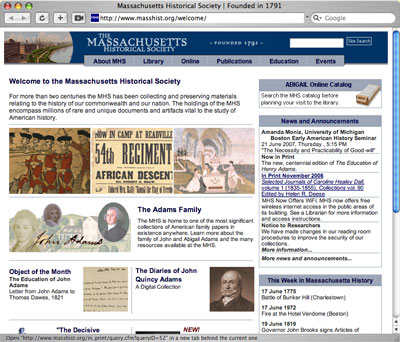
One of the most famous populist crusades against the modern medicine of its time was in 1721 when young Ben Franklin and his older brother James went after the smallpox inoculation policy favored by colonial Boston’s ministerial elite. The Massachusetts Historical Society has an excellent online presentation about the controversy, including images of Ben’s pseudonymous essays from the New England Courant. (Historians help me with some less well-known examples).
But historical context only goes so far, and just because some Founder did it, does not necessarily make it right in every case. So quite likely Dr. Andrew Wakefield really did need to be drummed out of the medical profession [original link to AP story no longer works]:
LONDON — The doctor whose research linking autism and the vaccine for measles, mumps and rubella influenced millions of parents to refuse the shot for their children was banned Monday from practicing medicine in his native Britain.
Dr. Andrew Wakefield’s 1998 study was discredited — but vaccination rates have never fully recovered and he continues to enjoy a vocal following, helped in the U.S. by endorsements from celebrities like Jim Carrey and Jenny McCarthy
Wakefield was the first researcher to publish a peer-reviewed study suggesting a connection between autism and the vaccine for measles, mumps and rubella. Legions of parents abandoned the vaccine, leading to a resurgence of measles in Western countries where it had been mostly stamped out. There are outbreaks across Europe every year and sporadic outbreaks in the U.S.
“That is Andrew Wakefield’s legacy,” said Paul Offit, chief of infectious diseases at the Children’s Hospital of Philadelphia. “The hospitalizations and deaths of children from measles who could have easily avoided the disease.”
Wakefield’s discredited theories had a tremendous impact in the U.S., Offit said, adding: “He gave heft to the notion that vaccines in general cause autism.”
In Britain, Wakefield’s research led to a huge decline in the number of children receiving the MMR vaccine: from 95 percent in 1995 — enough to prevent measles outbreaks — to 50 percent in parts of London in the early 2000s. Rates have begun to recover, though not enough to prevent outbreaks. In 2006, a 13-year-old boy became the first person to die from measles in Britain in 14 years.
“The false suggestion of a link between autism and the MMR vaccine has done untold damage to the UK vaccination program,” said Terence Stephenson, president of the Royal College of Paediatrics and Child Health. “Overwhelming scientific evidence shows that it is safe.”
Public-Private Partisanship: The Sources of Media Outrage over the AIG Bonuses
I find it extremely interesting to note what it took, after all of these years of corporate malfeasance and incompetence going back the 90s dot-com bubble, to get the mainstream media into full 24/7 scandal mode on a business story. To get the media spouting “populist” outrage against a corporation, what was needed was for the corporation to become more than 80% publicly-owned. Even now there seems to be a tendency for the media to defer to the pretend private business executives running AIG, and save the journalistic shouting for the president and his underlings. Is bowing to private wealth and autocratic power so ingrained that only the public takeover gave the media “permission” to go after a company? Are the media just capitalist stooges ideologically trying to slough off the private sector’s depredations on to the public servants charged with the impossible task of rectifying them? Or was the mainstream political media (especially the TV and the local press/AP) just too idiotic to do anything with a complex business story until it could be reduced to the rote terms of the post- (and sub-Watergate) D.C. political scandal: what-did-the-president-know-and-when-did-he-know-it? Or there is something deeper at work here, having to do with the demonization of governmental authority that the American Revolution (as read by some guy called Bailyn) built into our republic’s DNA?
Possibly the answer is some of all of the above. It is not an original thought with me to note that the final separation of American Christianity from government around 1820 (except for certain missionary groups) seemed to do wonders for Christianity’s popular appeal and cultural power. As Lyman Beecher finally realized, New England Congregationalism’s overt association with the region’s governing elite, and its tax structure, had only weighed it down. Their churches no longer supported by government revenues, Yankee Protestants created a “Benevolent Empire” of eleemosynary institutions and voluntary societies, like the newly private colleges and many social reform associations that popped up in the 19th century, that gained various special protections from government even as they became tremendous forces for shaping public policy.
It’s almost as if the more privatized and immune to public oversight an institution becomes in American culture the more sacrosanct it is, and, as in the AIG case, vice versa. It’s almost as if no one actually believes we have a system of self-government.
At Least You’re Not Travelling by Steamboat
As I may have mentioned before, I am teaching our History of Missouri course for the first time this semester, not a thrill for most I suppose but something I wanted to do because this region’s weird past was probably what first got me seriously interested in American history as a kid. Putting together my lectures I have been re-informing myself on many favorite topics and discovering some interesting items to share with the class.
For instance, I have been reminded that steamboats were possibly the most dangerous form of powered travel ever invented. Floating palaces of occasional scalding death, those things were, when they didn’t sink, run aground, or out of fuel. At any rate, I thought this page from University of Northern Iowa, “Helpful Hints For Steamboat Passengers” was fairly informative and clever. It admits to being made-up in the first few sentences but when I first found the page I missed that and thought for a while that someone had posted an unusually honest piece of 19th-century travel advice literature.
I also had to remind myself about earthquakes. I was looking up the New Madrid Earthquake 1811-1812 specifically, when “the Mississippi River ran backward.” More generally I re-ingested the fact we here in the Nation’s Doughy Midsection live in a California-esque environment, seismically speaking, only without the beaches, the Hollywood glitz, or buildings designed to withstand earthquakes. Here is a somewhat dated but informative video I found (possibly from the U.S. Geological Survey) that lays out the information without the History Channel hype. Check out the discussion of “liquefaction.” A good time will be had by all: Missouri highways already drive like they are paved over liquid.
I saw this public lecture announcement come over one of the early American history email lists and assumed the worst, that someone was blaming New England’s indigenous peoples for Moxie and canned bread, possibly by way of crediting them. But I guess not. Phew! That would be adding insult to injury if I ever saw it.
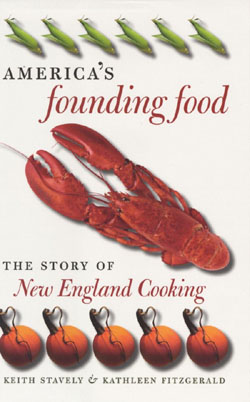
Actually that lecture sounds quite interesting, and if I lived in Connecticut, I would go to it. The phrase “Yankee foodways” just gave me flashbacks to some of our early experiments with the local, um, cuisine when we first moved out there.
January 23, 2009
A Commodious Space for Commodities
Common-place publishes the occasional “Object Lessons” column with good reason: knowing your material culture is important. For instance, when cataloging the office furniture purchases of ex-Merrill-Lynch CEO John Thain, The Consumerist’s Ben Popken makes a horrible mistake, and then corrects himself with the help of a little eighteenth-century know-how.
(hat tip, BPM)
January 21, 2009
Other Voices
I feel as though I am in the proper Obamanian mode of getting beyond the old politics, but the old politics side of me has to agree with David Sanger of the NYT, and even MoDo, that the part of the speech where Obama got in Bush’s face right in front of his face must be appreciated.
A couple of civilian (non-historian) friends also chimed in with their thoughts on Obama’s speech, through the magic of Facebook. My more positive friend C says:
One of the lines that struck me was “The question we ask today is not whether our government is too big or too small, but whether it works.” I thought that was a great way to say that he’s going to approach problems from a very different perspective than we’ve seen recently. I feel like we’ve been dealing with Reagan’s world view for 20+ years, and we finally have someone that can move us past that.
My snarkier friend B emphasizes a line I should have:
Hey Jeff – you know, I look forward to 8 years of being disappointed in a president I thought could be better versus 8 years of being outraged at a president I didn’t think could be any worse. Obama as the great orator is almost as much a myth manufactured by his political adversaries as the notion that he is a radical liberal or socialist – he’ll never live up to the McCain hype. Yet I shed more than one or two tears when Aretha was singing – something real was going on today. You know, with Bush and the president (Cheney) sitting there on the same stage, I was reminded of Colbert’s roast from a few years ago more than once today as Obama spoke. One of those moments for me was the section that started:
“As for our common defense, we reject as false the choice between our safety and our ideals.”
Hey Hey Goodbye
January 20, 2009
Grow Up, America: Choose Our Better History
I have long thought that now-President Obama’s reputation as an orator was little inflated, more by a media and public starved for a leader who could speak in complete sentences and cogent thoughts than by the man himself. That is an observation, not a criticism. My short speech-writing period left me with a very lively sense of how hard and ill-advised it is for a real modern human being to write or speak like a JFK film clip. Lots of Democratic politicians have hurt themselves rhetorically by trying to channel JFK. When they try MLK, it is generally even worse.
Today’s inaugural address was much like Obama’s convention acceptance speech in wisely avoiding Sorensenian flights of inspirational rhetoric and preacherly flourishes, but instead presenting liberal values and a post-imperial world view in forms that Americans raised on decades of Reaganism might be able to accept. Here is a passage that struck me:
We remain a young nation, but in the words of Scripture, the time has come to set aside childish things. The time has come to reaffirm our enduring spirit; to choose our better history; to carry forward that precious gift, that noble idea, passed on from generation to generation: the God-given promise that all are equal, all are free, and all deserve a chance to pursue their full measure of happiness.
In reaffirming the greatness of our nation, we understand that greatness is never a given. It must be earned. Our journey has never been one of short-cuts or settling for less. It has not been the path for the faint-hearted – for those who prefer leisure over work, or seek only the pleasures of riches and fame. Rather, it has been the risk-takers, the doers, the makers of things – some celebrated but more often men and women obscure in their labor, who have carried us up the long, rugged path towards prosperity and freedom.
Nothing special there rhetorically — even the nice “better history” line turns out to be recycled from Obama’s late campaign stump speech. Yet what he was saying what rather noteworthy, coming from a U.S. president. Here and in other parts of the speech, the infantile exceptionalism that has become nearly our national creed was quietly but firmly rejected. Our freedom, wealth, and power relative to other nations do not exempt us from the exigencies of history or the rules of morality, Obama declared. Quite the contrary. We are not authorized to “do as we please” just because we are America; our activities have an impact on other peoples that must be taken into account, and that accounting must modify our behavior. Poverty, injustice, fear, evil, and incompetence all exist in modern America and as part of our tradition. We can and must choose our “better history,” and also choose not to dwell on the worst, but the worst is still there, some it of sitting on the inaugural dais, in a wheelchair.
As in the convention speech, there was also a distinctly liberal economic message in Obama’s inaugural address, but delivered in so mild and sensible a fashion as to be almost impossible for all but the most hardened ideologues to disagree with. The free market is a powerful tool for generating wealth, but it cannot work properly without the “watchful eye” of government. Otherwise the market will “spin out of control.” The last line quoted above, about “the risk-takers, the doers, the makers of things” was one that many listeners (including Fox’s Brit Hume) probably heard as a shout-out to capitalist entrepreneurs. What it really was, or perhaps simultaneously acted as, was a little restatement of the labor theory of value that can be linked back to the producerism that has been the heart of so many past radical movements in American history. True wealth was not created by amassing “riches,” Obama argued, but instead by making things through our labors.
I make no claim that there is anything radical about Obama, or even Populist, and I worry about the Wall Street/Ivy League establishmentarians he has guiding his economic policy here at the outset. Yet he does represent and express the better part of our historical political tradition. I am happy that we chose it and look forward to the day when it does not take a national crisis to bring some of those better angels out.
President Obama (wow.) just gave his inaugural address, with an unattributed quote:
So let us mark this day with remembrance, of who we are and how far we have traveled. In the year of America’s birth, in the coldest of months, a small band of patriots huddled by dying campfires on the shores of an icy river. The capital was abandoned. The enemy was advancing. The snow was stained with blood. At a moment when the outcome of our revolution was most in doubt, the father of our nation ordered these words be read to the people:
“Let it be told to the future world…that in the depth of winter, when nothing but hope and virtue could survive…that the city and the country, alarmed at one common danger, came forth to meet [it].”
Obama seemed (at least to the tv talking heads) to imply that these were George Washington’s words, but the quote is from the first of Thomas Paine’s papers entitled The American Crisis. I also think some people may have jumped to the conclusion that this was the Valley Forge winter, but Obama is referring to December 1776, when Washington was about to lose much of his army to expiring enlistments, and the Battles of Trenton and Princeton had not yet taken place. The particular paragraph from which this quote is drawn is actually quite a belligerent passage.
Well, it’s a new administration, and an exciting day. I’m looking forward to tomorrow, when the pomp will be over and the country can get to work.
January 18, 2009
Power and Responsibility: What Barack Obama Learned from Peter Parker
This undated handout image provided Marvel Comics shows the cover of The Amazing Spider-Man featuring President-elect Barack Obama. (AP Photo/Marvel Comics)
We’re all aware that this is a huge moment in the social history of the presidency — first African-American president, first president born after 1960, etc. — but it’s also an interesting moment in the cultural history of the presidency. Doubtless most readers have seen the publicity about Barack Obama’s appearance in the current issue of Amazing Spider-Man, which Marvel Comics editor-in-chief Joe Quesada described as a “shout-out back” to a president-elect who was outed as a former comic collector some time ago. [Read some of the key panels here.] What we didn’t know was that the idiom of the comics our generation (”X ” or Jones or whatever) grew up with had become part of his political language. Actually, I suspected as much, but today we have proof.
“I want every child to understand that the blessings these brave Americans fight for are not free-that with the great privilege of being a citizen of this nation comes great responsibility.”
This is a paraphrase of Spider-Man’s motto — “With great power comes great responsbility” first presented in Spidey’s origin story from Amazing Fantasy #15 [see below] and repeated frequently thereafter. It was the guiding philosophy not only for Peter, who gave up his career to stay home and help, er, organize his community, but for the whole Marvel superhero line. Spider-Man, the Fantastic Four, Captain America, the X-Men and the rest regularly fought right-wing demagogues, racists, neo-Nazis, war profiteers, and colonialists along with the Green Goblin and Doctor Doom, who come to think of it were good enemies for a liberal hero, too, an irresponsible businessman and an unreconstructed monarchist, respectively.
Sure that “responsibility” line was in the movie, too, but I feel quite certain that Obama first read it in the original. And he also may not be the only member of his generation to pick up some of his liberal ideas from the House of Ideas [one of Stan Lee’s many nick-names for his company]. One idea in particular was that a decent person or nation had a duty to do something with whatever gifts it had been given — freedom, a sharp mind, spider-powers, a nuclear arsenal, or whatever — besides showing off. I do believe today was the first time Parade Magazine ever choked me up.
Common-Place Politics Issue Heads to the Archives
“Beyond the Valley of the Founders,” the Common-Place Politics Issue that tookup quite a bit of the last half of my 2008, has just been sent to the C-P archives by the first issue of 2009. Never fear, however, the politics is still available to read and comment on, and remains eternally relevant. We are not even done with the “Myths of the Lost Atlantis” series yet! Readers just discovering this blog should be particularly sure to go back and look the Politics Issue .
This is also a good moment to express our gratitude to outgoing Common-Place editor Ed Gray, whose efficiency, editorial skill and astounding patience and diplomacy in dealing with troublesome authors and guest editors has really kept this unique enterprise going the last 5 years. I am sure he is already enjoying his greatly-reduced email load.
Common-Place editor and blogger in Milan, celebrating completion of Common-Place Politics Issue conferring on Thomas Paine.
One of the Early Republic-themed (or -named) bands mentioned in an earlier post are on tour. That’s right, The Henry Clay People are coming to a city near you. (They seem to have chosen the Des Moines rather than Columbia/St. Louis route across, often an either/or matter, so I may have to give them a miss.) I am not entirely sold on these guys musically, but maybe someone’s Dad is a historian, so we should support them. Listen here, and below. The album the HCP is touring behind is here. Unfortunately they are not touring with the not previously-mentioned The Whigs, who are also on the road. (Listen to the Whiggery here.) This band does have amusing link that allows you to “Join the Whig Party,” which seems to involve period-inaccurate costumes. Both these band seem to espouse fairly traditional rock values, which is somewhat Whig-like.
The friend of my enemy is not someone I want anything to do with
This not a real proverb, but a political principle that it does not take much of an historian to see applies to the attitudes of pretty much every colonial people or small nation whose territory has been invaded since the dawn of modern nationalism, at least. Nobody likes getting their homes bombed, their cities overrun by foreign troops, their friends, neighbors, and relatives traumatized, maimed, or killed. People remember that stuff, and they tend not to look kindly on the politicians and officials who get installed or helped into power by the invaders, perhaps especially if the officials of the new regime are natives of the invaded territory.
Shall we recall a U.S. example? Let’s. In American schools, we used to learn a name for what the defeated Confederates called those who staffed the Reconstruction regimes: “scalawags,” “carpetbaggers,” and lots of worse things. We were not taught to admire those fellows. As we know from Eric Foner and other post-”revisionist” historians of Reconstruction, many of these officials were not grafters and traitors, but honest reformers trying to help the people of the South and improve their society and economy. Nevertheless, despite these noble intentions, the new regimes required the federal government’s protection to be stable and inspired a rather famous terrorist insurgency called the Ku Klux Klan. Once outside support was withdrawn, the South was immediately “redeemed” by the same people who started the CIvil War in the first place.
Of course, the more relevant example for the present-day issues of this type would be the politics of every post-colonial nation one can think of except Canada, Australia, and New Zealand: the sure path to political popularity and power in such countries was virulent opposition to the continuing influence of the old colonial power, even if such opposition was likely to be counter-productive. There was this early American politician called Jefferson who ended up president in no small degreee because he was the leading opponent of a non-anti-British foreign policy.
So, given this sort of historical experience, why would any policy-maker expect massively destructive invasions by overwhelmingly superior forces in isolated, beaten-down places like Gaza and Iraq to result in the people of those places warmly accepting regimes that the invaders helped to install? Yet the failure of the Iraqi people to do just this is Dick Cheney’s only regret about the Iraq War — and not because he was wrong to expect it, but because of their supposedly damaged psyches.
Even more incredibly, the Israelis apparently thought that crushing Gaza was going to give their favored party, the secular Palestinian Authority, the chance to win power back from Hamas. From the New York Times:
This not a real proverb, but a political principle that it does not take much of an historian to see applies to the attitudes of pretty much every colonial people or small nation whose territory has been invaded since the dawn of modern nationalism, at least. Nobody likes getting their homes bombed, their cities overrun by foreign troops, their friends, neighbors, and relatives traumatized, maimed, or killed. People remember that stuff, and they tend not to look kindly on the politicians and officials who get installed or helped into power by the invaders, perhaps especially if the officials of the new regime are natives of the invaded territory.
Shall we recall a U.S. example? Let’s. In American schools, we used to learn a name for what the defeated Confederates called those who staffed the Reconstruction regimes: “scalawags,” “carpetbaggers,” and lots of worse things. We were not taught to admire those fellows. As we know from Eric Foner and other post-”revisionist” historians of Reconstruction, many of these officials were not grafters and traitors, but honest reformers trying to help the people of the South and improve their society and economy. Nevertheless, despite these noble intentions, the new regimes required the federal government’s protection to be stable and inspired a rather famous terrorist insurgency called the Ku Klux Klan. Once outside support was withdrawn, the South was immediately “redeemed” by the same people who started the CIvil War in the first place.
Of course, the more relevant example for the present-day issues of this type would be the politics of every post-colonial nation one can think of except Canada, Australia, and New Zealand: the sure path to political popularity and power in such countries was virulent opposition to the continuing influence of the old colonial power, even if such opposition was likely to be counter-productive. There was this early American politician called Jefferson who ended up president in no small degreee because he was the leading opponent of a non-anti-British foreign policy.
So, given this sort of historical experience, why would any policy-maker expect massively destructive invasions by overwhelmingly superior forces in isolated, beaten-down places like Gaza and Iraq to result in the people of those places warmly accepting regimes that the invaders helped to install? Yet the failure of the Iraqi people to do just this is Dick Cheney’s only regret about the Iraq War — and not because he was wrong to expect it, but because of their supposedly damaged psyches.
Even more incredibly, the Israelis apparently thought that crushing Gaza was going to give their favored party, the secular Palestinian Authority, the chance to win power back from Hamas. From the New York Times:
JERUSALEM — Israel hoped that the war in Gaza would not only cripple Hamas, but eventually strengthen its secular rival, the Palestinian Authority, and even allow it to claw its way back into Gaza.
But with each day, the authority, its leader, Mahmoud Abbas, and its leading party, Fatah, seem increasingly beleaguered and marginalized, even in the Palestinian cities of the West Bank, which they control. Protesters accuse Mr. Abbas of not doing enough to stop the carnage in Gaza — indeed, his own police officers have used clubs and tear gas against those same protesters.
The more bombs in Gaza, the more Hamas’s support seems to be growing at the expense of the Palestinian Authority, already considered corrupt and distant from average Palestinians.
“The Palestinian Authority is one of the main losers in this war,” said Ghassan Khatib, an independent Palestinian analyst in the West Bank city of Ramallah. “How can it make gains in a war in which it is one of the casualties?”
Israel is proposing, with the tacit agreement of Egypt and the United States, to place the Palestinian Authority at the heart of an ambitious program to rebuild Gaza, administering reconstruction aid and securing Gaza’s borders. But that plan is already drawing skepticism. Mr. Khatib, for example, called the idea of any Palestinian Authority role in postwar Gaza “silly” and “naïve.”
Perhaps more dispiriting to the ever fewer who believe that any overall settlement is possible now — with peace negotiations suspended and Palestinians divided between Hamas in Gaza and the Palestinian Authority in the West Bank — is that Israel itself does not really hold out high hopes for a larger postwar role for Fatah. Israel’s proposals seem dutiful, an acknowledgment of a stalemate that not even so ferocious an assault on Hamas can undo.
“There are not too many realistic ideas around,” conceded Yigal Palmor, a spokesman for the Israeli Foreign Ministry. The reason: Most ideas, he said, largely rely “on the good will of Hamas.” That may be in short supply, because Hamas, deeply embedded in Gazan society both as a fighting force and a provider of social services, seems highly likely to survive in some form after this war.
Ever since Hamas began its one-party rule of Gaza, in the summer of 2007, Israel and the West have tried to turn Gazans against Hamas through an economic embargo and diplomatic isolation. While there is certainly anger at Hamas among Gazans, it pales beside the anger at Israel, the West and what some see as Fatah’s collusion with those enemies.
Mr. Abbas and his loyalists have not entered Gaza since 2007, when they were ousted by Hamas, which took over the area after a brief but ruthless factional war. They are now hoping that the Egyptian cease-fire initiative will serve as a vehicle to regain a foothold there.
Of course, not only has the Israeli attack on Gaza not destroyed Hamas or reinstalled Fatah, it has not even stopped the rocket fire into Israel that was the main justification for the invasion. And, really, what should we expect? What if it were U.S. southern or rural white men involved in a similar situation; what would we expect? I know there is some quotation I should be using here, but I imagine if their country had been invaded, we would expect that southern white men would consider it their duty to keep firing rockets as long as they still had the gasoline and fingers to do it with. Fight to the end, and beyond: it’s one of the master narratives of American male culture, embodied in Birth of a Nation,The Patriot, Red Dawn, most of the early World War II films, and thousands of other popular American stories.
There’s a word for the assumption that another people will react differently (more submissively) than your own to violent coercion: racist. I am not in the habit of pointing that particular finger, but it really seems to fit in the case of the thinking that underlies U.S. and Israeli policy toward the Palestinians and the rest of the Muslim world.
These blog posts originally appeared in issues 9.2-9.3 (January, 2009-April, 2009).
Jeffrey L. Pasley is associate professor of history at the University of Missouri and the author of “The Tyranny of Printers”: Newspaper Politics in the Early American Republic (2001), along with numerous articles and book chapters, most recently the entry on Philip Freneau in Greil Marcus’s forthcoming New Literary History of America. He is currently completing a book on the presidential election of 1796 for the University Press of Kansas and also writes the blog Publick Occurrences 2.0 for some Website called Common-place.
Wyoming Caucuses Primary Source Special: Gore ‘88
<<One of many glamorous moments of the 1988 Al Gore campaign that I did not see.
Scene of my big campaign moment. I was not there either. >>
In honor of Obama’s Wyoming caucus win, I am going to reveal the prominent role of the Wyoming caucuses in my own personal history. 20 years ago, I was working as the junior speechwriter on current national treasure, then premature centrist Al Gore’s presidential campaign. I was in way over my head on several counts, and not doing the sort of glamorous, power-behind-the-throne work that people seem to associate with speechwriting. For the most part, I stayed in D.C. cranking out talking points and local situation reports and terrible, terrible jokes for momentary appearances Gore was making at places like the Council of Jewish Organizations of Borough Park and the Dalton, Georgia Rotary Club, never knowing whether anything I was writing was actually issuing from the candidate’s mouth. The likely answer was probably not, at least not more than a line or two that might have made it in his standard stump speech. Other, more important people were writing the formal addresses that actually got read. I was not producing anything that was really worth saying out loud anyway.
That is, except for Wyoming. Gore’s whole 1988 race was predicated on sweeping the original Super Tuesday primaries, which were concentrated in the South and set up to infuse more southern, centrist influence into the Democratic nominating process. In other words, it was supposed to help some white southern hawk-ish type win the nomination, and Al hoped to be that type. Funny story, Jesse Jackson won a bunch of those Super Tuesday primaries, I needed a new job by April, and then the Soviet Empire collapsed, taking much of Gore’s raison d’etre as a candidate with it. (The environmental thing was not much in evidence then, at least not in the campaign.) Long story short, Gore 1988 did not go down as one of the more world-historical presidential campaigns ever chronicled.
On to Wyoming. At some too-late date, the Gore braintrust realized that the whole Super Tuesday gamble might not work out exactly as they had planned and decided to contest some states outside of the South and Northeast. (They had already Guiliani-ed Iowa.) As it turned out, Wyoming was one of two states outside the South that he actually won. This did Gore about as much good as today’s win is likely to do Obama, though I hope otherwise. Wyoming was a big deal to me, however, because for whatever reason they let me write the big speech there, the one that actually got read apparently more or less verbatim. It was at the historic Union Pacific Depot in downtown Cheyenne, and while I did not actually get to go there, I did know it got read (confirming hearsay) because some of my lines were quoted in a news story the next day.
That was a thrill, but it also helped make the decision I was ruminating over at the time about whether I was staying in D.C. politics and journalism after the campaign, or going on to grad school. Upon further review, it seemed sort of pathetic to be thrilled that I had written some words were said by someone else, with almost no one actually knowing about it besides myself and 2 or 3 others directly involved. I was not feeling the insider jollies that DC lifers seem to thrive on, and it dawned that relative obscurity in my own name (academia!) appealed more than getting my words on front page or TV news in someone else’s. What’s more, the speech that won Wyoming — if Hillary brought peace to Northern Ireland, then this is the least I can claim — had been more interesting than most of what I done for Gore because I got what then seemed very deep into the historical background for it. I had checked out some Wyoming books from the DC public library and written all this jazz about Democrats going west with the railroads, the western progressive tradition, etc. As a speechwriter, it seemed, I was a better and more enthusiastic historian than I had ever been with the boilerplate political verbiage.
At any rate, I dug out Al Gore’s historic Union Pacific Depot address out of my files and scanned it for the amazement of the reading public and those sadly obsessed with past political minutiae. You can see the actual antique printer edition here, with a bonus speech written for Casper, Wyoming that I will bet he did not read — prostitutes were mentioned. Or, read on:
Remarks of
Senator Albert Gore Jr.
Union Pacific Depot Speech
Cheyenne, Wyoming–January 28, 1988
draft
I can’t think of a better place to talk about revitalizing the Democratic party than the Union Pacific Depot in Cheyenne, Wyoming. Democrats built the Union Pacific and the state of Wyoming along with it. I’m not talking about the Republican barons who made their money in the West so they could live fabulously back East. I mean the hard-working, rough-hewn men who came West to lay down the tracks and then stayed here to live.
This was not an easy land to tame. Before the white man arrived, probably no more than 10,000 Native Americans lived here. Even the buffalo found it difficult to survive. Many of the people who came with the railroad couldn’t face the challenge of putting down roots. By the time the Union Pacific was finished in 1869, many of the workers vanished and Wyoming’s population dropped to only half what it had been a year earlier. Even today, there is a square mile of land for every family in the state.
But hard winters and high winds make for strong and independent people, and maybe that accounts for Wyoming’s great progressive tradition. Democrats settled the towns along the U.P. line in southern Wyoming. When Wyoming’s first territorial legislature met in 1869, every member–all twenty-one–were Democrats. Now that’s the way to get things done.
That remarkable assembly became the first government in the history of the world to give women the right to vote and hold public office. The Republican governor tried to stall, but a certain Mrs. Morton E. Post and her friends camped in the governor’s living room and refused to leave until he had signed the bill.
That same all-Democratic legislature granted married women control of their own property and earnings, and equal treatment under the inheritance laws. It mandated equal pay for equally qualified female school teachers. Luckily for them, Ed Meese had not yet taken office in 1869.
At a time when it was said in some Western states that no one knew whether the state was being run out of the Capitol or the Union Pacific Building, that first legislature stood up to the railroad. It passed laws to force U.P. to stand by its obligations to the citizens and smaller competitors. That’s the kind of tradition you have here in Wyoming, that continues today in the persons of progressive state officials like my friend Ed Herschler, current Governor Mike Sullivan, Secretary of State Kathy Karpan, and Superintendent of Public Instruction Lynn Simons.
It’s a tradition I like to think I share. I grew up in Carthage, Tennessee, a few miles from the home of Andrew Jackson, the very first Western Democrat. Tennessee was the Wild West in Jackson’s day. Old Hickory was swept into the White House on a tide of votes from the West and South. He took power away from a narrow minority and, for the first time in the history of our country, gave it to ordinary people in all parts of the young nation. Andrew Jackson made the United States once and for all a democracy –of and by the people as well as for them.
Where I come from and where you come from, that is what the Democratic party means. As Democrats, we are proud to be the party of the people, not the powerful–the party of national interests, not narrow interests.
But recent years have brought hard times for Democrats in the West. When was the last time a Democratic nominee carried Wyoming? 1964. There are 23 states that the Republicans have carried in the last five elections–including Wyoming and all its neighbors. There isn’t a single state that we Democrats have carried five times running. Democrats can’t afford to write off those 23 states for another 24 years.
If we are going to win back the White House in 1988, we’ll have to do things differently this time. We’ve got to reach out to ordinary voters, and bring back the young Americans and middle-class voters who were once the strength of the Democratic party.
I’m concerned about America’s future. That’s why I can’t go along with my opponents in supporting ideas that are good politics in one place but bad policy for the country.
I’m not going to play that game. I don’t think our party can afford to play that game. I’m running for President of the United States, not President of Iowa.
But the process will be different this time. The battle for our party’s nomination won’t be won or lost in the first week of the election season; the issue won’t be decided before the West and South get a chance to be heard.
My home state has banded with a number of other states in every region to hold all our primaries on Super Tuesday–March 8- three days after your Wyoming caucuses. This is our chance to make a difference again and return to our party’s roots. More than that, it is our chance to make the candidates address the problems faced by the regions that have been shut out of the nomination process up til now.
**** We need to talk about economic development policies that make sense for the West and South.
**** We need a national energy policy that puts Americans back to work and insures that domestic oil and gas producers will never take a back seat to countries like Libya and Iran. We also need a long-range policy to develop new ways to use our other resources, especially our coal reserves.
**** We need to make sure that people in the less populated regions of the country have access to basic services at reasonable prices. In my home town and yours, the Reagan-Bush administration’s rush to deregulation has crippled transportation systems, with devastating effects on economic development. We must establish and promote a system of incentives for the development of safe and reliable air, bus and rail freight transportation for smaller communities. I have fought to link regulatory concessions to major transportation companies to their willingness to serve rural America. It’s a shame no passengers can travel through this beautiful depot anymore.
Most of all, we need to elect a Democratic President in the fall. America’s workers and ranchers and teachers need a friend in the White House, not another Republican landslide. When we go to the polls next March, we should look for the candidate who can win next November. We can compete in every part of this country. We can be a party for all regions. We have done it before. Andrew Jackson carried every state in the South and the West. So did Franklin Roosevelt.
I am travelling the old Union Pacific route this week, through the Democratic heart of the west, starting here in Cheyenne today and going on to Laramie and Rock Springs tomorrow. I hope my course will lead your state and region back to my party. In October, I told you I would not forget Wyoming after the caucuses are over; I repeat that pledge now. I intend to retrace these steps to make sure that Wyoming sends a Democrat to the White House–and a Democrat to the Senate–in November.
–end-
This article originally appeared in issue 8.3 (April, 2008).
Jeffrey L. Pasley is associate professor of history at the University of Missouri and the author of “The Tyranny of Printers”: Newspaper Politics in the Early American Republic (2001), along with numerous articles and book chapters, most recently the entry on Philip Freneau in Greil Marcus’s forthcoming New Literary History of America. He is currently completing a book on the presidential election of 1796 for the University Press of Kansas and also writes the blog Publick Occurrences 2.0 for some Website called Common-place.
Don’t Mess with Us, Texas
I am driving off to the Society for Historians of the Early Republic (SHEAR) annual meeting in beautiful downtown Springfield, Illinois, this morning. Worthwhile national history conferences in easy ground transportation range of mid-Missouri are something of a rarity, so I would not miss it. Perhaps I will “live blog” some of the proceedings. Also, perhaps I won’t.
Just one brief item before I go: Dan Mandell of Truman State called my attention to a Wall Street Journal article discussing the latest target for Texas shootin’ irons in the educational culture wars: our own field of U.S. history. This kind of history standards debate is not new, of course — we can say a little prayer of thanks that Lynne Cheney never got her own CIA hit squad, or whatever Dick’s most recently revealed scheme turns out to have been. Yet back in the day, it was usually conservatives complaining about what was left out of the National History Standards; in present-day Texas, they are looking to put a tendentiously right-wing Christian view of American history into the public schools. The agenda seems to go considerably beyond LCheney-like complaints about the insufficient love given to George Washington. I will supply some key passages for myself or others to take up in the comments or later. The whole thing is worth reading, if you are feeling calm:
The fight over school curriculum in Texas, recently focused on biology, has entered a new arena, with a brewing debate over how much faith belongs in American history classrooms.
The Texas Board of Education, which recently approved new science standards that made room for creationist critiques of evolution, is revising the state’s social studies curriculum. In early recommendations from outside experts appointed by the board, a divide has opened over how central religious theology should be to the teaching of history.
Three reviewers, appointed by social conservatives, have recommended revamping the K-12 curriculum to emphasize the roles of the Bible, the Christian faith, and the civic virtue of religion in the study of American history. Two of them want to remove or de-emphasize references to several historical figures who have become liberal icons, such as César Chávez and Thurgood Marshall.
“We’re in an all-out moral and spiritual civil war for the soul of America, and the record of American history is right at the heart of it,” said Rev. Peter Marshall, a Christian minister and one of the reviewers appointed by the conservative camp. . . .
The three reviewers appointed by the moderate and liberal board members are all professors of history or education at Texas universities, including Mr. de la Teja, a former state historian. The reviewers appointed by conservatives include two who run conservative Christian organizations: David Barton, founder of WallBuilders, a group that promotes America’s Christian heritage; and Rev. Marshall, who preaches that Watergate, the Vietnam War, and Hurricane Katrina were God’s judgments on the nation’s sexual immorality. The third is Daniel Dreisbach, a professor of public affairs at American University.
The conservative reviewers say they believe that children must learn that America’s founding principles are biblical. For instance, they say the separation of powers set forth in the Constitution stems from a scriptural understanding of man’s fall and inherent sinfulness, or “radical depravity,” which means he can be governed only by an intricate system of checks and balances.
Colonial historians, would you like to take a guess about what figure some of the Texas reviewers wanted removed from the curriculum, apparently as part of this biblical program? From the specific suggestions listed at the end of the story:
Delete Anne Hutchinson from a list of colonial leaders
Students learn about colonial history in the fifth grade, and three reviewers suggested that the standards not include Anne Hutchinson, a 17th century figure, among a list of significant leaders. Ms. Hutchinson was exiled from the Massachusetts Bay Colony for teaching religious views at odds with the officially sanctioned faith.
So rebellious female Christians just don’t count when it comes to America’s biblical principles, and/or Puritan orthodoxy is alive and well deep in the heart of Texas. I don’t think that’s what Bob Wills intended, do you?
This article originally appeared in issue 9.4 (January, 2009).
Jeffrey L. Pasley is associate professor of history at the University of Missouri and the author of “The Tyranny of Printers”: Newspaper Politics in the Early American Republic (2001), along with numerous articles and book chapters, most recently the entry on Philip Freneau in Greil Marcus’s forthcoming New Literary History of America. He is currently completing a book on the presidential election of 1796 for the University Press of Kansas and also writes the blog Publick Occurrences 2.0 for some Website called Common-place.
The Spanish Empire and the Seven Years’ War
One of Fred Anderson’s goals in Crucible of War is to stimulate discussion about the place of the Seven Years’ War in American and eighteenth-century history. By showing how the insights of recent scholarship can be incorporated into a new narrative synthesis, and by revealing problems that historians have not yet resolved, Anderson has called attention to some fruitful avenues for future research. One of these concerns the role of Spain’s American empire in the origins of the Seven Years’ War.
Anderson focuses his narrative on the “the forty-year-long effort to subject the Ohio Country, and with it the rest of the Transappalachian west, to [British] imperial control.” In his discussion of events pertinent to the valley, Anderson devotes the better part of his attention to the colonies and government of the British empire; a great deal of attention to the Indian nations involved in the causes, course, and consequences of the Seven Years’ War; and considerable attention to Britain’s French imperial adversary. He mentions the Spanish empire only in passing. In many ways, the Ohio Valley is a good choice for the book’s narrative focus. A succession of significant events occurred there, and some of the most impressive recent scholarship concerning the Seven Years’ War discusses Native Americans and Europeans who were active in the region. But centering an account of a global war on an American river valley also raises questions. The hostilities that triggered the American portion of the Seven Years’ War began in the Ohio Valley, and the war was fought in part for imperial possession of the region. But was the war really about the Ohio Valley itself? A close examination of Anderson’s descriptions of British policy and of contemporary French interpretations of British conduct indicates that the Ohio Valley region may have derived much of its importance from its relation to British and French interest in the wealth of the Spanish empire in the Americas.
Consider first the curious combination of warlike behavior and war-weary sentiment that characterized British North American policy in the mid-1750s. Anderson demonstrates the militancy that formed one aspect of this policy. By October 1754, the British plan for operations in North America included an advance on the French forts in the Ohio country, and the destruction of French forts on Lake Ontario, Lake Champlain, and the Nova Scotia isthmus. In early 1755, General Braddock and two regiments of British troops arrived in Virginia. That spring, British ships tried to intercept French reinforcements bound for Canada. In July 1755, Braddock’s advance into the Ohio country culminated in the Battle of the Monongahela. This all occurred before an official declaration of war.
As Anderson observes, in spite of the apparent bellicosity of these actions, prominent figures in the British government still hoped to prevent or contain renewed Anglo-French hostilities. The recently concluded War of the Austrian Succession had given Britain little in return for the thousands of lives and millions of pounds lavished on the conflict, and thus had dampened British enthusiasm for a new war. Moreover, with this recent demonstration of the rising costs of eighteenth-century European warfare in mind, British officials could anticipate that another large-scale war with France could only worsen the state of British public finances. (They were right to worry: British governmental debt climbed to about £146,000,000 by the end of the Seven Years’ War.) [1] The Duke of Newcastle hoped that resolute British action in America would persuade French officials to abandon their attempts to expand into areas such as the Ohio Valley, thereby reducing the danger of a full-scale Anglo-French war in North America. At the same time, a “System” of British financial subsidies, diplomatic overtures, and defensive alliances in Europe would discourage France from extending North American hostilities to the European continent. Nonetheless, although prominent British officials may have hoped to avoid a general war with France, British attacks on French forts and French troop ships could not help but risk provoking one. What persuaded Whitehall that taking this chance was worthwhile?
Anderson mentions two considerations animating Britain’s assertive North America policy, but they alone seem insufficient to explain the degree of British pugnacity that was evident in the mid-1750s. He points first to a fear on the part of British imperial officials that a French cordon in the trans-Appalachian west would raise the “prospect of a burgeoning [British] colonial population indefinitely confined to the lands between the Appalachian barrier and the Atlantic, where demographic growth would inevitably drive down wages to the point that Americans would compete with British manufacturers, rather than consuming their wares” (17). Anderson notes later, however, that British officials themselves would, in the 1760s, seek to prevent British colonists from expanding into the lands west of the Appalachians. Britain could have allowed its colonists to settle beyond the mountains sometime in the future, but Halifax’s plan, officially promulgated as the Royal Proclamation of 1763, shows at least that expansion into the trans-Appalachian west was not an urgent and continuous priority of the British government.
Anderson suggests a second concern that was driving British North American policy in the early and mid-1750s: the British government did not “relish the stationing of expensive army and navy detachments in America as bulwarks against French aggression” (17). It is not clear, however, that courses of action envisioned by British statesmen before the war could have obviated the need for such detachments. British officials knew that no immediately foreseeable war would eliminate all of the Indian peoples in North America that were potentially hostile to British settlers; so some threats to the colonies would remain, regardless of the outcome of a war between Britain and France. More importantly, as Anderson suggests, few British officials in the early and mid-1750s were contemplating the eviction of the French empire from mainland North America. Anderson calls Pitt’s interest in doing so “by far the most original and distinctive aspect” of his December 1757 plan for the conduct of the war, and he notes that Pitt’s later scheme to strip France of its colonies made others in Whitehall uneasy. If Pitt’s desire to drive the French from North America was exceptional, then most British officials in the mid-1750s must have expected some kind of continued French presence in North America after the war, and, along with it, a possible need for a continued, expensive, imperial role in the defense of the British colonies there. Anderson’s account of British conduct during and after the war weakens his explanation for the aggressiveness of British North American policy before the war.
What, then, accounts for this aggressiveness? A look at the ideas of French officials provides some insight into the underlying reasons for the combativeness of British conduct and for the diplomatic prominence of the Ohio Valley in the 1750s. A February 1755 letter from the French minister of foreign affairs, Antoine-Louis Rouillé, to the French ambassador in Spain, the duc de Duras, offers one example of a French attempt to understand British intentions. In it, Rouillé asked about the reasons behind recent British actions in North America:
Are our possessions in America the unique object of the jealousy, the ambition, and the cupidity of the English? One need only cast one’s eyes on a map to be left with no doubt about the designs of England. The territory of the Ohio which forms the subject of the current discussions does not approach in value the amount that the court of London is expending on armaments, and the nation would not pardon the ministry for engaging in a war of which all the advantage was limited to a portion of a barren and wild country where it is not possible to establish a lucrative commerce. The supposed rights to the Ohio are nothing but a mask artificially contrived to cover the true objective intended. It is at the possessions of Spain that the English wish to arrive. [2]
Rouillé went on to say that Britain wanted to remove the barrier that the French colony of Louisiana interposed between the British colonies and Mexico. Control of the Ohio Valley would enable the British empire to cut communications between Louisiana and Canada, thereby allowing it to conquer either vulnerable French colony as it pleased. With the French empire in North America eviscerated, British soldiers and merchants could move overland towards Mexico’s northern frontier, or down the Ohio and Mississippi Rivers to the Gulf of Mexico and its Spanish coastal cities.
Why might French officials have thought that British North American policy aimed in this fashion at the Spanish empire? One reason was that Spanish America constituted a crucial market for European goods. Its population was large, far greater than that of the British colonies in North America. In 1800, a year for which good comparative statistics are available, the population of the United States was about 5.3 million, while that of Spanish America was between 13 and 17 million. [3] In the early 1750s, before the extraordinary post-1763 growth in the population of eastern North America, the disparity would have been greater still. Moreover, Spanish America was the only market of the mid-eighteenth century that could pay for European goods with silver. This silver came from the mines of Peru, where production at the famous Potosí mine tripled between 1720 and 1780,; and Mexico, where output quadrupled over the course of the eighteenth century. [4]
The British empire needed large quantities of this American silver. Silver served as a useful means of exchange in Europe and it backed European paper currencies whose value could become uncertain during periods of warfare and political instability. Silver was becoming even more important for British trade in the eighteenth century because Chinese merchants generally demanded silver as payment for goods such as porcelain, silk, and tea that were growing increasingly popular in Europe. Bullion usually formed eighty percent of the cargo of outgoing British East India Company ships. [5] Moreover, still popular mercantilist ideas held that silver and gold sustained state power, and these ideas were not without some basis in fact. French officials observed, for example, that the British empire used silver to pay its armed forces and to subsidize its German allies in times of war. Anderson notes that during the Seven Years’ War, British shipments of silver to Germany and America were so large that they created a severe specie shortage in Britain in early 1759. [6]
Along with these general commercial and political considerations, a succession of specific British actions had convinced French officials that British statesmen coveted the mineral wealth of Spanish America and the influence over European affairs that this silver could buy. In 1711, motivated in part by the challenge of financing debts incurred during the War of the Spanish Succession, Britain had formed the South Sea Company for trade with the Spanish empire. In 1713, Britain had obtained the lucrative asiento contract to supply Spain’s possessions with slaves. Throughout the first half of the eighteenth century, British merchants had smuggled their goods into Spain’s colonies and exchanged them for American silver. In 1739, Britain had enthusiastically entered the War of Jenkins’ Ear against Spain, and had then attacked important Spanish-American trading cities such as Cartagena and Portobello, raided Spanish silver-producing colonies such as Peru, and captured the silver-laden Spanish galleon that sailed annually from Acapulco to Manila. In the case of the Seven Years’ War, one has to ask if British statesmen would have pursued such risky policies before the war, and if they would have accepted strategies that so increased the national debt during the war, if they had not thought that military victory would somehow repay such risks and expenditures by increasing British access to the riches of Spanish America.
Much suggests that a full explanation of the origins of the Anglo-French war that began in the Ohio Valley may require further inquiry into the relationship between events in the region and British and French designs on Spain’s empire. As Fred Anderson has convincingly traced the connection between the Seven Years’ War and the events precipitating the revolutionary crisis in North America, scholars inspired by Crucible of War may, in turn, usefully place the Seven Years’ War in the context of the long series of attempts by European powers to profit from the resources of Latin America.
Notes
1. To put this figure in perspective, Alexander Hamilton estimated that the total value of both specie and paper money in the thirteen colonies on the eve of the Revolution was £6,750,000. See John J. McCusker, Money and Exchange in Europe and America, 1600-1775 (Chapel Hill, 1978), 7. The approximate annual value of British exports to the thirteen colonies in the years from 1749-1755 was about £1,374,000. See Jacob M. Price, “The Imperial Economy,” in The Eighteenth Century, vol. 2 of The Oxford History of the British Empire (Oxford, 1998), 103.
2. French Archives des Affaires etrangeres, Correspondance Politique, Espagne, 517, Rouillé to Duras, February 25, 1755, 154-55.
3. John Lynch, Bourbon Spain, 1700-1808 (London, 1989), 366; Nicolás Sánchez-Albornoz, “The Population of Colonial Spanish America,” in Colonial Latin America, vol. 2 of The Cambridge History of Latin America, ed. Leslie Bethell (Cambridge, 1984), 34.
4. Peter Bakewell, “Mining in Colonial Spanish America,” in Colonial Latin America, 148; D. A. Brading, “Bourbon Spain and its American Empire,” inColonial Latin America, 420-21.
5. P. J. Marshall, “The British in Asia: Trade to Dominion, 1700-1765,” in The Eighteenth Century, 488, 490; Price, “Imperial Economy,” 80, 83.
6. See Stanley and Barbara Stein, Silver, Trade, and War: Spain and America in the Making of Early Modern Europe (Baltimore, 2000).
This article originally appeared in issue 1.1 (September, 2000).
Paul Mapp is a PhD candidate in the Department of History at Harvard University. He is currently completing a dissertation on “European Geographic Ignorance and North American Imperial Rivalry: The Role of the Uncharted American West in International Affairs, 1711-1763.”
Introduction: Toward a Pacific World
Discovery, exploration, conquest. Settlers, pilgrims, natives. Colonies, plantations, empires. These are the terms we associate with the beginnings of American history. They bring to mind those early “plantations,” as the English called them: Jamestown, Plymouth Colony, the Massachusetts Bay Colony. In these fragile settlements, we are often taught, English men and women planted the seeds of what would become the United States. They discovered new lands; they explored seas and rivers and backcountry; they conquered, they settled, and then they made a nation.
How curious it is, for those of us reared on these old maxims of U.S. history, to contemplate parts of the present-day United States—the West Coast, Hawaii, and Alaska—where the story of our national origins is much less familiar. Approached from the Pacific (which, as Mark Peterson’s essay tells us, has not always been just the Pacific), our past has an unfamiliar cast of characters. There is no clear, dominant settler population and no distinct class of mariners maintaining communication with the so-called Old World. There are no familiar Native American heroes—no Squanto or Pocahontas—and there are no harassed religious pilgrims, fleeing the corruptions of the Old World for the promise of the New. There are swashbuckling Renaissance men: Sir Francis Drake, Thomas Cavendish, Magellan, and others. But at least in the case of the Englishmen Cavendish and Drake, they tend to be better known for their Atlantic exploits than their late-sixteenth-century voyages across the Pacific.
The cast of characters who populate Pacific history includes Russian fur traders, Spanish missionaries, Japanese fishermen, French and Spanish explorers, British naval officers, American travelers, German naturalists, Tahitian translators, Aleutian hunters, Polynesian navigators, Yankee merchants, and that peculiar species of Pacific go-between, the beachcomber. Some traveled in huge treasure ships. Some rode in small seal-skin kayaks, others in grand outrigger canoes. And still others traveled overland along the coastal regions that form a massive arc from Cape Horn north to the Bering Strait and then south again toward China. Their purposes were as varied as their methods of travel. Some came seeking knowledge, others to settle new lands, some in search of game, and some to trade. Their routes were also widely varied. Some came across the vast middle of the Pacific, traveling between the Philippines and Mexico. Some traveled the Polynesian archipelago as if it was all one giant landmass. Others sailed from the Atlantic through the treacherous waters around Cape Horn. Some crossed the Bering Strait or hopscotched across the Aleutian Island chain and still others came from the Indian Ocean and the East China Sea.
These travelers did not come in one, continuous wave. Their journeys are separated by years and, in some cases, millennia. And, unlike the more familiar characters in the story of America’s beginnings, these travelers often ended their travels where they began them. How different from the Pilgrims of Plymouth or many of the young gentlemen of Jamestown.
For all these differences from the stories and characters who populate the well known ground of America’s early history, there are striking parallels. As we have learned in recent years, the history of the earliest European settlements in America can no longer be told as the history of small, isolated bands of desperate women and men, struggling against nature and themselves to survive. These European colonizers, their servants and slaves, and the Indians with whom they came into contact were in fact drawn into processes that far transcended their tiny American settlements. Those processes—including the movement of goods, of disease, of biota, of cultures, of free and unfree people—drew together a diverse array of people from throughout the Atlantic basin.
Over the previous two decades, scholars have begun to focus on this remarkable Atlantic World as a discreet area of study. And they have found that in the age of sail, oceans often did more to unite than to separate. They have also raised important questions about the tendency to divide people according to readily identified nations—with clear boundaries and distinct governments. For the people of the early Atlantic World, we now know, such divisions were often arbitrary. What those people did, where they traveled, with whom they did business, against whom they waged war—all often had little at all to do with the conventions of political geography. Who they were was as often a function of what language they spoke or how they made their living as it was of the government that ostensibly ruled them.
This sort of insight proves especially valuable when we approach Pacific history. There we find few of the nation-states that once defined European and American history. To be sure, some of the players in the Pacific sailed under European flags, but until the late eighteenth century few of them made any serious claim to territory abutting the Pacific. Relative to the Atlantic, then, the European presence there was paltry in every way. But it is precisely this fact that makes Atlantic studies so useful for understanding Pacific history. If we continue to move beyond nations and states as the defining subjects of historical understanding, turning instead to large scale processes, we can begin to see in Pacific history a vital analog to the much better known history of the Atlantic. As the essays in this issue of Common-place make clear, disease, migration, trade, and war effected the Pacific in much the way they effected the Atlantic: they drew together vast, diverse collections of human beings, whether stretching from Easter Island west to New Zealand, or from coastal California north and then west to the Kamchatka Peninsula.
For those of us interested in the early history of the United States, these Pacific communities may not be as well known or as influential as their Atlantic counterparts, but their stories still have much to teach us. At the very least, they invite us to contemplate exactly what American history is and where it began. Hence, the double entendreof this issue’s title: Pacific Routes. The stories told here deal as much with historical roots as they do the routes their subjects traveled. And we invite readers to carry this sense with them, as they make their way into the lives and stories of the Pacific.
This article originally appeared in issue 5.2 (January, 2005).
Edward G. Gray teaches early American history at Florida State University and is writing a biography of John Ledyard.
Alan Taylor teaches early American history at the University of California at Davis. He is the author of American Colonies: The Settlement of North America (New York, 2001), William Cooper’s Town: Power and Persuasion on the Frontier of the Early American Republic (New York, 1995), and Liberty-Men and Great Proprietors: The Revolutionary Settlement on the Maine Frontier (Chapel Hill, 1990).
The Nat Fuller Feast: Together, in Harmony
Clinton, South Carolina, seems at first blush an unlikely host location for the Nat Fuller Feast.
One couldn’t call it a “one-stoplight town”—there are, in fact, four. But its size—at roughly 8,500 souls, it’s around one-one hundredth the size of the three other host locations—would seem to militate against its selection, along with its complete lack of a fine dining tradition. Not only did the last “white tablecloth” restaurant vanish six or seven years ago, its owners’ plans reduced to so much rubble by the financial crash of 2008, but indeed much of the town qualifies under the USDA’s definition of a food desert: a “low-income area with limited access to healthy, affordable food.”
1. The plaque dedicated to the “colored friends” buried in the cemetery from 1855-1869. Photo courtesy of the author.
So what was it, then, that motivated Clinton to respond to Dr. David Shields’ call for a new Civil War commemoration tradition? And not just to respond, but for every significant institution in the town—from the president and senior administration of Presbyterian College to the city government to the churches to the leading employers, philanthropists, and citizens on both sides of the color line—to embrace the ideas behind the dinner and participate in its planning and eventual success?
There were many reasons, and three of them are inscribed into the town’s physical landscape. They include:
*A towering obelisk, at the crossroads in the center of town. Seen by every passerby, the Confederate Heroes memorial is such an everyday sight that few register it. Dedicated in 1910, and rising as high as the roof of the nearby train depot, it shouts its message, “lest we forget”—in a town whose population is nearly forty percent African American.
*Another marker that “everyone” knows about but few will speak of. Half covered by sand and weeds at the farthest corner of the First Presbyterian Church cemetery, it’s about the size of a composition notebook: a dark-colored stone that bears a haunting inscription:
“In Memory Of
Our Colored Friends
Who Were Buried Here
1855–1869”
It became clear that we were drawn together by a shared conviction that Nat Fuller’s story, which at heart is a story about the power of hospitality, had the potential to be transformative for our tiny town.
*And finally, those earlier referenced train tracks, which for decades served to segregate the textile “mill town” north of the line from the wealth, prestige, and prosperity of the town’s founders, who lived to the south. It’s a division that lingers. With the demise of the mills and the failure to find any source of employment to replace them, the old mill town has become a center of desperate poverty, with a population that is 90 percent highly transient renters who live a forty-minute walk—in a town lacking public transportation or even a taxi service—from the nearest full-service grocery.
Clinton is small. Clinton is poor. Clinton is divided. And at the same time, Clinton desperately desires to heal its divisions, to solve its problems. As our committee of city and college officials, representatives of the African American community and the powerful churches—both black and white—met, shared stories, and developed trust and a common language for discussing the difficult issues raised by the initiative, it became clear that we were drawn together by a shared conviction that Nat Fuller’s story, which at heart is a story about the power of hospitality, had the potential to be transformative for our tiny town.
2. The grave of the founder of Presbyterian College, William Plumer Jacobs, is in the same cemetery, but in a somewhat, shall we say, more prominent place than the “colored friends” plaque. Jacobs was a Presbyterian minister who was the pastor of First Presbyterian and the founder of Thornwell Orphanage (established for Civil War orphans) and Presbyterian College (so the orphans would have a place for higher education). Photo courtesy of the author.
As Frank Stovall, the Clinton city manager, was to say again and again over the course of our work together, in words that electrified and informed our sense of mission every time he uttered them: “Ferguson, Missouri, has to be our wake-up call. There’s not a small-town city manager in America who doesn’t realize that ‘that could be my town.’ But if I have anything to say about it, it’ll never be this small town.”
Of course, there were many moments that underlined the enormity of the task ahead of us. One of them came about halfway through the planning process, when a steering committee member shared the story behind one of the names on the guest list. The gentleman in question—who did not wish to be recognized or singled out in any way—was the nephew of “the last man lynched in Laurens County.” The date of that crime, 1937, was recent enough to send a chill down our collective spines. I myself was deeply shaken by the realization that our small town harbored living descendants on both sides of this horrific crime—and they likely were well aware of the tangled and tragic relationship. What, it made me wonder, were we doing? What were we hoping that a mere dinner could accomplish in the face of such concentrated historical evil? And more to the point: how should I, as chairman of the committee and leader of this effort, respond to this information?
I answered that question not as an academic but as a Southerner. I asked for a meeting with the Rev. Dr. Blake Harwell, for 17 years the pastor of First Baptist Church and a member of our committee. I asked him to pray—for the committee, for the community, for the work that we were trying to do, that it might prosper and that we might bring healing to our outwardly placid and charming but deeply hurt and hurting town. And what ensued was truly remarkable, for not only did Harwell pray, he went much further than that, rallying a group of ministers representing every important congregation in town to pray as well, for the Nat Fuller Feast and for the wider Clinton community. Virtually every week during Lent, this group met, knowing full well that most of them would not be invited. And yet they gathered—and prayed.
And so it was that Clinton’s Nat Fuller Feast was held on April 9, the sesquicentennial of the day that the Battle of Appomattox Courthouse was fought and lost, and “Marse Bob” Lee surrendered what remained of the Army of Northern Virginia to Gen. (and soon to be president) Ulysses S. Grant. Their actions on that day changed the course of American history. With a few strokes of a pen, a new and completely different vista unfurled, a view of a world without slavery. And while so many of us have been taught to view that day as a day of unconditional sadness, the feast served to highlight the fact that the truth is far more complex. Because it was also a day of liberation—yes, for the enslaved but also for those who had enslaved them. And all across the South, there was mourning, but there was also relief, sheer, simple relief, that the war had ended. There was hope, because the human animal is nothing if not optimistic. And there was even, everywhere, celebration. Because the day of Jubilee had come and a people once enslaved was free.
3. The memorial to Confederate Heroes at the main crossroads of town was erected 1910 by the Daughters of the Confederacy. Photo courtesy of the author.
This sesquicentennial year also should remind us that there have been three fifty-year anniversaries of the war and, at each of those anniversaries, the nation has effectively renegotiated its meaning. The first, in the immediate aftermath of the experience, was about the veterans, about honoring their sacrifices and celebrating their valor. It was also, unfortunately, about historical erasure, as North and South, in agreeing to a story that they could tell themselves about the war, agreed that the experiences of black veterans, the triumph of emancipation, and the postwar era’s successful experiments in integrated governing and living would simply be written out of the historical record.
The most potent symbol of this process is a centennial anniversary that almost no one is celebrating—the anniversary of the release of “Birth of a Nation,” which revived a moribund Ku Klux Klan and unleashed a wave of violence and hatred across the nation. Given this backdrop, it was probably not surprising that the second semicentennial of the war was about the unfinished business of the first. In 1965, the word “Selma” became branded on the nation’s consciousness, with the year’s tumultuous events bookended by the passage of the Civil Rights Act in 1964 and the Voting Rights Act in 1965.
In Clinton, we greeted the third semicentennial of the Civil War against the backdrop of a summer and fall of protests, the #blacklivesmatter movement, and, only days before our event, charges of murder against a North Charleston policeman in the apparent execution of a fleeing African American man. Once again, April 9 saw us asking ourselves, what did those 150-year-old events mean? What do they have to do with today? And especially, what meaning should they carry for our children, our students, their faces so full of hope and possibility?
In this sesquicentennial year, it is critical that we confront the question of how we give our youth the tools to confront change and to live in this new century. This, of course, involves understanding the past: knowing it, but knowing all of it, not just the parts that are pleasurable or conformable to our most flattering ancestral portraits; and honoring it, the parts that were, indeed, honorable. It’s traditional to quote Faulkner when talking about the South and the past. But for the purposes of conversation on racial reconciliation, Robert Penn Warren is much more to the point. As he wrote so memorably in one of my favorite novels, All the King’s Men, “If you could not accept the past and its burden there was no future, for without one there cannot be the other.”
You’ll note that Warren does not merely reference the past; he speaks of the past and its burden. Here, I hope I may be forgiven if I reference a piece of my personal journey. I’m a new faculty member at Presbyterian College and very new to the Clinton area. But I’m also a native of the South—and I’m part of that roughly one third of the nation with a direct connection to the Civil War. I have relations who fought in the war—on the Confederate side—and I have relations who were freed by the war.
My family’s history proper begins during Reconstruction, when that white slaveholder who was also my two-times great-grandfather gave his sons money, instead of the land they were unable to inherit, and they used that money to purchase land in Greenwood County. I’m one of the heirs to that 150 acres, in Ninety Six, South Carolina—land purchased “when peace declare,” as the old people refer to Emancipation—that is still intact and in the family.
I’ve had the experience of standing beside a great uncle on a remnant of the “Charleston Road,” which once
stretched from “Indian Country” in South Carolina’s northwest corner to the coast. We were on the outskirts of Saluda, South Carolina, and he was showing me the foundation stones of the plantation where my ancestors were enslaved. Then he pointed out the approximate location of his grandfather’s cabin, and began repeating those tales his Pawpaw told him, of learning what freedom was and that he was free, and then of watching the soldiers as they walked slowly home after their hard-fought war.
What is the future that can be made out of this past?
At Clinton’s Nat Fuller Feast, I observed as the initial unease of the whites in the room—adjusting to the presence of so many African American guests—relaxed into warmth and amity as people sampled the wine and hors d’oeuvres and conversed. I watched the intent faces of the crowd as speaker after speaker rose to offer their sense of the occasion. I watched the city manager as he described seeing the news feed from Ferguson while attending a convention in Atlanta, and being overcome with horror as he watched a city’s compact with the public, the compact to offer order and safety, simply shatter. I watched as the Rev. Harwell delivered a preview of his first post-Easter sermon: a hard-hitting description of a horrific event in Clinton’s Reconstruction-era history, an assault on the black community that left twelve African Americans dead, and I watched his fearless and uncompromising challenge to the white community, to begin living the words of their faith. As these men spoke, and the table conversations unfolded, I watched as a town I barely knew was moved and laughed and prayed—“together, in harmony,” just like the motto our committee had hopefully adopted. And I saw a future beginning to sprout, like a green leaf struggling to cast off the casing of a seed.
In a moment of doubt in our planning process, I had asked myself, what can a mere dinner accomplish in the face of concentrated historical evil? That evening I had my answer: a great deal indeed.
At our feast, the town’s leading philanthropists, George and Ann Cornelson, and the president of the university, Dr. Claude Lilly, sat down to dinner with an African American city councilwoman and a couple of “church ladies” from Friendship A.M.E. Church. They had so much fun that Mrs. Cornelson buttonholed me before the evening ended to share her ideas for next year’s event.At a nearby table, the leader of the local #blacklivesmatter movement, the Rev. Steven L. Evans, brainstormed with Clinton’s police chief, Robin Morse, on how to recruit more African Americans to the force. The report on the conversation came from Harold Nichols, head coach of the Presbyterian College football team, whose praise of his tablemates, and of the event, was effusive. “I’ve never attended anything like this in my life,” he said as he pumped my hand. “Please call on me in the future. I want to be involved in whatever comes next.”
Dr. Shields, in issuing his call for participation in the Nat Fuller initiative, emphasized the way in which Fuller’s gesture, in “reasserting the antebellum ethic of hospitality, in invoking a spirit of generosity,” created a space for black and white citizens to come together. One hundred and fifty years later, our experience in a small town with a tragic past demonstrates that such gestures resonate still—that they can, in fact, be transformative.
The Nat Fuller Feast allowed Clintonians, black and white, to reconcile the stories that they tell about the past. Operating from a common understanding, we can now begin the process of reaching out and effecting the kinds of changes that can suture the tears in our community’s fabric.
“Together, in harmony.”
This article originally appeared in issue 15.4 (Summer, 2015).
Kendra Hamilton is an assistant professor of English and director of the Southern Studies program at Presbyterian College. She is the author of Goddess of Gumbo: Poems and Romancing the Gullah, a work of cultural criticism forthcoming from University of Georgia Press.
Hidden in Plain Sight
A conversation with Alfred F. Young about Masquerade
Sarah Pearsall: Given that Vera Laska, author of the first full article on Deborah Sampson, wrote that a book-length biography of her would require “a graduate seminar with a dozen doctoral candidates working on various aspects of her life,” (Masquerade, 395) what made you decide to undertake such a task yourself? In other words, what drew you to Sampson’s story, despite the monumental research challenges it entailed (especially since the main sources about her story are not reliable)?
Alfred Young: Doing the story of George Robert Twelves Hewes, the Boston shoemaker, convinced me that you could break through to the consciousness of ordinary people in the Revolution by focusing on an individual. I was challenged after the Hewes article and some other scholarship on artisans appeared: “where are the women?” I did an essay on the women of Boston as a group in the decade from 1765 to 1776, but I also wanted to see if I could find a woman of the laboring classes whose life story I might do. In the late 1980s, while working on the Chicago Historical Society exhibit “We the People,” I stumbled across Herman Mann’s strange as-told-to memoir of Deborah. We put the book on exhibit in a section called “Veterans Remember the Revolution,” but I really could not make head nor tail of it. When I received an invitation from the Institute of Early American History and Culture to do a paper for a conference on identity in early America, I decided to see what I could make of Deborah Sampson for an essay.
For Hewes, I had not one but two as-told-to memoirs and a rich body of sources to test his memory. For Sampson, there were three versions of Mann’s memoir: one published in 1797; a revised version by Mann in manuscript in the Dedham Historical Society written after Sampson died; and still a third reprinting by Mann in the 1860s with rich editorial notes by the New England genealogist and historian John Adams Vinton. I thought that among the three I could dope out Sampson, but I made a mistake: my experience with the Hewes sources did not prepare me for the difficulties of unlocking Sampson’s secrets. Early on I was guided by one of the self-trained historians in Massachusetts who had been working on Sampson for years and who took me around to the sites. Then I started discovering things in material culture with which I had never worked before: the houses in which she lived; a replica of the hut above West Point in which she might have lived; a dress that turned out to be her likely wedding dress. After that, I was hooked on the project.
True, I didn’t have a graduate seminar or a team of colleagues working on phases of the project, but as my five pages of acknowledgements may suggest, I got a lot of help from friends as well as strangers. And I had a very able researcher who tracked down Sampson in Sharon, Massachusetts sources and two others who did specific tasks. Your question goes to the heart of one problem with doing life histories of ordinary people for whom there are sparse sources: it is very labor intensive and the profession is not prepared to encourage collaborative or team work to facilitate these sorts of projects.
Fig. 1: Masquerade
SP: Your response leads me to think about your decision to focus on the story of one remarkable individual in this way (employed successfully in both of your last two books). I wonder if you could say more about this method (which some might call biographical, others might call microhistorical), and what its advantages and disadvantages might be.
AY: Jill Lepore’s article in the Journal of American History, drawing a distinction between microhistory and biography, is a must-read for anyone working in these genres, both stimulating and cautionary. But for me I am not so sure it is an either/or matter. Hewes was more microhistory than biography. I was interested in him as a man in the street in Boston whom I thought was typical of the so-called inferior artisans. The Sampson study combines the two kinds of history: I was interested in her life and what was singular and unique, but also in what Lepore calls her “exemplariness,” or what I might call her class. I felt I was constantly going back and forth between the two. Take the big question of “why did she do it?” That is, Why did she disguise herself and go into the army? She was a rural woman of the laboring classes: daughter of a farm laborer, an indentured servant, a near orphan more or less abandoned by her family. Her only real option was to become someone’s wife and the mother of seven or eight children. But she was unusually gifted and self-educated in book learning—which opened a wider world to her—and she had a wide range of interests. She wanted something more out of life. So perhaps that made her special. But then she was a weaver in Plymouth County, a part of New England which was a center of women weavers and weaving and, as Laurel Ulrich posits, offered a range of “liberating opportunities.” Sampson also became a Baptist in Middleborough, a town which was the major center of New England Baptists. As Susan Juster has shown in her work on women Baptists, Deborah’s particular church attracted many poor single women in the 1780s. She learned civil disobedience from the Baptists.
In cross-dressing, Deborah was like a good many other plebeian women we are discovering who were in flight: to escape indentured servitude, to avoid the shame of a pregnancy, to get out of the reaches of the law, and so on. But to explain why she carried it off so long, you have to fall back on her skills and resourcefulness. This double approach works as well with members of the elite: witness Rhys Issac’s recent portrayal of Landon Carter in all the individuality his diary reveals, yet sharing characteristics of his class of large slave-holding planters. Some of the biographers of the great leaders of the Revolution could profit from this double approach.
SP: Of course, pursuing this double methodological approach also meant mastering a considerable range of sources, including material ones (objects owned by Sampson, spaces in which she lived). Do you have any advice for other historians interested in incorporating more material evidence into their studies?
AY: First, I mined whatever traditional sources I could lay my hands on: petitions, military records, real-estate deeds, tax records, church records, newspapers, almanacs, and so on. I have also always been open to sources in material culture, especially after serving as a co-curator of a museum exhibit where we took whatever object we could locate in the Chicago Historical Society to build the story of an individual: a farmer’s plough, a woman’s needlepoint, a slave’s note to her master, or a page from a wheelwright’s journal. I think historians should allow themselves to learn more from objects and work up from the object to the person. But it also helps to know about the category of objects with which you are dealing.
I also think professional historians should be more open to what self-trained, so-called amateur historians can teach them. Patrick Leonard, a former Pinkerton detective who had been researching Sampson for years, took me to the sites of her life. Beatrice Bostock, a descendent, showed me the dress her mother had kept and the cup plate, handed down from Deborah. Daniel Arguimbau took me around the land he farms which was the Sampson farm and into the house in which Deborah lived. You might say this is serendipity, but you really have to make these things happen. I think it goes without saying that you should visit sites, local historical societies, museums, and should also track descendants. You also have to seek out specialists: museum curators, historians of clothing, town historians, and others. The Internet is of great help here. I think you have to take the attitude: you never know what you will find unless you look and (in my case) you have to keep in mind you are not the first or the only person who is interested in your subject. Others have gone before you.
Fig. 2. Deborah Sampson, the frontispiece of The Female Review, published in Dedham 1797, commissioned by Herman Mann. The engraving by George Graham was from a drawing by William Beastall, in turn based on Joseph Stone’s painting, which it closely resembled. Courtesy American Antiquarian Society.
SP: Among the people who had earlier explored Sampson’s story were scholars in the field of women’s history. What made you decide to focus in this area?
AY: Let me sort this out. I have always known that women’s history was a subject. As an undergraduate in the 1940s at Queens College, one of my favorite teachers was Vera Shlakman, the author of one of the first studies of women textile workers in Chicopee, Massachusetts. I took a course with her on labor in which women workers figured prominently. During the McCarthy era, she was fired for refusing to answer the questions of a congressional investigating committee, and yet she made a comeback and is alive and kicking at ninety-five—an inspiration. So I suppose you could say that I was introduced to women’s history by the “old Left” which was feminist before feminism.
I learned nothing about women’s history at graduate school at Columbia and Northwestern where there were no women professors in history. In the 1960s, I was influenced by the feminist movement and the example of pioneer historians such as Gerda Lerner, whom I asked to do a volume of documents on women in America in the American Heritage Series. It seemed obvious to me in the 1970s that I should commission an essay on women in the Revolution in the first explorations in American radicalism collection, but I must say I was never content with Joan Hoff-Wilson’s interpretation and welcomed the books that followed by Linda K. Kerber and Mary Beth Norton.
My first foray into women’s history in the Revolution may have a lesson for others. I was invited to do a paper of my choice on women in the American Revolution for an international conference on women in the democratic revolutions of the late eighteenth century. I had never done research on women’s history per se and said I didn’t think there was enough for such a paper. However, I did a very simple thing. I re-read all my notes on original sources on the Revolution in Boston and was amazed at how many references to women I had copied down but never used. They were hidden in plain sight.
And out of this came an article on the many roles of the women of Boston in the making of the Revolution.
Then I started teaching a graduate seminar I called “First Person Sources in Writing Social History,” and I was off. I remember Laurel Ulrich sending me a piece of the original of the diary of Martha Ballard so we could compare it to the bowdlerized printed version. The sources for women’s history, I discovered, abound. I think you could say I learned what was possible from the examples of women scholars in the same way I had learned earlier of the possibilities of recovering American history from below from the examples of E.P Thompson, George Rude, and Christopher Hill in English history.
Fig. 3. Hannah Snell, as depicted in an excerpt from “The Life and Adventures of a Female Soldier,” the narrative of the most famous cross-dressing British soldier of the century. It appeared in Isaiah Thomas’s New England Almanack (Boston, 1774). Printers recycled the image on other imprints. Courtesy American Antiquarian Society.
SP: In addition to women’s history, Masqueradealso required knowledge of new scholarship on the history of gender and sexuality. What drew you to those fields?
AY: Deborah Sampson did. The terrible Herman Mann, Sampson’s biographer, drove me up the wall on matters of sexuality. I concluded early on that he simply could not be trusted because he (with Sampson as likely collaborator) made up too much (for example, portraying Sampson at the battle of Yorktown when even he admitted she enlisted the following May). But what to do with Mann’s allegations about sexuality: that Sampson had an affair with a beautiful heiress in Philadelphia (a chaste one in his 1797 version, a warmly erotic one in the 1830s unpublished manuscript) or that hearsay in her neighborhood had it that she denied her husband “the rites of the marriage bed” (possible because she stopped having children after she had three).
I wasn’t going to find out via Mann or any other documents, so I embarked on a voyage of discovery of context (just as I did for example with what it meant to be a weaver, a Baptist, a member of the Light Infantry, and other such topics). There was a lot to read about heterosexuality, same-gender sex, cross-dressing in England, but, when I started, there was next to nothing(save for Jonathan Katz’s anthologies)about early America. I had a feeling that, for colonial America, the subject came to life among scholars as I was working on it, and I am grateful to the scholars who joined me in trying to puzzle out these mysteries.
I ended up writing a long chapter, “The Sexual Landscape in Eighteenth-Century New England,” which I later ditched, in part because the manuscript was just too long, but mostly because I just could not draw dots for connections with Sampson. I was left with speculation. So I distributed it as context where it was relevant. Was she “lesbian” as some claim? I doubt both versions of the romance in Mann’s tellings. Other scholars may draw different conclusions. We have a growing sense of the likely and the possible in early American expressions of sexuality. This is another reason for historians to take on life histories of early Americans of all classes.
SP: Do you think Deborah Sampson would like your life history of her? Do you think you were not only taken but taken in by her, as Alan Taylor has suggested in his review of the book?
AY: Oh, I think Sampson would love the book. After all, a book made her a celebrity, and my book may help make her better known. I don’t think she would mind my correcting Mann or saying she collaborated with him in his tall tales. She would wink at me. She would love the idea that an independent producer in Hollywood is developing a movie about her.
Alan Taylor’s review was a joy: appreciative, analytical, critical. Every author should be so blessed. He brings us back to another of Jill Lepore’s propositions. A biographer ends up either loving or rejecting his subject; a microhistorian preserves a distance by pursuing mysteries. I was doing both. I don’t think I was taken in by Sampson because I was so skeptical of my evidence and because I was also doing history. There’s no question I was intrigued by her and that I admired her. And I think I have told a life which others may interpret in different ways. The film may be a good medium to portray the mysteries and uncertainties about Deborah Sampson.
Further Reading:
For further information on Deborah Sampson, see Herman Mann’s biography of her, The Female Review (Boston, 1866). This edition, edited by John Adams Vinton, is available in some libraries as a 1972 Arno Press imprint. It is also available in a digitized version in the Harvard University Library Open Collections. Also see Julie Wheelwright, Amazons and Military Maids: Women who Dressed as Men in Pursuit of Life, Liberty and Happiness (London, 1989).
For the general background of women in Deborah Sampson’s world, see Linda K. Kerber, Women of the Republic: Intellect & Ideology in Revolutionary America (New York, 1980); and Mary Beth Norton, Liberty’s Daughters: The Revolutionary Experience of American Women, 1750-1800 (Boston, 1980). For background on New England Baptist women in particular, see Susan Juster, Disorderly Women: Sexual Politics & Evangelicalism in Revolutionary New England(Ithaca, 1994). For the context of women and weaving in New England, see Laurel Thatcher Ulrich, “Wheels, Looms, and the Gender Division of Labor in Eighteenth-Century New England,” William & Mary Quarterly, 3rd ser., 55:1 (Jan. 1998): 3-38. Issues about women and army life in the Revolution are ably covered in Holly A. Mayer, Belonging to the Army: Camp Followers and Community during the American Revolution (Columbia, S.C., 1996).
For early American sexuality, see “Special Issue: Sexuality in Early America,” William & Mary Quarterly, 3rd ser., 60:1 (January 2003).
A helpful discussion of microhistory can be found in Jill Lepore, “Historians Who Love Too Much: Reflections on Microhistory and Biography,” Journal of American History 88:1 (June 2001): 129-44.
Further work by Alfred Young includes The Shoemaker and the Tea Party: Memory and the American Revolution (Boston, 1999), and two edited volumes, The American Revolution (Dekalb, Ill., 1976) and The American Revolution Reconsidered (Dekalb, Ill., 1993). He sums up his life at the point of his “retirement” from Northern Illinois University in “The Outsider and the Progress of a Career in History,” William & Mary Quarterly, 3rd ser., 52 (July 1995): 419-512; Alan Taylor reviews his scholarship as a whole in “The Transformer,” New Republic (June 21, 2004), 32-37.
This article originally appeared in issue 5.4 (July, 2005).
Common-place asked Sarah M. S. Pearsall, who has been a fellow at the Newberry Library this year, to interview Alfred F. Young about his book Masquerade: The Life and Times of Deborah Sampson, Continental Soldier (New York, 2004). Young’s life-long commitment to history from the bottom up has inspired many early Americanists. We wondered what new challenges he faced when writing about a woman who became a continental soldier.
Alfred F. Young, emeritus professor of history at Northern Illinois University and senior research fellow at the Newberry Library, Chicago, was recognized by the Organization of American Historians in 2000 for distinguished service to the historical profession. Masquerade was a finalist in history for the Los Angeles Times Book Prize for 2004; his essays, some old and some new, will appear in Liberty Tree: Ordinary People and the American Revolution, forthcoming from NYU Press, after which he hopes to complete In the Streets of Boston: The Making of the American Revolution.