Pasted Indians: John F. Watson, Scrapbook Culture, and the Construction of a Lenape Image

In November 2025, I conducted a research visit to the Library Company of Philadelphia, where I examined manuscript materials associated with the antiquarian John F. Watson and his Annals of Philadelphia. Among them was an early nineteenth-century scrapbook page that, at first glance, appeared to preserve a rare visual record of Native American life: two small hand-colored images, one depicting a Native leader addressing seated listeners, the other a wounded figure kneeling in distress accompanied by a handwritten poem and a note asserting that one of the figures had been drawn directly from life.

Figure 1: John Watson’s scrapbook functioned as both an archival object and a curated construction of memory, bringing together fragments of frontier imagery, text, and historical interpretation. Excerpt from the John F. Watson scrapbook. Courtesy of the Library Company of Philadelphia, photograph by the author.

Closer inspection complicates that impression. The page does not preserve a single moment or source, but instead assembles multiple elements into a new narrative. The images appear to have been cut from an earlier printed publication, while the accompanying verse can be traced to late eighteenth-century literary culture. What emerges is not a direct record of Indigenous life, but a constructed representation shaped by Watson’s antiquarian practice. 

Watson (1779–1860), a Philadelphia-based collector and compiler of historical materials, worked at a moment when early Americans were increasingly concerned with preserving the remnants of a rapidly receding past. His Annals and manuscript scrapbooks reflect a broader culture of antiquarianism in the early republic, in which fragments of text, image, and memory were gathered and reassembled to produce narratives of origin and identity. Within that process, Indigenous peoples, particularly the Lenape, often referred to in earlier sources as the Delaware, the Indigenous peoples native to colonial Pennsylvania, were frequently recast not as contemporary communities, but as figures of a vanishing past.

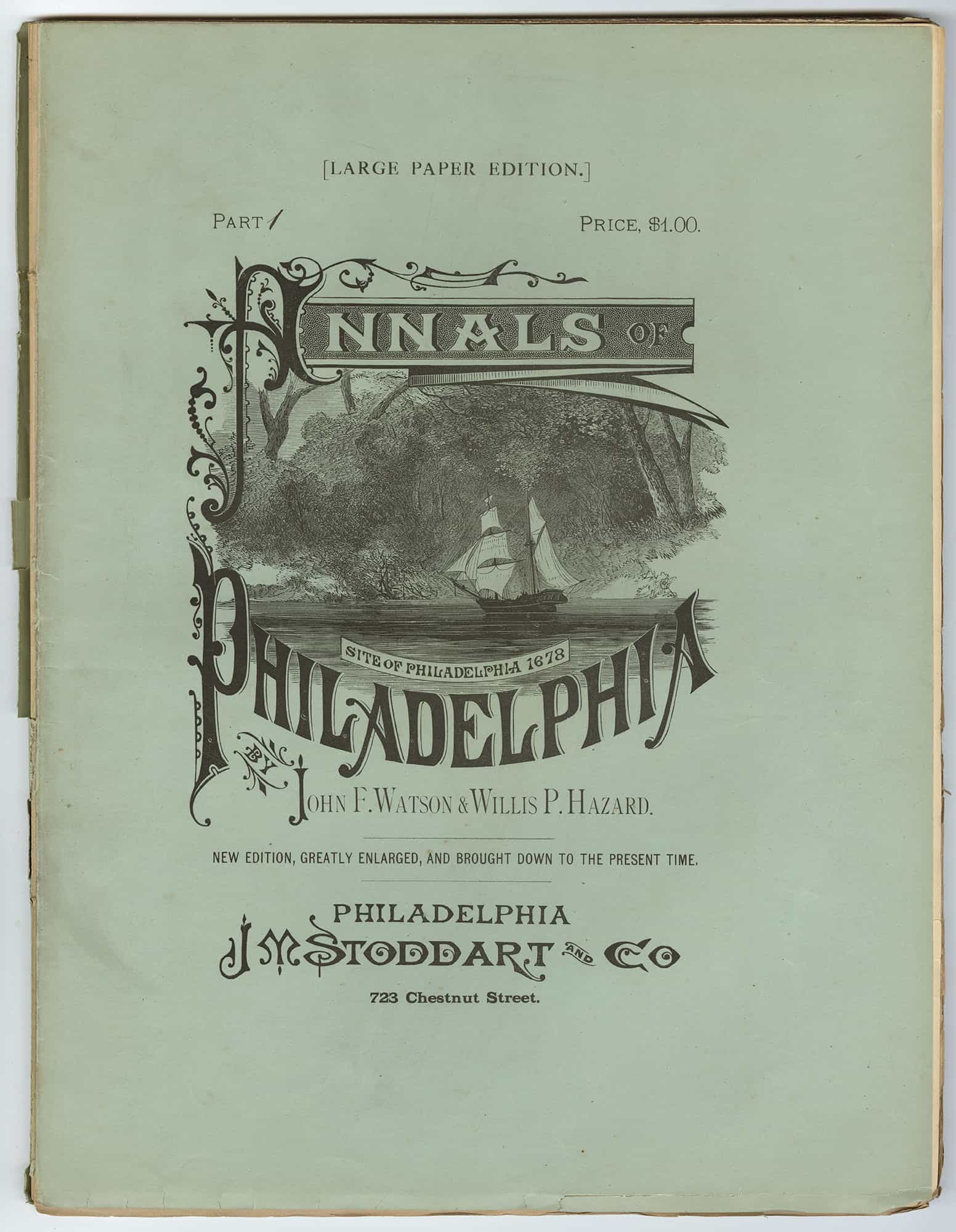
Figure 2: Cover wrapper for a later edition of John F. Watson’s Annals of Philadelphia and Pennsylvania in the Olden Time (Philadelphia: J. M. Stoddart & Co., ca. 1884). Courtesy of the Library Company of Philadelphia.

This transformation did not occur in a vacuum, but rather was shaped by the long history of colonial violence on the Pennsylvania frontier and by the cultural memory of those conflicts in the early nineteenth century. Accounts of warfare, captivity, and dispossession circulated widely in print, forming what Peter Silver has described as a shared language of fear on the frontier. At the same time, representations of Indigenous peoples were increasingly abstracted into symbolic types, figures of nobility, savagery, or loss, rather than specific individuals. As Robert F. Berkhofer Jr., has argued, such images functioned as contextualized representations, shaped less by Indigenous realities than by the cultural and intellectual frameworks of Euro-American society. 

The scrapbook page examined here sits squarely within that world. It does not simply preserve historical material; it actively constructs meaning through the selection, arrangement, and reinterpretation of visual and textual fragments. By examining this page closely, we can see not only how Watson worked, but how Indigenous imagery itself was reshaped within early American historical imagination. 

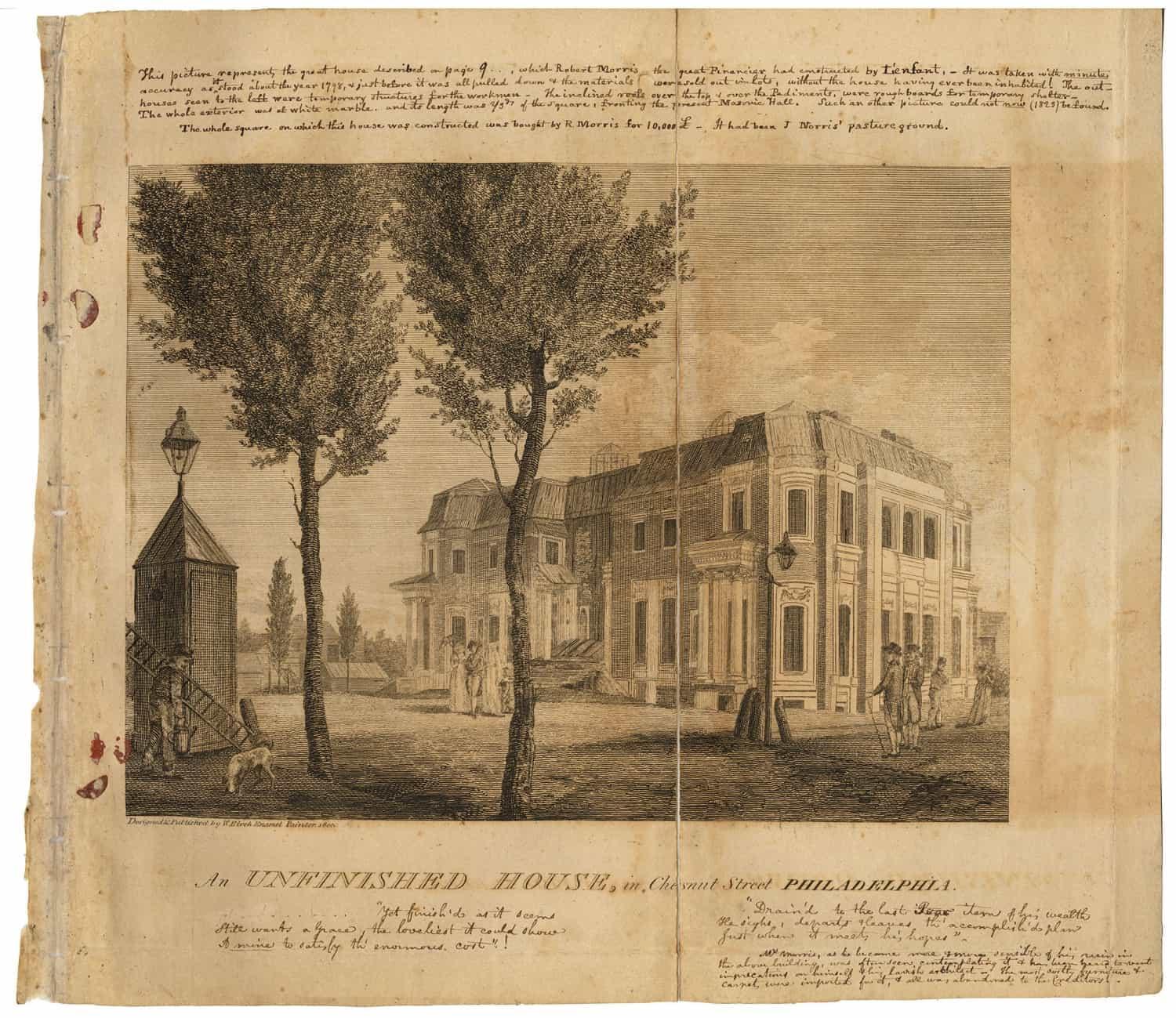
Accounts of John F. Watson’s reputation as a collector of early Philadelphia history have often emphasized preservation. Yet his manuscript materials reveal a more active role. Watson regularly cut, rearranged, annotated, and recombined textual and visual fragments. His scrapbooks are therefore not neutral repositories, but sites of interpretation. 

Figure 3: Another example of John Fanning Watson’s annotations can be seen on this image of William Birch, An Unfinished House, in Chestnut Street, Philadelphia. Courtesy of the Library Company of Philadelphia.

The page examined here reflects that process clearly. Rather than preserving an intact printed image or text, Watson assembled a composition: two engraved images, a handwritten poem, and a framing note. Each component originates elsewhere, but together they create the appearance of a unified historical scene centered on a Lenape subject. 

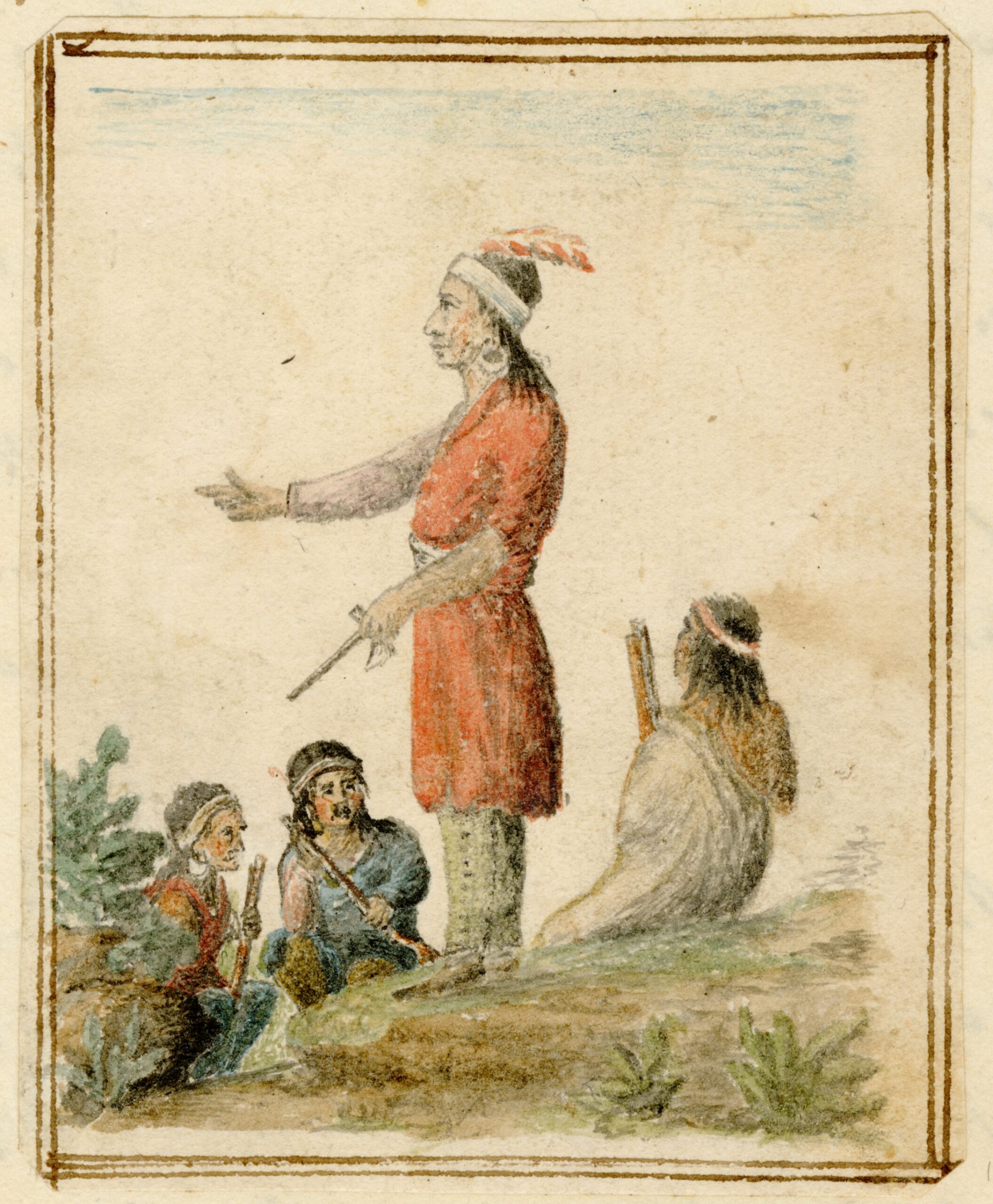
The upper image presents a standing Native figure addressing three seated listeners. The figure’s posture–upright, composed, and gestural–suggests authority. The arrangement is formal and balanced, evoking a council or oration. The scene reads less as observation than as a constructed type: a Native leader presented in a manner that is almost regal.

Figure 4: Watson’s inclusion of this image reflects nineteenth-century antiquarian interpretations of Native oratory and leadership as preserved through Watson’s collecting practices. “A Delaware chief addresses his people,” John F. Watson scrapbook. Courtesy of the Library Company of Philadelphia.

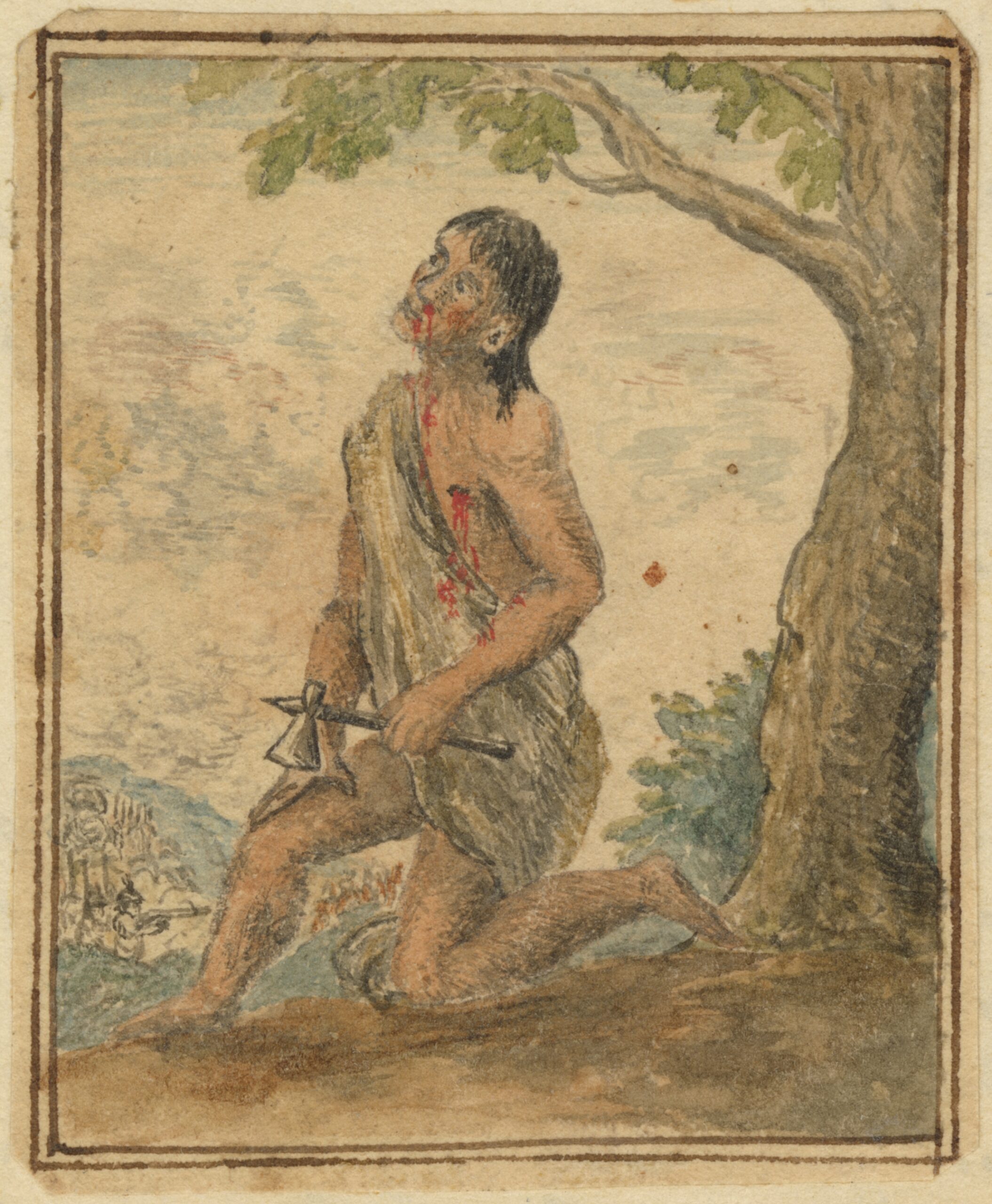
The lower image offers a striking contrast. Here, a Native figure kneels, wounded, with visible blood on his face and torso. He retains a weapon, suggesting resistance, yet his posture conveys exhaustion and vulnerability. A small but crucial detail appears in the background: a distant battle vignette, indicating that the scene represents the aftermath of conflict rather than an isolated moment. 

Figure 5: The wounded warrior image shown here reflects the sentimental and dramatic frontier imagery popular among early American antiquarians and collectors. “Wounded Native warrior”, John F. Watson scrapbook. Courtesy of the Library Company of Philadelphia.

Taken together, the images form a deliberate pairing. This juxtaposition creates a narrative arc of authority, conflict, and decline. Such pairings were common in late eighteenth-century visual culture, where Indigenous figures were often framed through a dual lens of nobility and loss.

Above the upper image, Watson included a handwritten note that reads, in full:

“I know this one of the best Indian physiognomy’s I have ever seen It was sketched from life …”

This statement is critical. By emphasizing “Indian physiognomy” and asserting that the figure was “sketched from life,” Watson attempts to establish the image as an authentic representation derived from direct observation. Such language reflects a broader early American and European interest in physiognomy, the belief that character and identity could be read through facial features.

Yet the visual evidence complicates this claim. The image’s composition, balance, and engraving style strongly suggest that it derives from a printed source rather than a firsthand sketch. The assertion of authenticity, therefore, appears less as documentation and more as a rhetorical device, one that reinforces the authority of the constructed scene. The accompanying imagery appears alongside a narrative passage describing frontier violence and its aftermath. Here is a transcription of the relevant text, as it appears on the page:

 “The unfortunate victim was pursued with great violence, and after making every exertion to escape, he fell, pierced with many wounds, and expired on the spot. The savage who had inflicted the mortal blow, after giving a horrid yell, rushed forward, and tearing off the scalp, held it up in savage triumph.

The body was then stripped of its clothing, and left exposed upon the ground. His companions, who had fled at the first onset, soon returned, and finding him lifeless, gave vent to their grief in loud lamentations.

The Indians, having secured their prisoners and collected what plunder they could obtain, set fire to the buildings, and retired with their captives into the wilderness.

Such were the scenes which were frequently exhibited upon the frontiers, during the early settlement of the country, when the inhabitants were constantly exposed to the incursions of hostile tribes, and when every man was compelled to rely upon his own courage and vigilance for protection…”

This passage reinforces the interpretive framework constructed by Watson. The text presents a familiar frontier narrative of violence, captivity, and loss, consistent with late eighteenth- and early nineteenth-century representations of Native Americans in Anglo-American print culture. When read alongside the images, the text strengthens the narrative arc already established visually (i.e. authority, conflict, and decline), further embedding the figures within a moralized and constructed historical imagination rather than a documented Indigenous perspective.
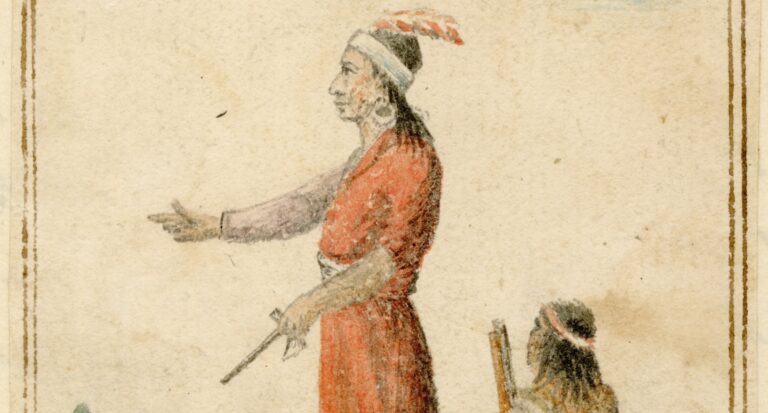
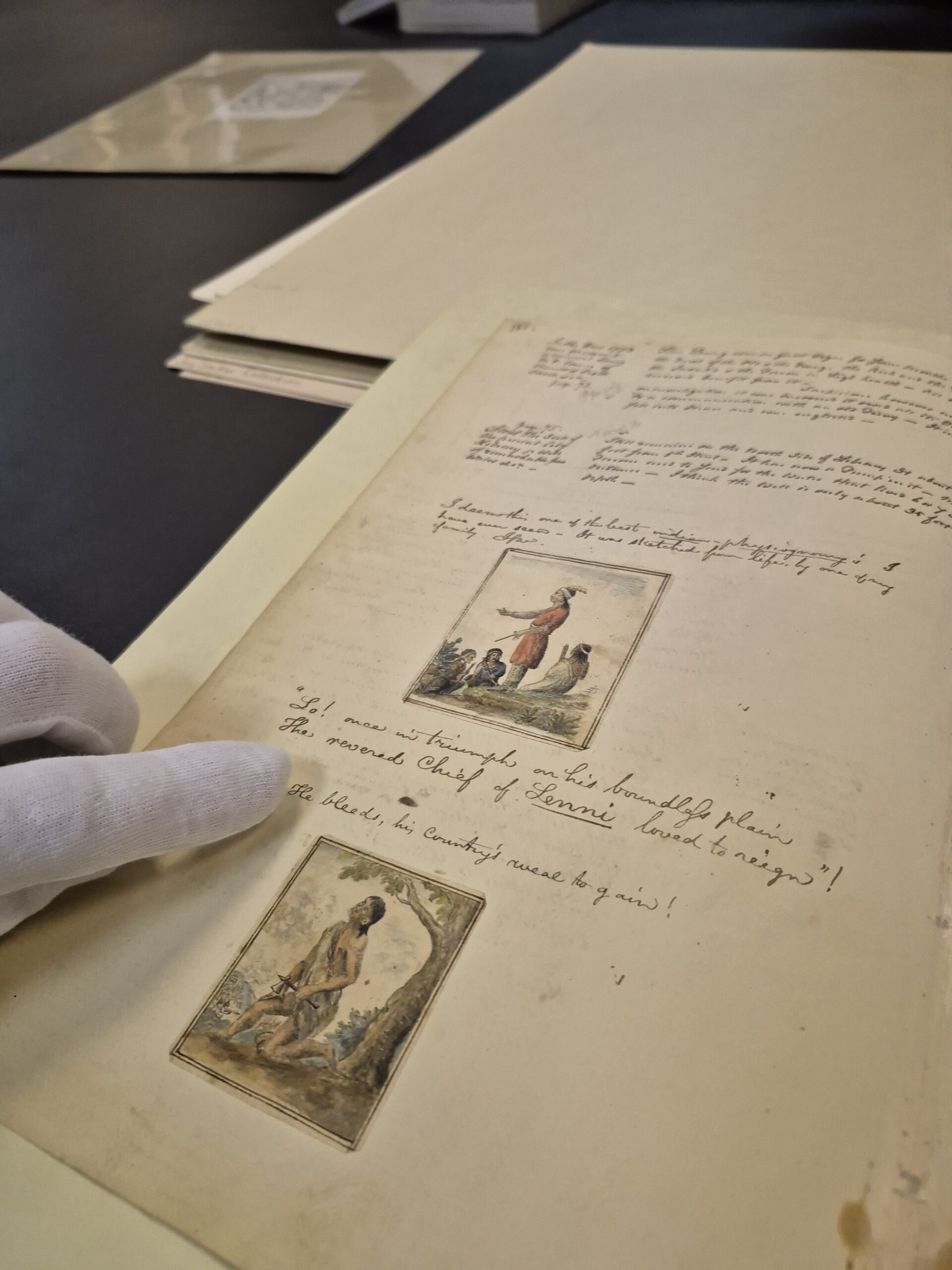
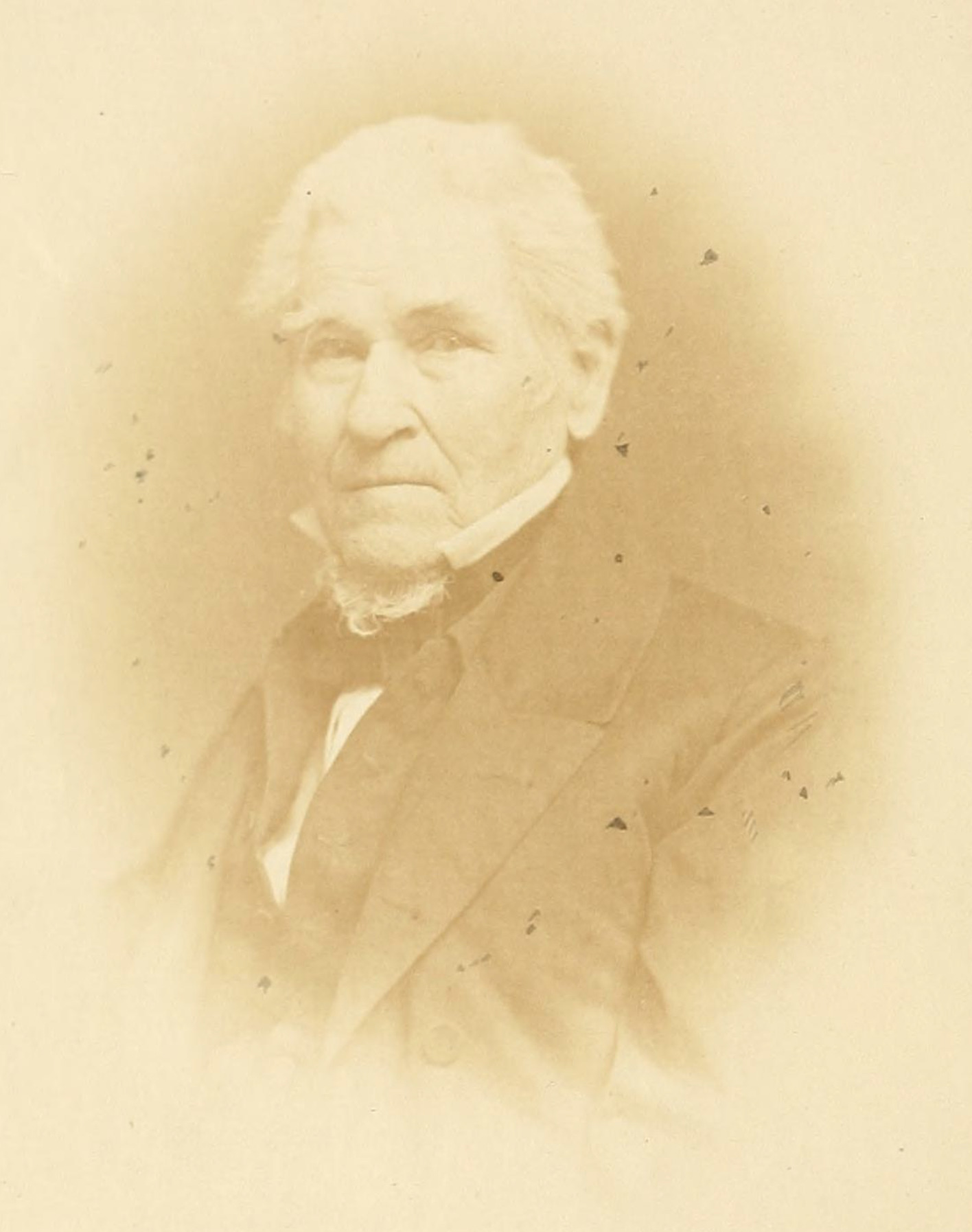
Figure 6: Portrait of John Fanning Watson, Frontispiece to Benjamin Dorr, A Memoir of John Fanning Watson, the Annalist of Philadelphia and New York (Philadelphia: Collins, Printers, 1861). Courtesy of the Internet Archive.

The physical characteristics of the images, such as small-scale, engraved line work, and later hand-coloring, indicate that they were cut from a printed source rather than drawn by Watson. Their style aligns with late eighteenth-century engraving traditions, in which small vignette scenes circulated widely in books and periodicals.

Although the precise source of these engravings remains unidentified, they likely derive from British or early American print culture. Publications such as The Columbian Magazine and The American Museum frequently included engraved illustrations and often reprinted or adapted European imagery. Within such contexts, Native American figures were typically presented as symbolic or moral types rather than as ethnographically specific individuals.

The images on Watson’s page conform to this pattern. They do not display detailed cultural specificity, but instead rely on established visual formulas: the “Indian council scene” and the “fallen warrior.”

Between the two images, Watson inserted a handwritten poem:

So! once in triumph on his boundless plain,
The revered Chief of Lenni loved to reign!
He bleeds, his Country’s weal to gain!

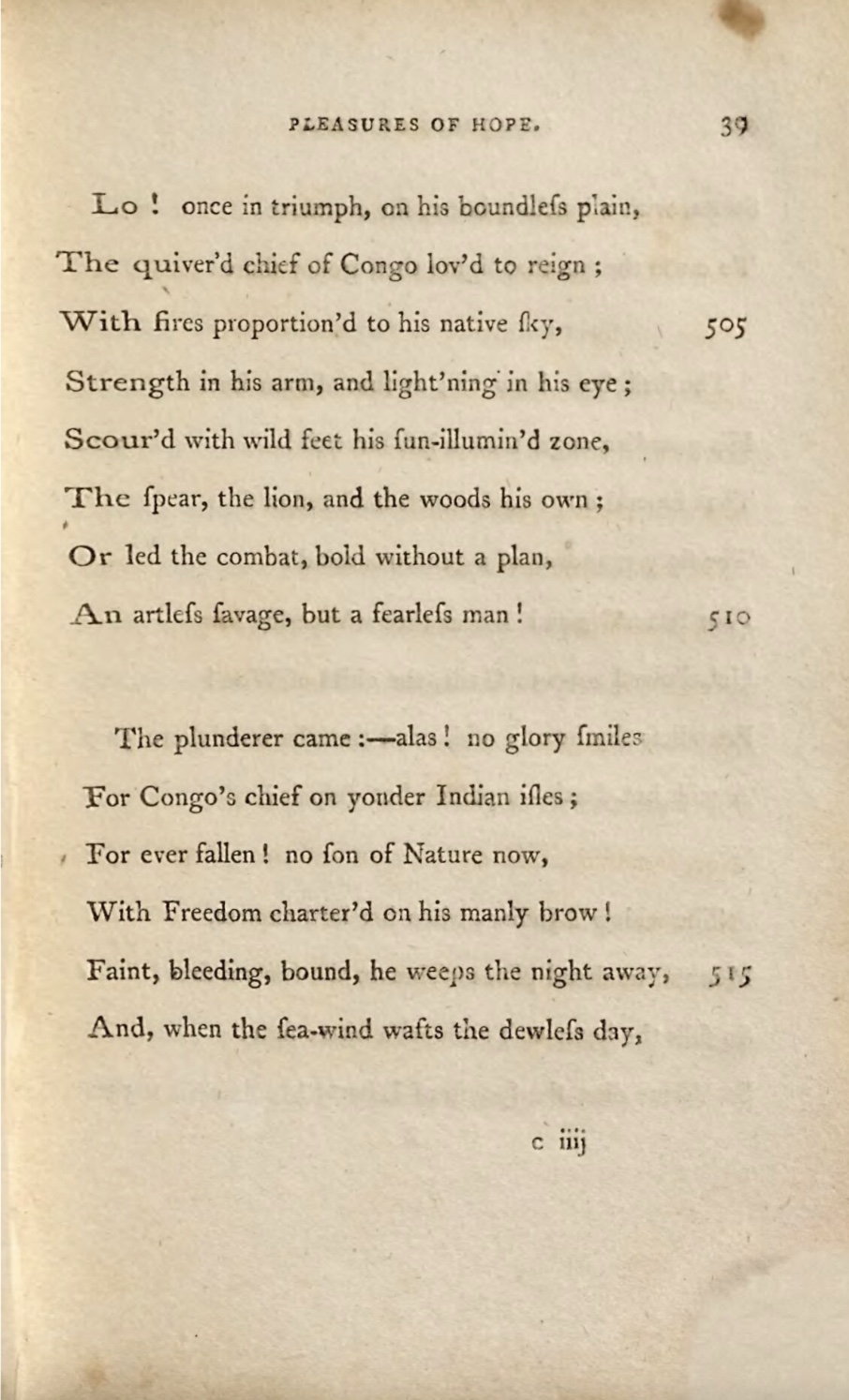
This verse corresponds closely to a passage in The Pleasures of Hope by Thomas Campbell, which describes an African “chief of Congo” who moves from power to suffering. Watson’s version replaces Campbell’s African subject with a “Chief of Lenni,” adapting the poem’s emotional structure to a Native American context.

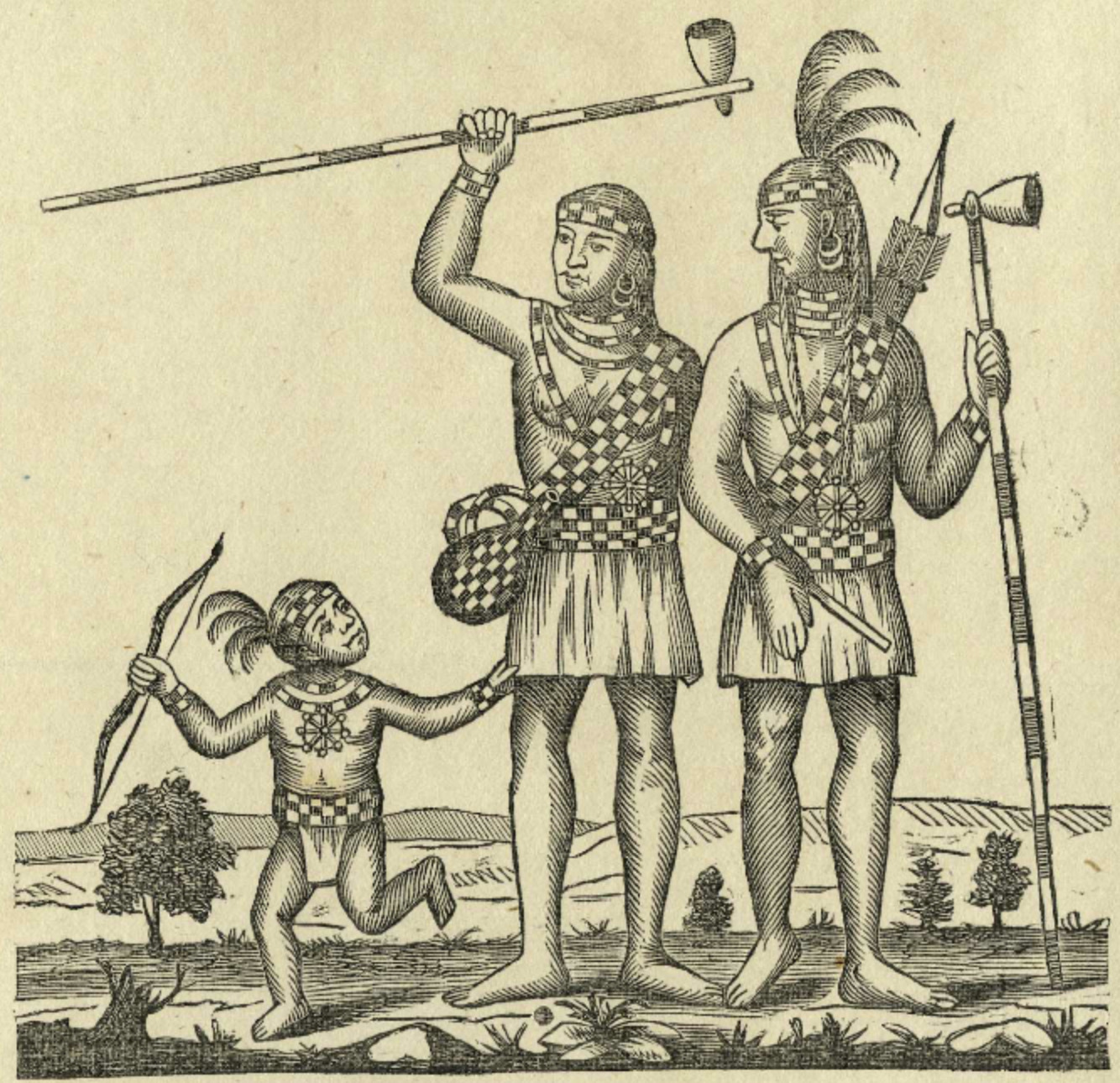
Figure 7: Lenni Lenape as depicted by Thomas Campanius Holm in Nya Swerige. Published in Stockholm in 1702. Campanius Holm’s depiction became one of the most reproduced early European images associated with the Lenape people and heavily shaped later visual understandings of Native Americans in the Mid-Atlantic. Held at the Historical Society of Pennsylvania. Thomas Campanius Holm, Public domain, via Wikimedia Commons.

This transformation illustrates the fluidity of late eighteenth-century literary material. Texts circulated widely, often detached from their original contexts and repurposed to fit new narratives.

The term “Lenni” is central to Watson’s construction. The images themselves do not identify their subjects as Lenape; that association is introduced through Watson’s handwritten verse and reinforced by his note. In effect, Watson assigns a specific cultural identity to otherwise generic figures.

Figure 8: Thomas Campbell, The Pleasures of Hope: In Two Parts; With Other Poems, 2nd Edition (Edinburgh: Mundell & Son, 1800), 39. Courtesy of the Internet Archive.

By combining engraved images from an unidentified source, an adapted literary passage, and finally, an assertion of authenticity, Watson creates the impression of historical specificity. Yet this specificity is constructed, not inherent.

Watson’s work must be situated within the cultural context of Philadelphia, where Native American imagery, particularly imagery associated with the Delaware (Lenape), held symbolic significance. In the late eighteenth and early nineteenth centuries, such imagery was frequently employed to evoke ideas of origin, virtue, and loss.

The scrapbook page reflects this broader cultural framework. It does not document Indigenous perspectives but instead reveals how Indigenous imagery was appropriated and reshaped within Anglo-American historical imagination.

The Watson scrapbook page demonstrates how historical meaning could be constructed through the combination of disparate materials. The images likely originated in late eighteenth-century print culture, while the poem derives from The Pleasures of Hope by Thomas Campbell. Watson’s intervention brings these elements together, transforming them into a cohesive Lenape-centered narrative

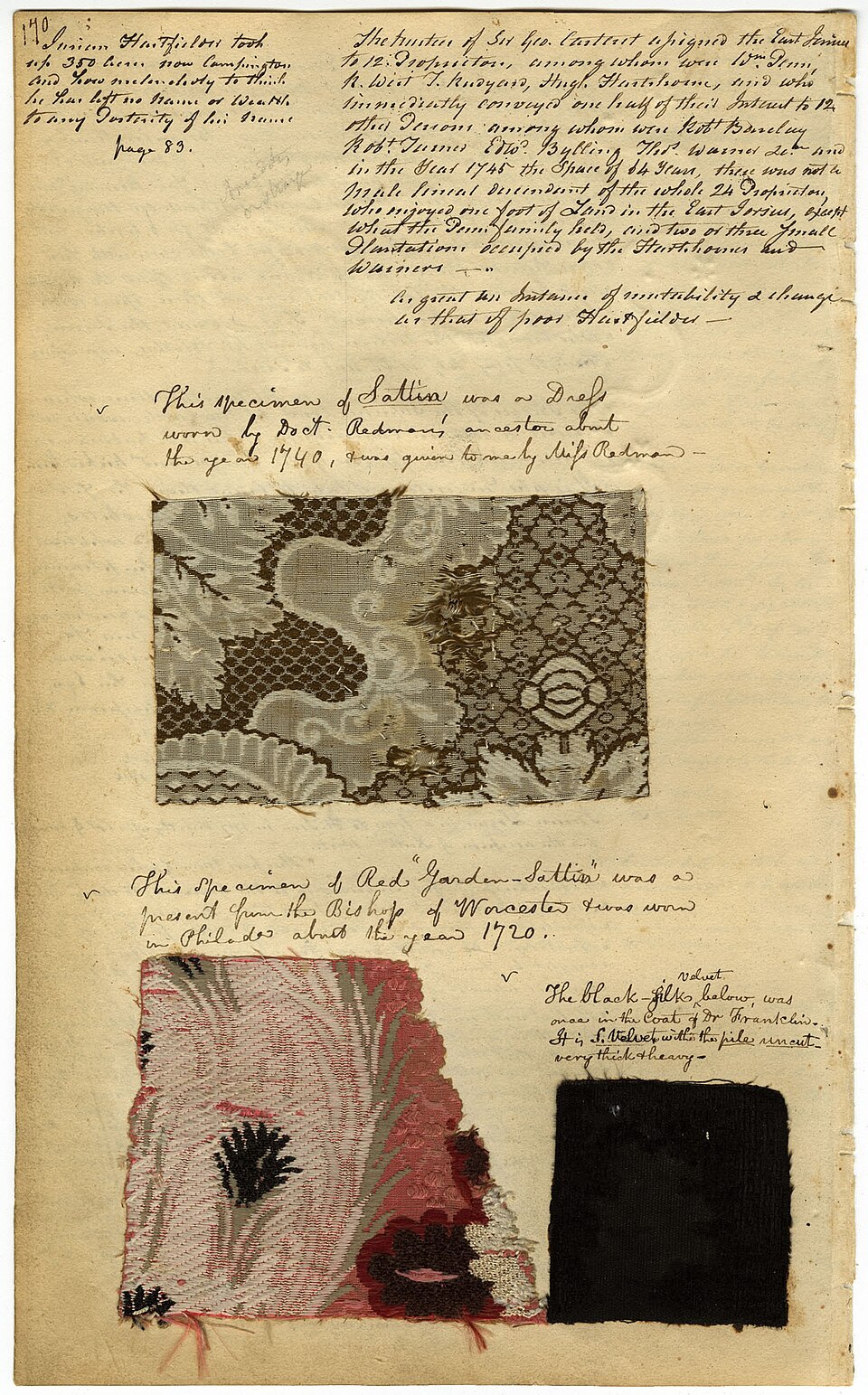
Figure 9: Fabrics from 1720 and 1740 arranged with descriptions in John Watson’s Annals of Philadelphia. John Fanning Watson, Public domain, via Wikimedia Commons.

Rather than preserving a direct record of Native life, the page reveals the processes by which early American antiquarians assembled and interpreted the past. In doing so, it offers valuable insight into the creation of historical memory itself.

Further Reading:

The American Museum (Philadelphia, 1787–1792).

Robert Berkhofer Jr., The White Man’s Indian: Images of the American Indian from Columbus to the Present (New York: Vintage, 1979).

Matthew P. Brown, The Pilgrim and the Bee: Reading Rituals and Book Culture in Early New England (Philadelphia: University of Pennsylvania Press, 2007), 145–172.

Thomas Campbell, The Pleasures of Hope (Edinburgh, 1799), Part I.

The Columbian Magazine (Philadelphia, 1786–1792).

Philip J. Deloria, Playing Indian (New Haven: Yale University Press, 1998), 1–70.

David D. Hall, “Antiquarianism and the Uses of the Past in Early America,” Proceedings of the American Antiquarian Society 111, no. 2 (2001): 279–318.

Hugh Honour, The New Golden Land: European Images of America from the Discoveries to the Present Time (New York: Pantheon, 1975).

Simon P. Newman, Parades and the Politics of the Street: Festive Culture in the Early American Republic (Philadelphia: University of Pennsylvania Press, 1997), 85–120.

Peter Silver, Our Savage Neighbors, How Indian War Transformed Early America (New York: W.W. Norton, 2009).

John F. Watson, Annals of Philadelphia and Pennsylvania in the Olden Time (Philadelphia: Uriah Hunt, 1830), Preface.


This article originally appeared in June 2026. 


James Blake is a researcher, artisan, and museum professional focused on the material culture and visual history of the Eastern Woodlands and early American frontier. He serves as a docent for the Washington County Historical Society in Pennsylvania and has contributed historical interpretation and material culture expertise to PBS documentary projects, including Opening the Door West and The War That Made America. His research and writing have appeared in numerous publications.