Read More Books: Immigration is about Staying Put, too.
Why This Book?

Reading the news, you’d be forgiven for thinking that immigration policy in the United States is about policing national borders. But the longer history reveals a much more complicated federal legality and the essential role of states in managing migration. It’s a history not only about people coming to North America from Europe, or Asia, or Africa, but also about the status of enslaved people and Native Americans already within the geopolitical boundaries of what constitutes the modern-day United States.

Read More Books is an opportunity to put even more thinking and conversation about books out into the world. It’s text, not video, and doesn’t originate on social media, but here on an open access site. Because it takes lots of formats and options in this information kaleidoscope of a world. If you read the first installment, you’ll know that the format for Read More Books is straightforward: five similar but adapted questions for an author, with some preview comments from me, and notes about what else to read. With the forbearance of the editor and editorial board, I’m excited to share more books every other month or so.

Whether you’re reserving a book in your library app, requesting a volume from closed stacks, ordering or pre-ordering from your favorite independent bookseller, or just pulling it off your TBR pile—why this book? Do you ever read a review in a big mainstream outlet and wonder why x is being reviewed but not y?  Or see a bookfluencer musing about a particular book when you wish they’d just put their hands and eyeballs on a different one?  Why this one is regularly a combination of market forces (literally, if a press has dedicated marketing resources to a book), conversations and politics in the cultural moment, serendipity– someone recommended a book, or just liked the cover. For historians, why this book is also about immediate relevance and the state of a field.  A book that brings new research and a new framework for thinking about an issue that has contemporary salience will get more eyeballs; equally, a book that contributes to the scholarship along multiple vectors.

Anna Law is Associate Professor of Political Science and Herbert Kurz Chair in Constitutional Rights at CUNY Brooklyn College.  Her new book is about as on point for urgent political context as we get these days.  And contributes to scholarship developed by historians, legal scholars, and political scientists about how citizenship and who could, or was made to, move within and into the shifting borders of the United States in the nineteenth and then twentieth centuries.
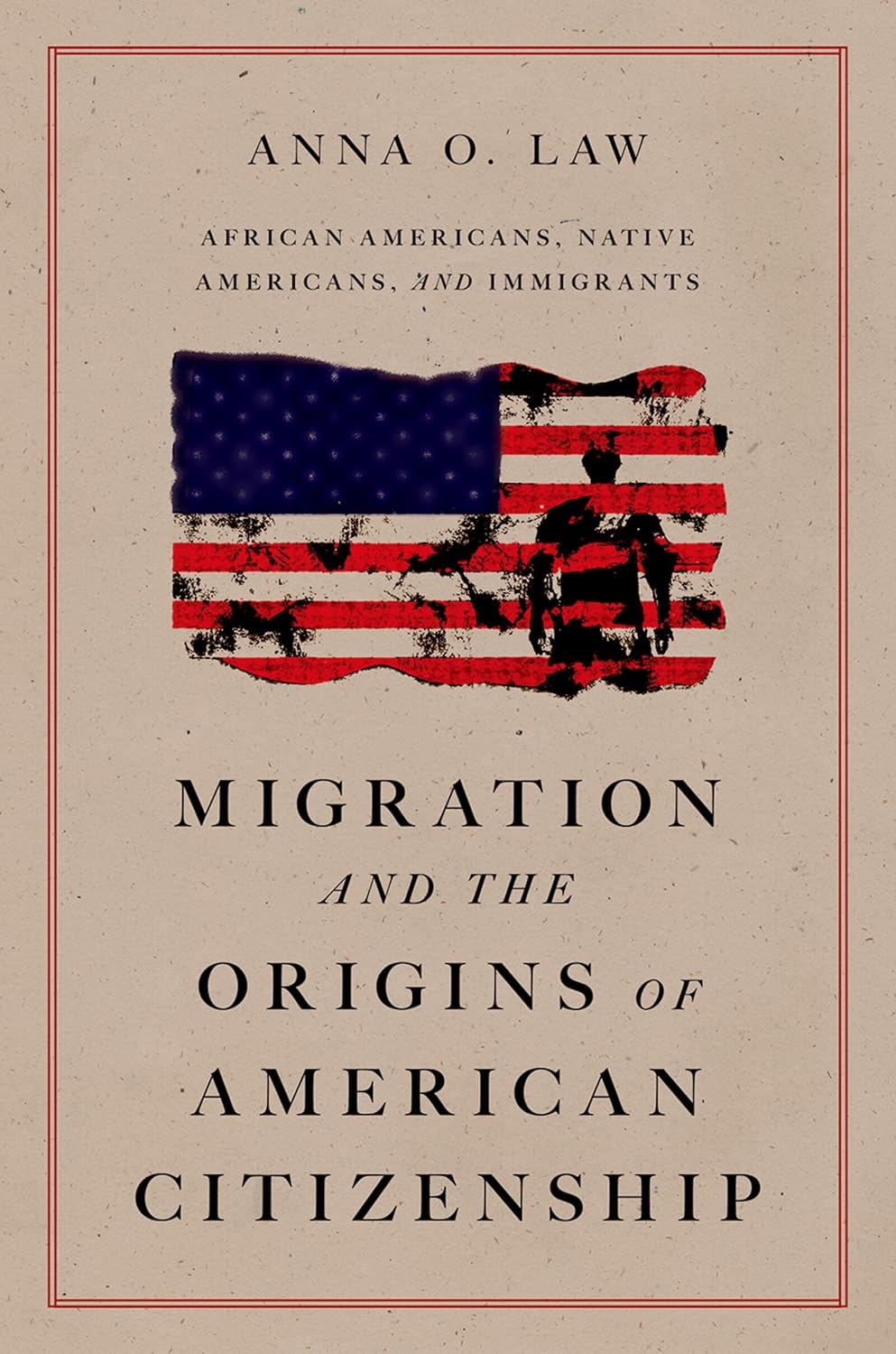
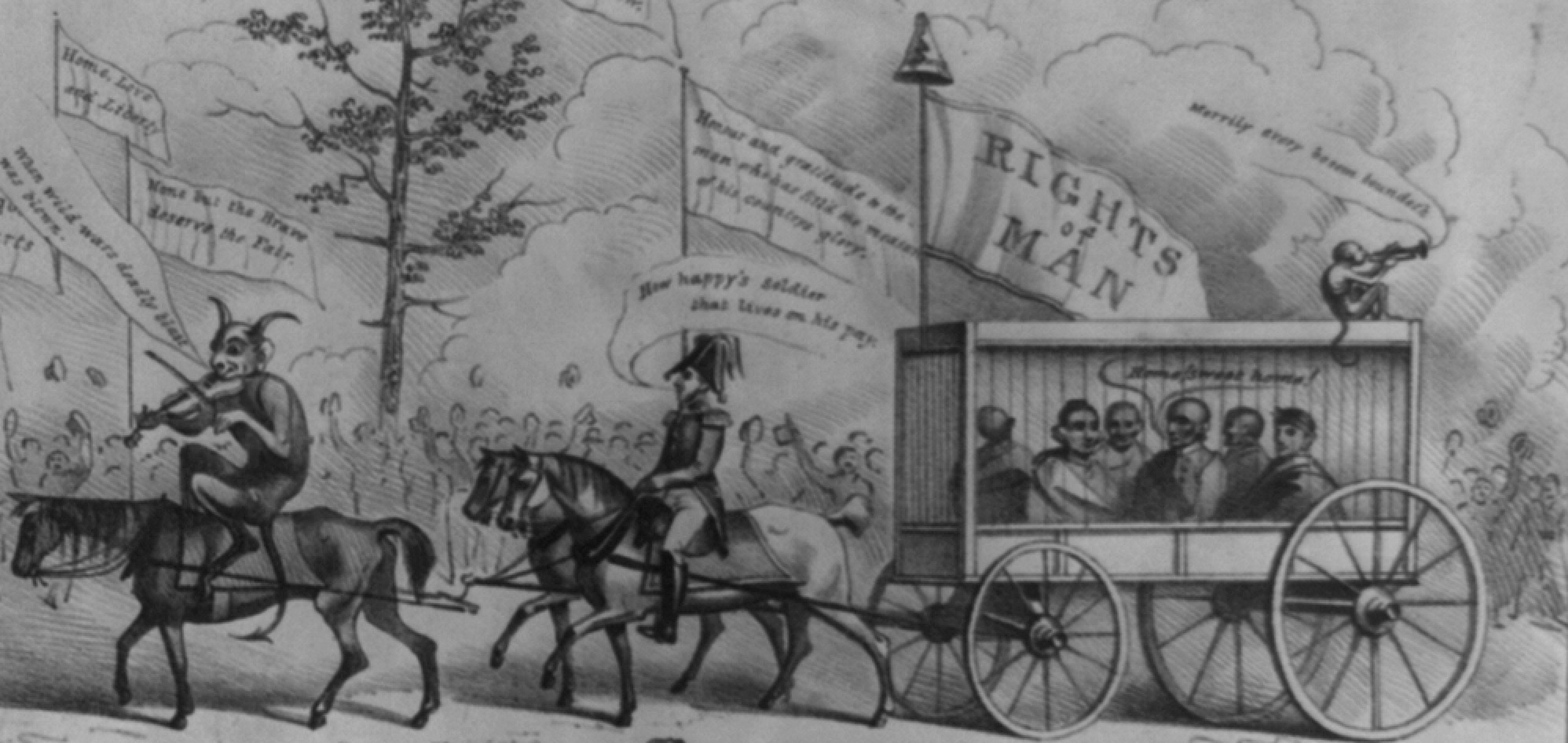
Figure 1: Anna O. Law, Migration and the Origins of American Citizenship: African Americans, Native Americans, and Immigrants (Oxford University Press, 2026).

  1. Why is it important to see the long history of complementary state and federal (or colonial and imperial!) regulation of migration to understand the federal posture towards immigration today?

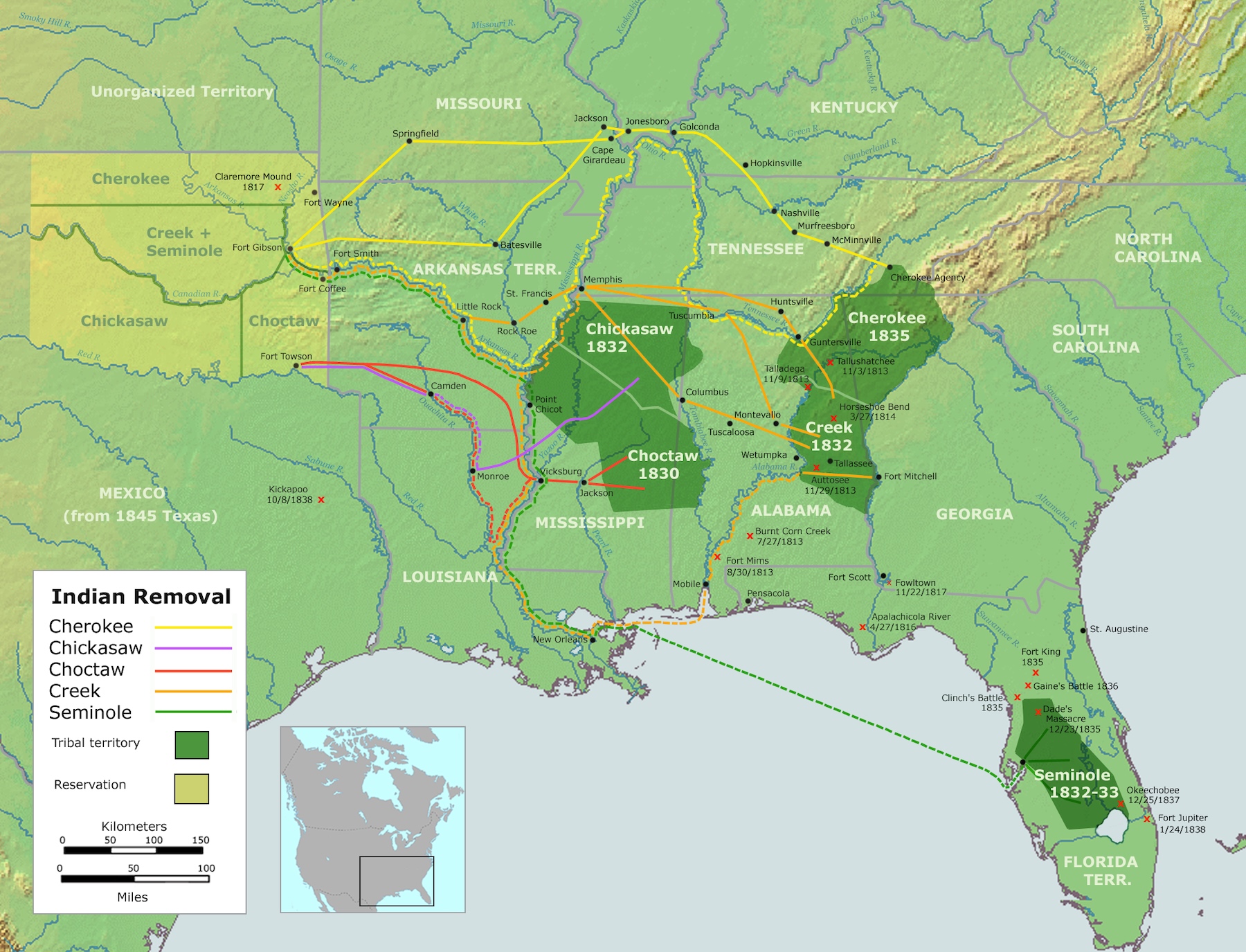
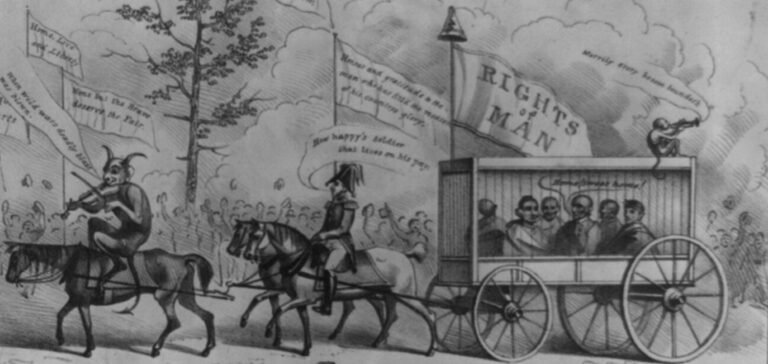
There are two reasons why my historical book is relevant today. First, the level of government that has control over one’s mobility and ability to stay dictates the kind of force used against a group. But that division of labor shifts over time. Historically, being under the supervision of one level of government or the other dictated state capacity. Free and enslaved African Americans’ mobility and ability to set roots where they wanted was regulated by state laws and took the form of administrative hassles to even remain in a place where they wanted to. Native Americans ability to stay on their ancestral lands was mostly subject to the federal government’s control. By the 1830s, the U.S. government funded and supplied the troops and (insufficient) material resources to violently deport 80,000 Native people in the southeast. Now that immigration entry/exit authority is at the federal level, which didn’t happen until 1888, we see the catastrophic consequences from Los Angeles, Chicago, Minneapolis, and anywhere there are migrant detention centers.

Figure 2: Native Americans in a Jacksonian era parade transported in a cage saying “Home Sweet Home!” Detail from The Grand National Caravan Moving East (New York: Endicott & Swett, 1833?). Retrieved from the Library of Congress.

Second, what we know and don’t know about U.S. history affects how we evaluate constitutional arguments, a process Jack Balkin calls the work of constitutional memories. If we don’t know early U.S. migration history, we don’t know the origin stories of how and why particular migration laws and institutions were created and why they were discarded. Or, worse yet, we default to accepting the U.S. government’s official story of migration history because we don’t know any better. Their account is ahistorical and eliminates more than a century of local migration laws that were in place to restrict the international and interstate mobility of poor, sick, disabled, and free and enslaved African Americans. The ahistorical official story of the U.S. government is that there were functionally open borders until the federal government started enforcing borders in the late nineteenth century.

The U.S. Constitution is but lifeless words on a page. Over time, different parts of the Constitution are infused with meaning through political contestation. The U.S. Constitution creates a federal system where the national, state, and local governments share authority. But the location of the dividing line between central and local authority over migration has been in the past and continues today to be politically determined. Thus, in telling the story of U.S. migration policy history, I pay equal attention to the federalism structure and how the politics of each era determine that division of labor.

In the colonial period to 1888, international and interstate migration was controlled by the colonies and then the states in part because slave jurisdictions jealously guarded their ability to restrict the international and interstate mobility of enslaved and free African Americans due to fears about enslaved insurrections. Northeastern states in that same period received the largest volume of voluntary migrants and were collecting revenue from head taxes to screen out those who might become an economic burden on their states. These states too wanted local control of migration. Today, states have the option of signing 287(g) agreements with the federal government to use local and state assets to assist in US immigration enforcement or not.

  1. Readers might think of this as a work of history, or of legal history, but you write about it as a work of American Political Development (APD), a subfield of Political Science. How does APD as a field and a method shape the book?

An American Political Development approach has much in common with the work historians do, but also differences. Both disciplines share careful attention to temporality. Both are driven by understandings that why something happens is often explained by when it happened and what else was happening in the rest of U.S. history. APD scholars focus on power and institutions. Historians study institutions like the federal courts, the U.S. presidency, and arrangements of power like federalism too. APD scholars, though, construe institutions as composed of rules and norms that structure political and legal outcomes by incentivizing certain types of political and legal outcomes over others.

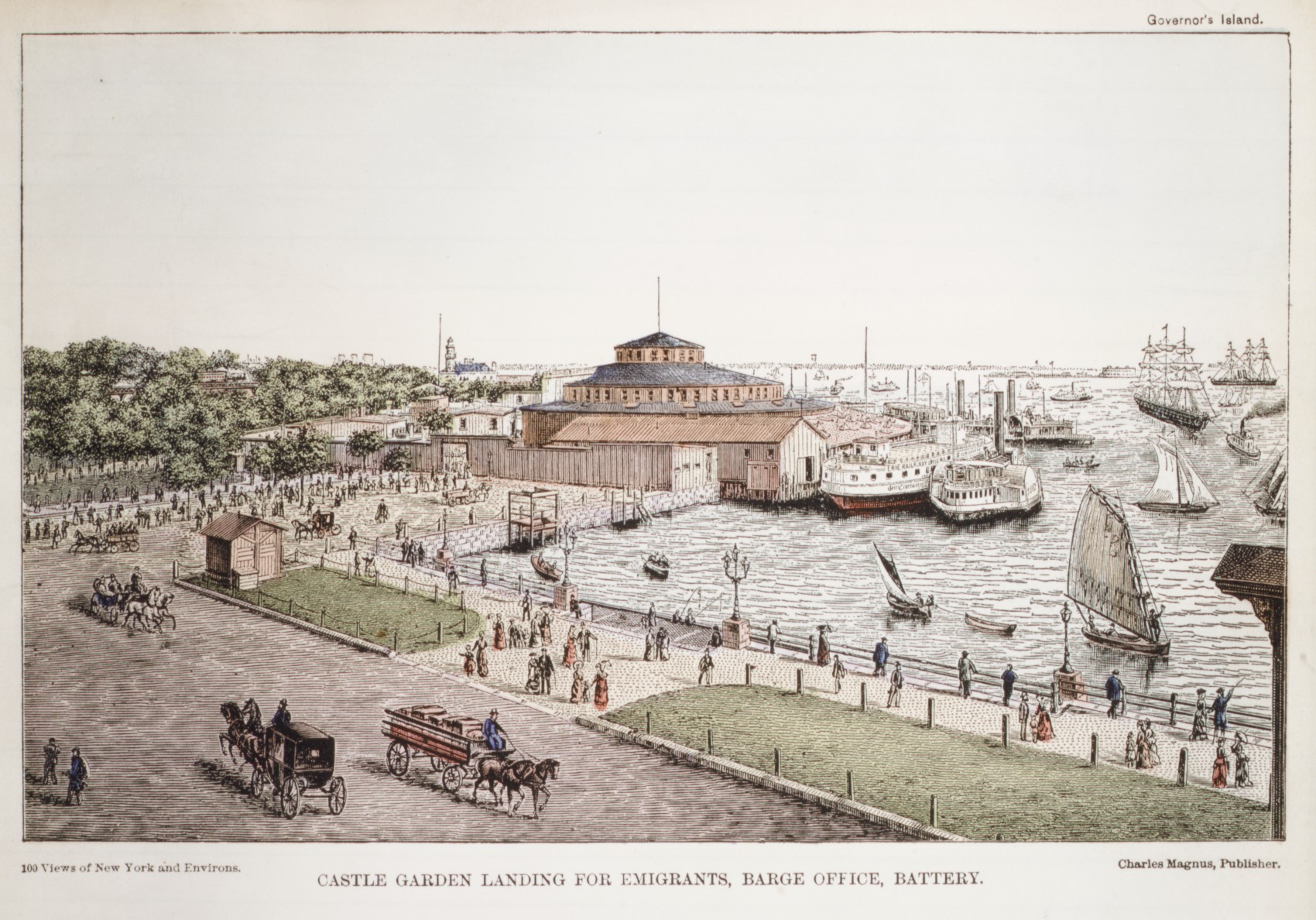
For example, federalism doesn’t dictate the valence of migration and citizenship laws. But in that broad stretch of time where international and interstate migration was locally controlled, the overwhelming number of state laws were restrictionist in nature. Only New York passed laws and created institutions to protect and care for migrants. Historically, the federal system multiplied the varieties and numbers of restrictionist migration laws of colonies and states. Today, that is not true. Many blue states and cities have laws that don’t void federal immigration laws, but try to shield migrants from indiscriminate and aggressive federal enforcement.

Figure 3: Castle Garden Landing for Emigrants, Barge Office, Battery (Charles Magnus and Company, 1850-1900), CCO, The Edward W.C. Arnold Collection of New York Prints, Maps and Pictures, Bequest of Edward W.C. Arnold, 1954, Metropolitan Museum of Art.

  1. What prompted you to write the book?

A nagging question drove me. “What is the relationship of enslaved migration to voluntary migration, if any?” I saw most U.S. immigration historians and immigration law professors setting enslaved migration aside in a footnote or paragraph before returning exclusively to discussions of voluntary migration. They have good reasons for doing so given the entirely unfree nature of enslaved importation and the suis generis nature of hereditary lifetime racial slavery. I’m not construing enslaved importation as “immigration”, a term that implies consent. But I do find multiple examples of the institution of slavery affecting the content and trajectory of voluntary migration laws and policies.

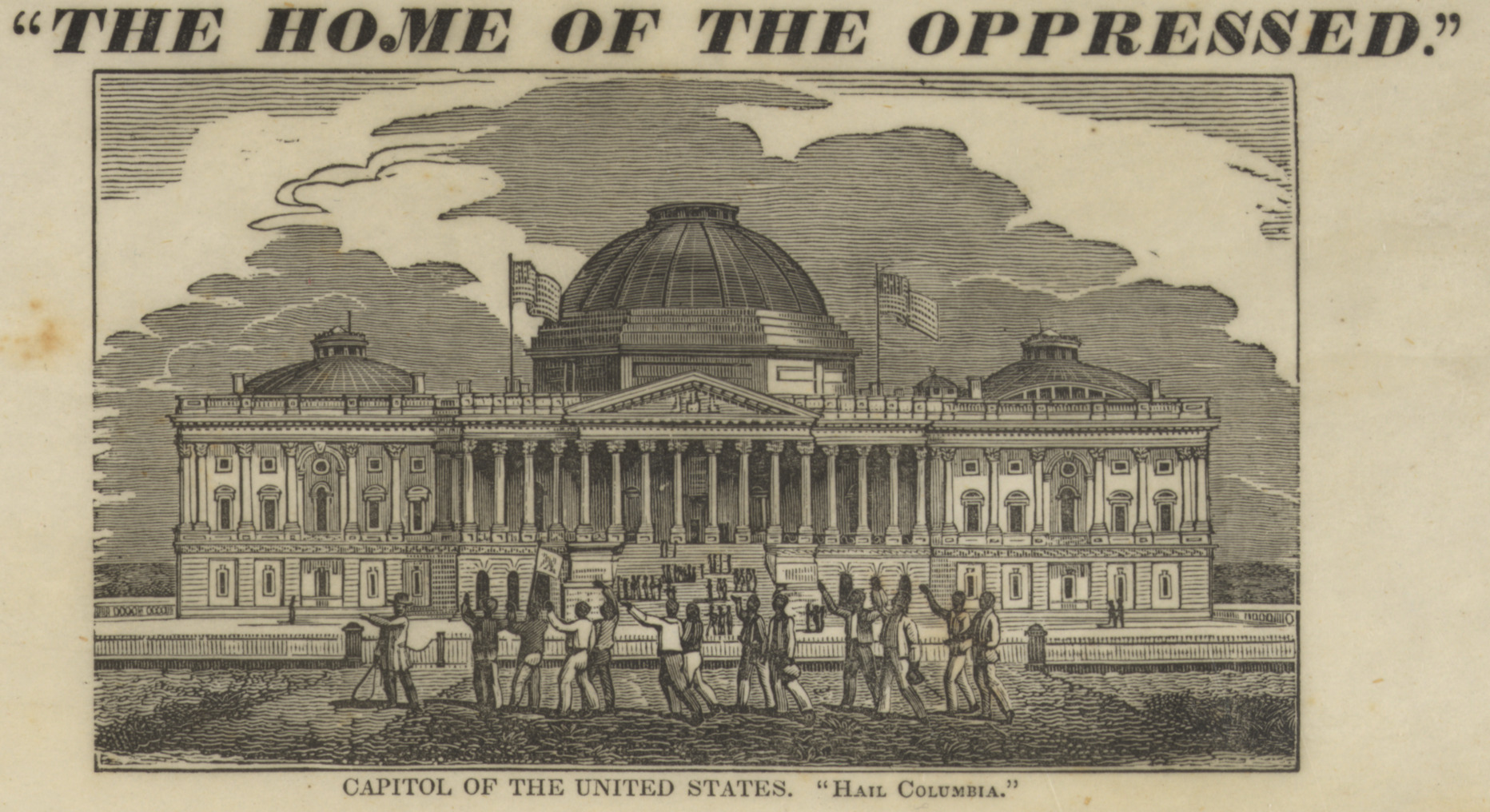
Slavery’s main effect on voluntary migration laws was to delay the transition of power over migration and citizenship to the federal level, which didn’t happen until after the Civil War and with the Reconstruction Amendments. Only then did slavery became disentangled politically from voluntary migration and slave states stopped fighting to preserve migration control for themselves paving way for the transition to federal immigration control. The Supreme Court also invalidated northeastern migration restrictions that they had previously upheld, and these states banded together to lobby the federal government to assume immigration management in the 1880s.

Figure 4: Enslaved men being led past United States Capitol from William S. Dorr, Slave Market of America (New York: American Anti-Slavery Society, 1836). Retrieved from the Library of Congress.

  1. What was your most notable research experience while working on Migration and the Origins of American Citizenship?

Probably my discovering the interconnectedness of the migration and forced migration experiences of different groups (voluntary migrants, African Americans, and Native Americans). I started the book believing I’d be writing only about migration. Since the research question is about federalism, I anticipated that I would have to learn the African American history of enslavement and resistance. From reading Samantha Seeley’s excellent book and nineteenth-century Supreme Court cases, I learned that the lawmakers and general public of different eras regarded the migration and the right to remain of groups as zero sum even though missionaries, abolitionists, Native Americans, and African Americans opposed these restrictions and deportations.

For example, in Cherokee Nation v Georgia (1831) and Worcester v GA (1832) the Supreme Court ruled on the constitutionality of southeastern slave states aggressively invading Native sovereignty. These cases were generated by the states’ enslavers coveting Indigenous land to expand the cotton crop and African slavery. Southeastern slave states eventually goaded the federal government into executing a mass deportation of Indians. Native Americans are not migrants at all but original landowners and occupants. They are in my book because in the 1830s the U.S. government carried out the violent deportation of 80,000 Indigenous people from multiple tribal nations in the southeast.  Native Americans’ ability to stay on their ancestral lands was relational to white settlers and state/federal lawmakers’ desire to occupy that same territory. We don’t think of these peoples as related today but the jurists, lawmakers, and general public of those eras did.

Figure 5: Map of Native American Removal from the Southeast in the 1830s. User:Nikater, Public domain, via Wikimedia Commons.

What else to read:

Maggie Blackhawk, “The Constitution of American Colonialism,” Harvard Law Review (2023).

Kevin Kenny, The Problem of Immigration in a Slaveholding Republic (2023).

Samantha Seeley, Race, Removal, and the Right to Remain:  Migration and the Making of the United States (2021).


This article originally appeared in August 2026. 


Karin Wulf is the Beatrice and Julio Mario Santo Domingo Director & Librarian of the John Carter Brown Library, and Professor of History at Brown University. A historian of gender, family, and politics in British America, her most recent book is Lineage: Genealogy and the Power of Connection in Early America, published by Oxford University Press in 2025.