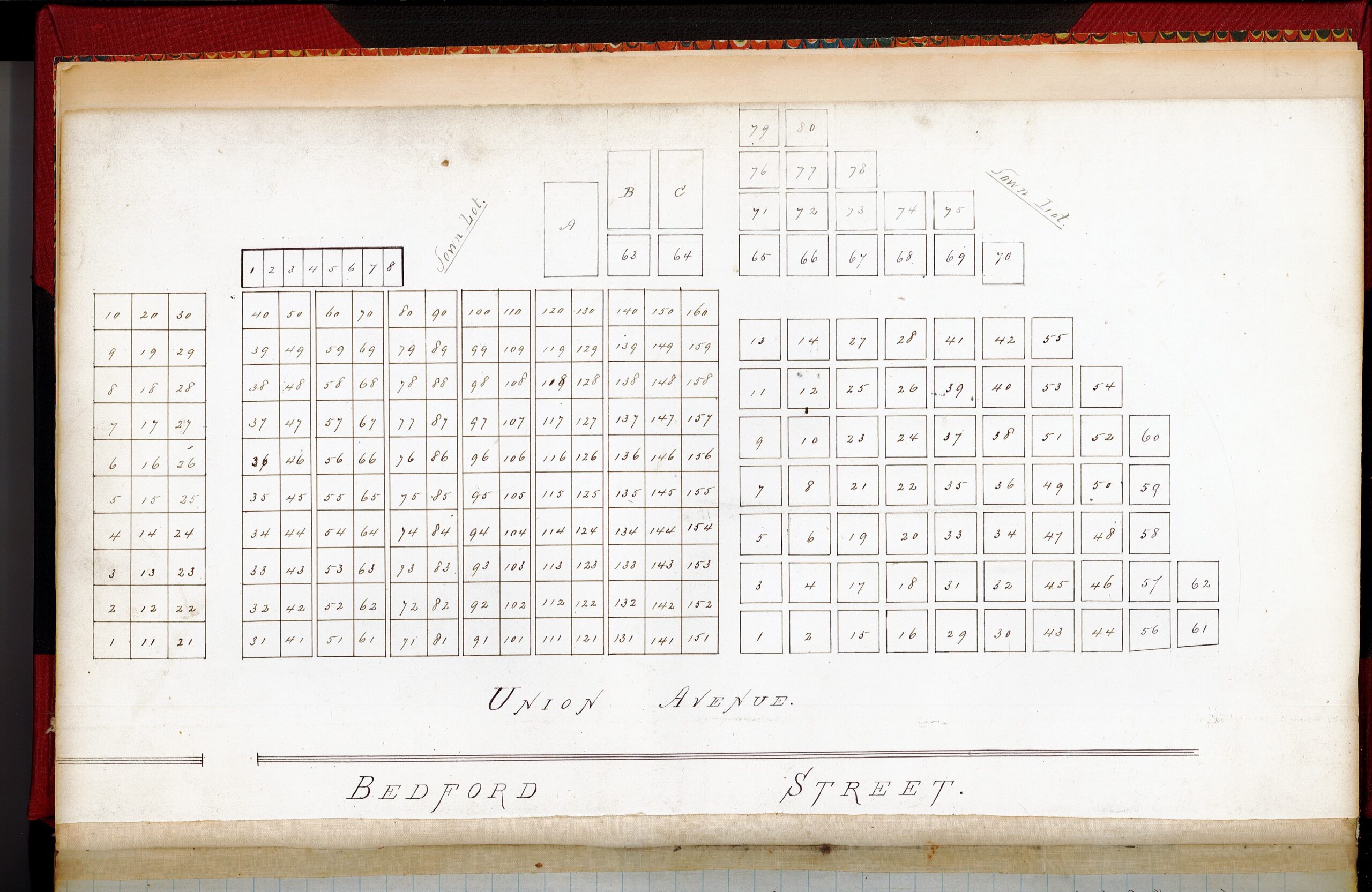
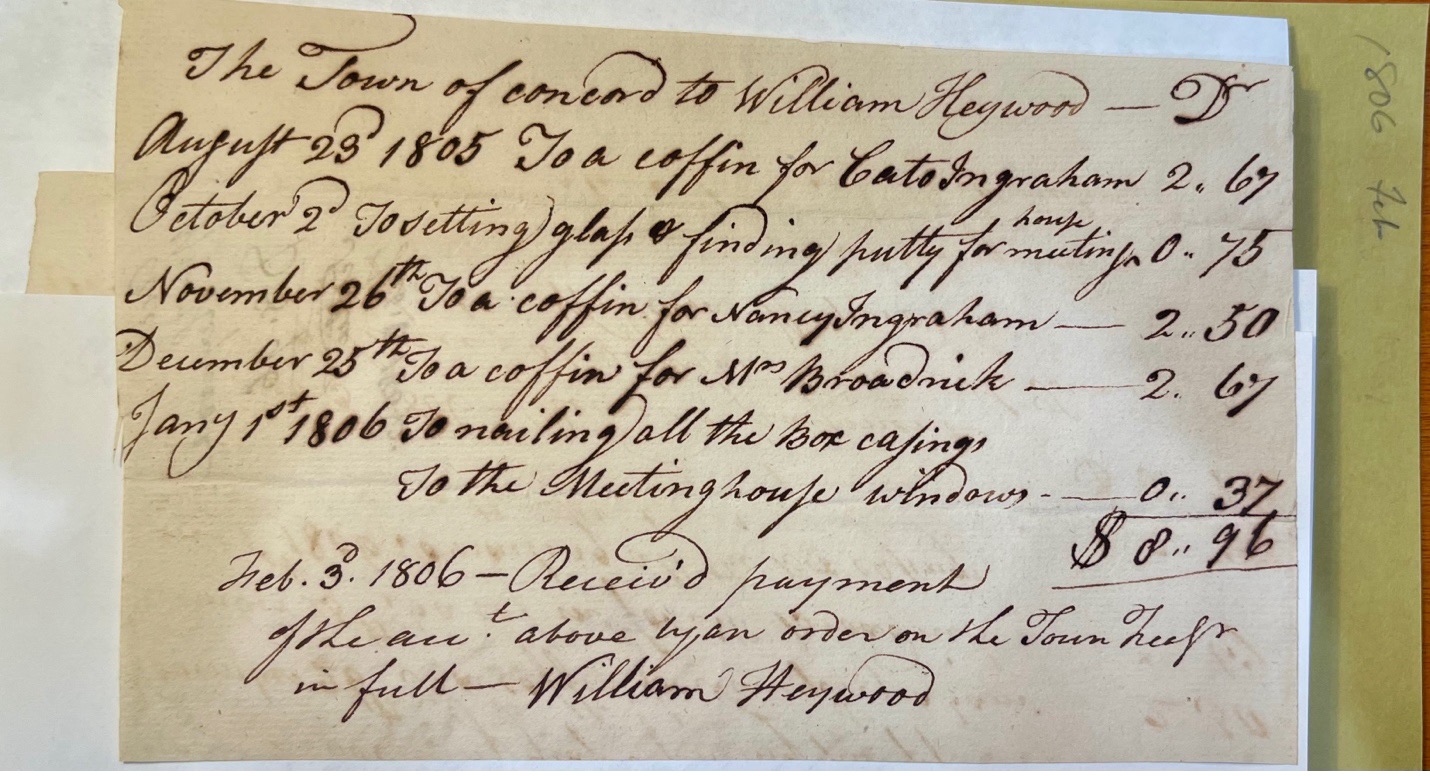
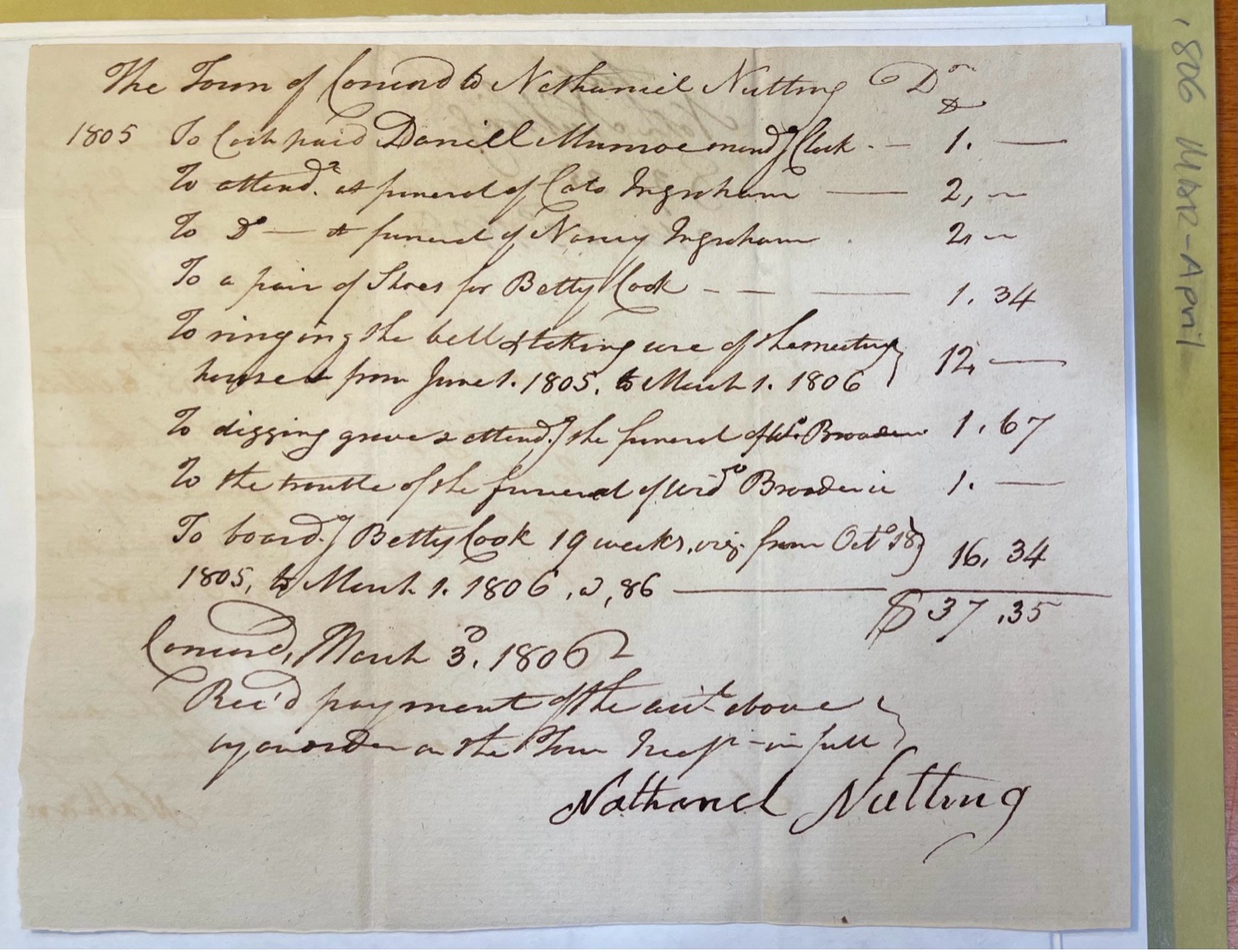
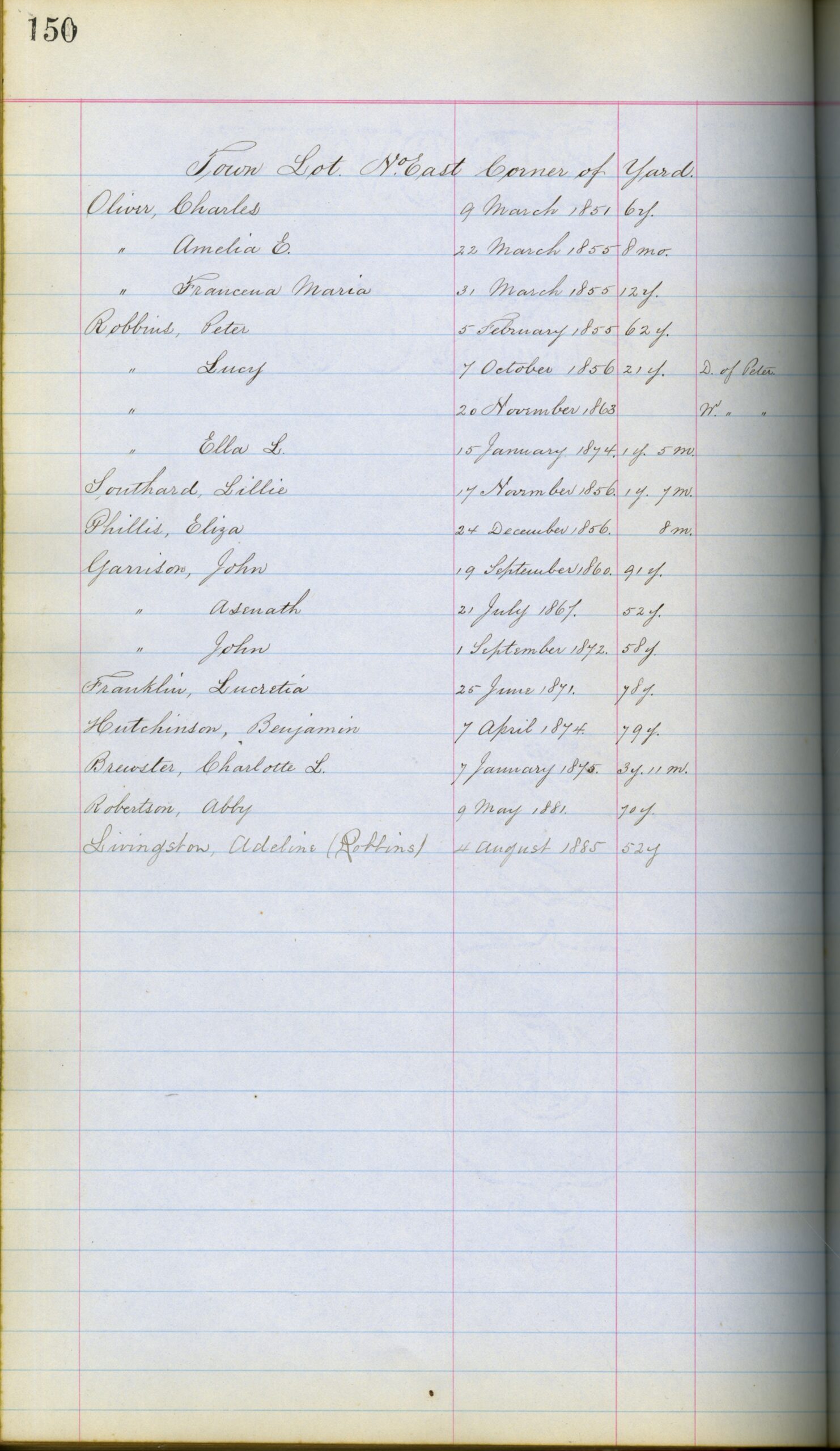
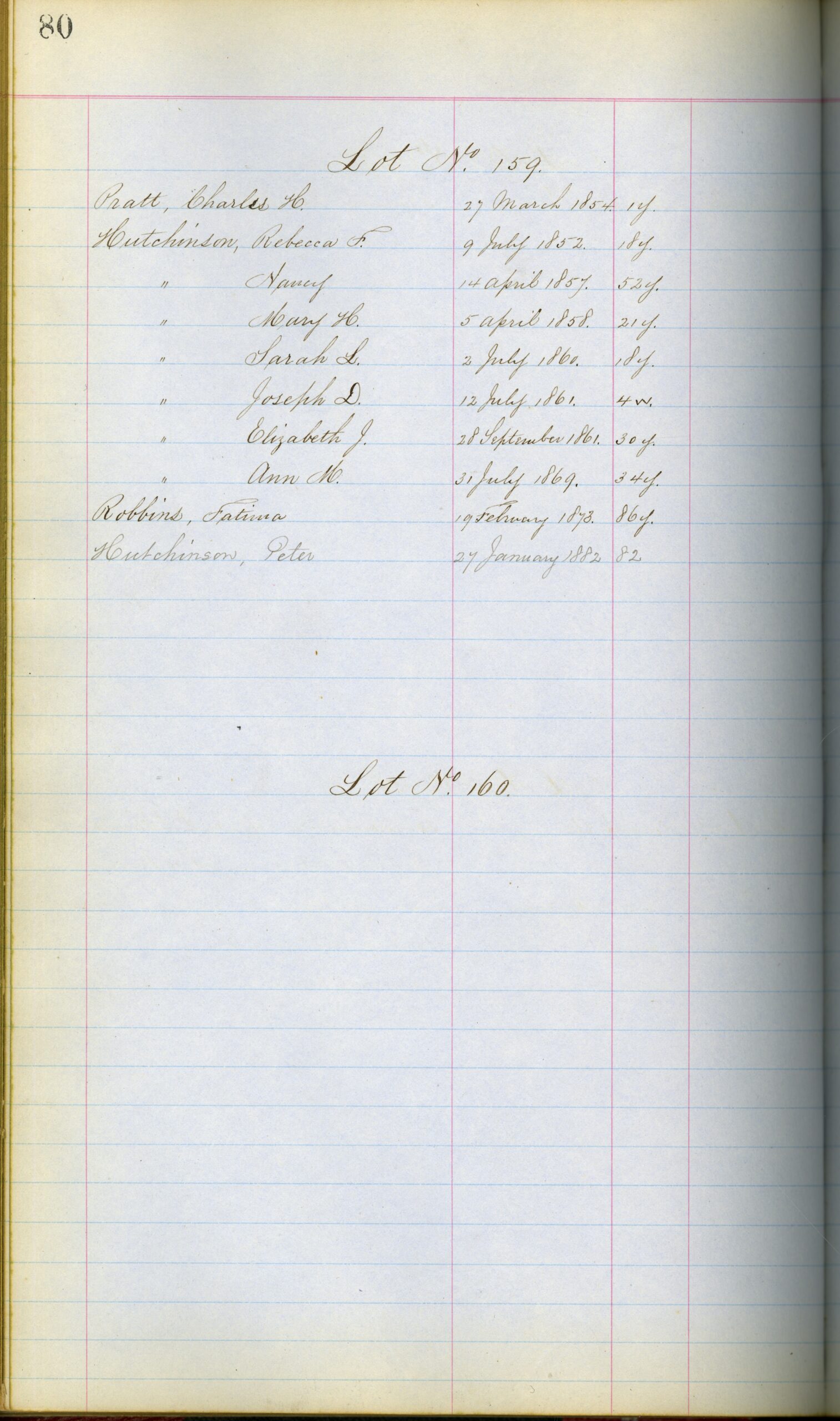
Official records are only part of the story. Local memory also played a role in preserving Concord’s Black history. A review of local newspapers supported my discovery of a separate lot for Concord’s Black community, albeit in a different way. The May 26, 1881, edition of The Concord Freeman, which had a section that served as a sort of gossip column, reporting who visited whom and other goings-on in town, reported: “Abby Robertson, the colored lady whose death is elsewhere reported, was brought here on Saturday for burial in the lot of John Garrison, her brother-in-law, with whom she used to live not far from where the burial took place.” Although the official record identified her resting place as the Northeast Corner, this newspaper account revealed that townspeople referred to it as John Garrison Jr.’s lot. This local knowledge further strengthens the conclusion that the lot was used by the town to bury the Garrison family and the broader Black community.
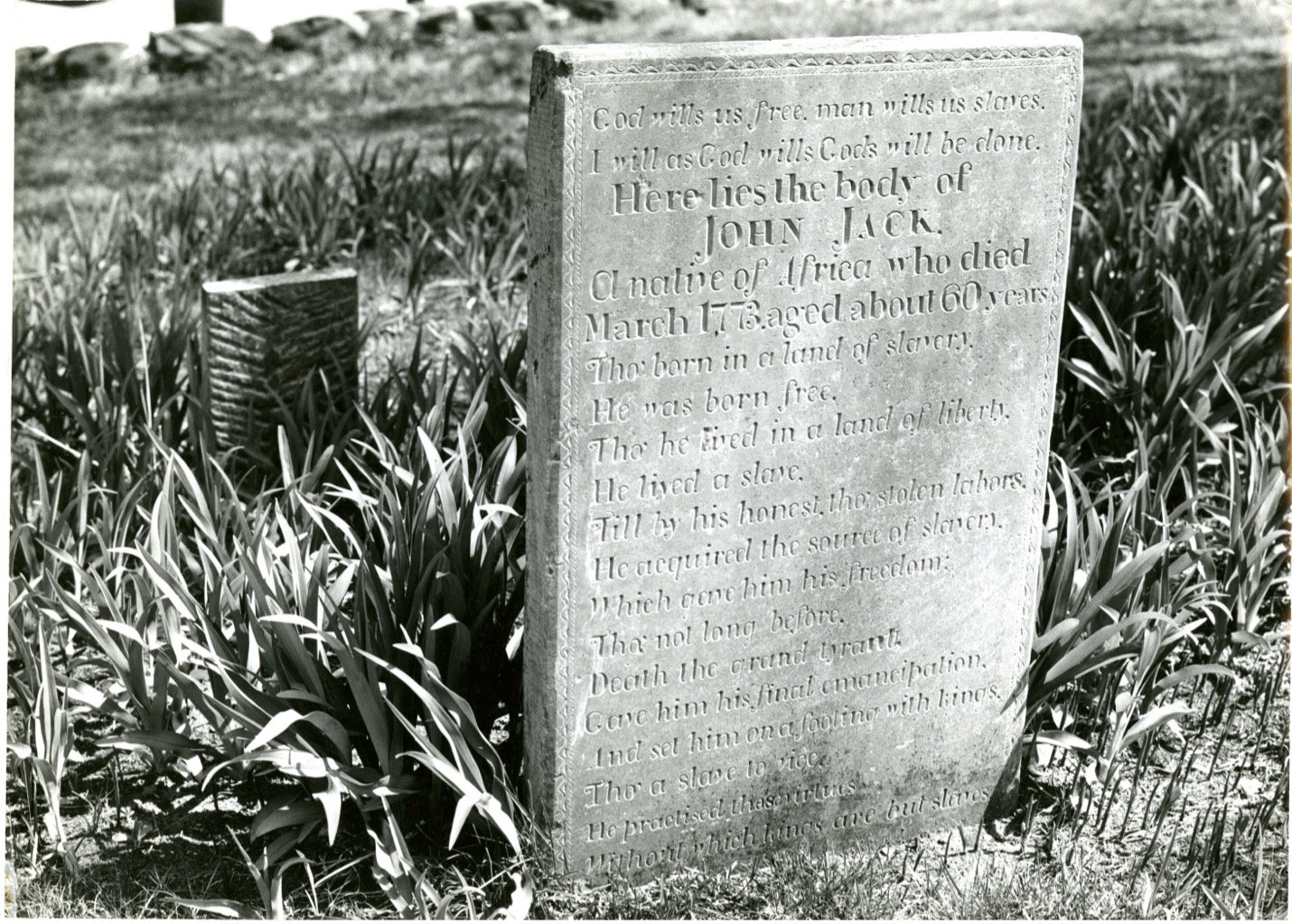
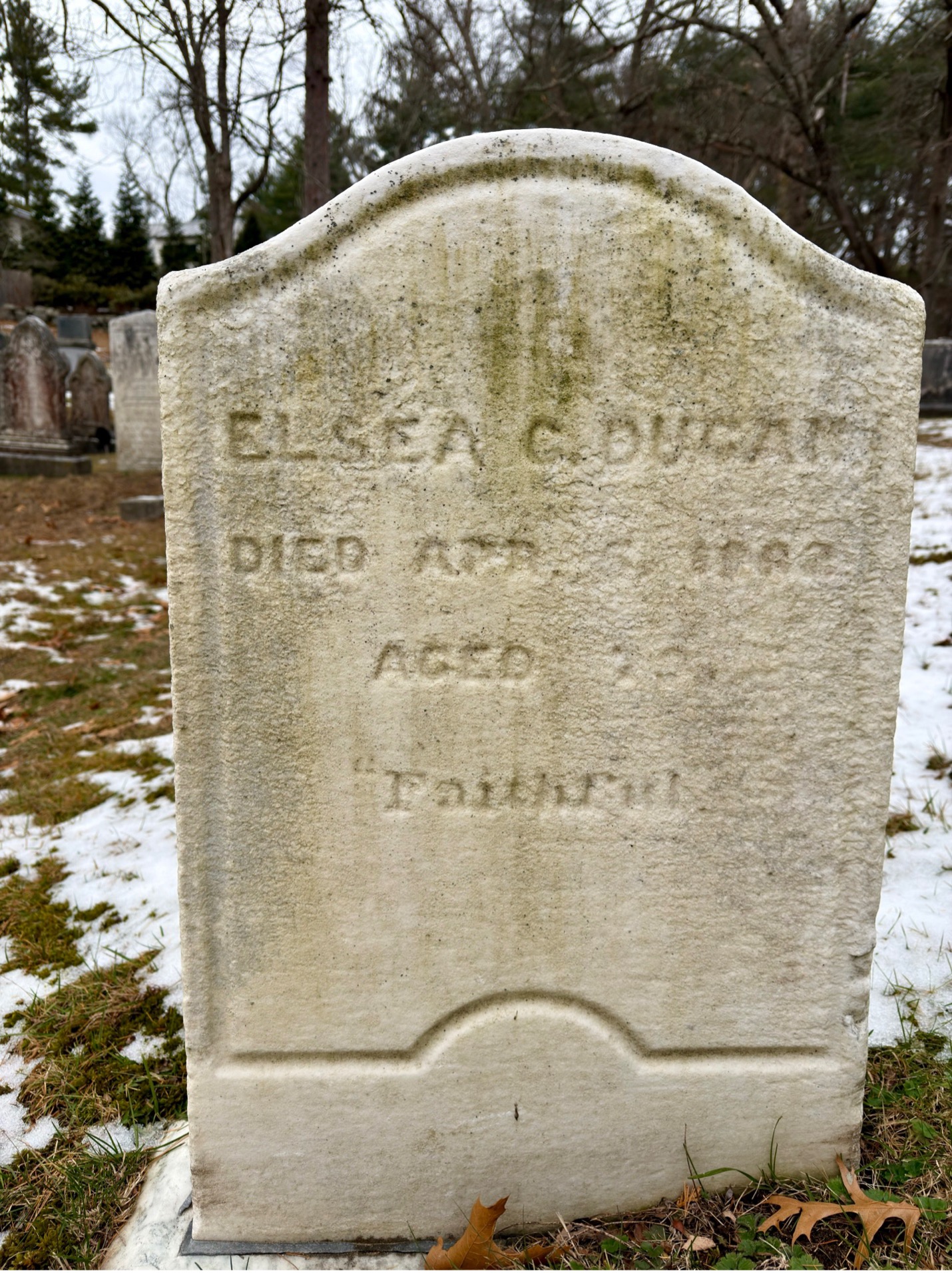
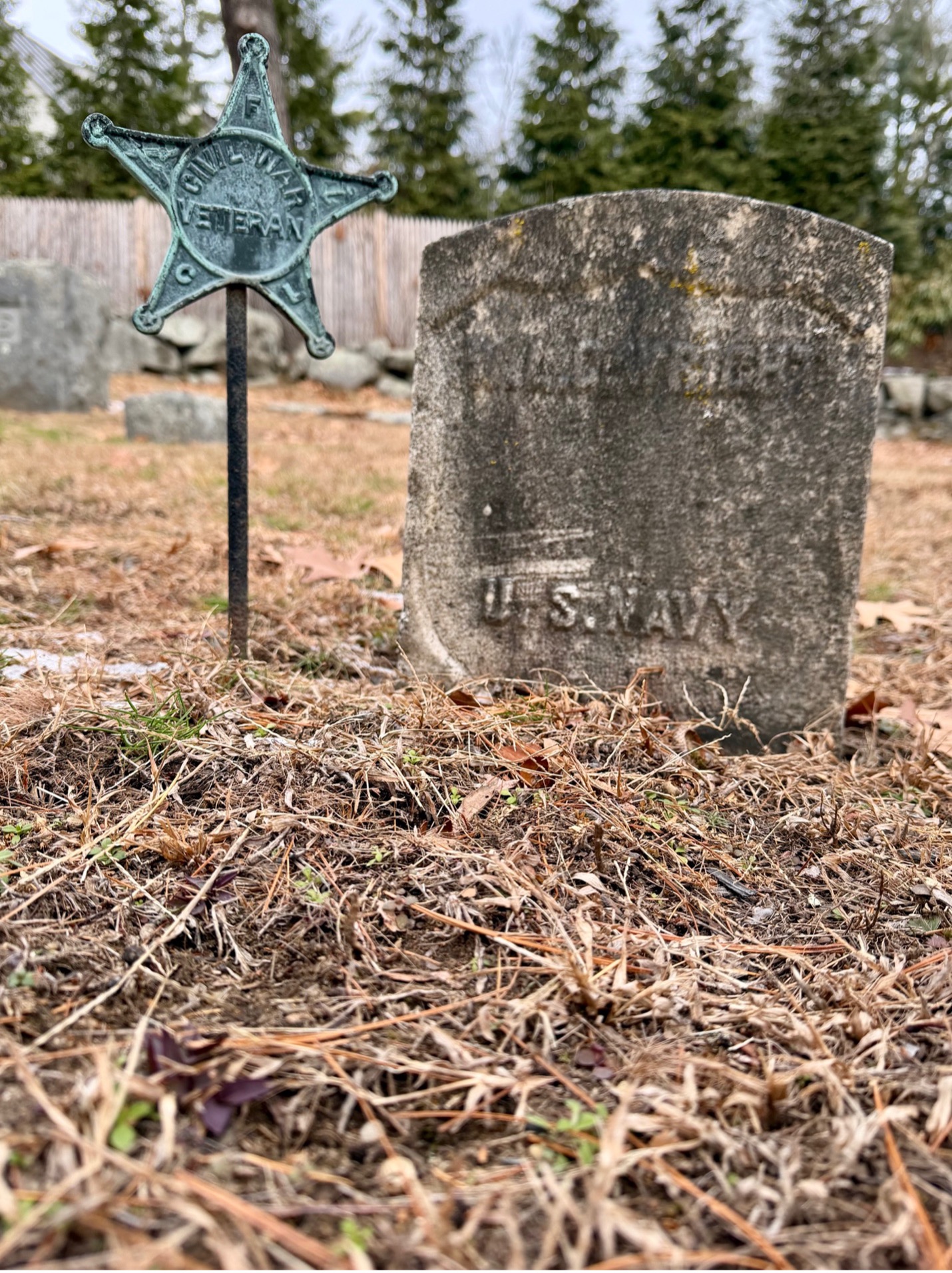
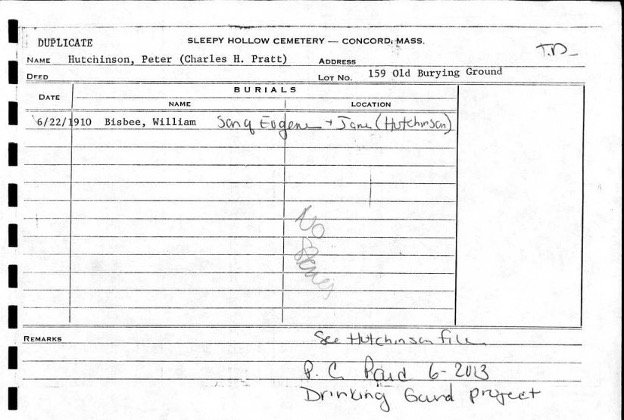
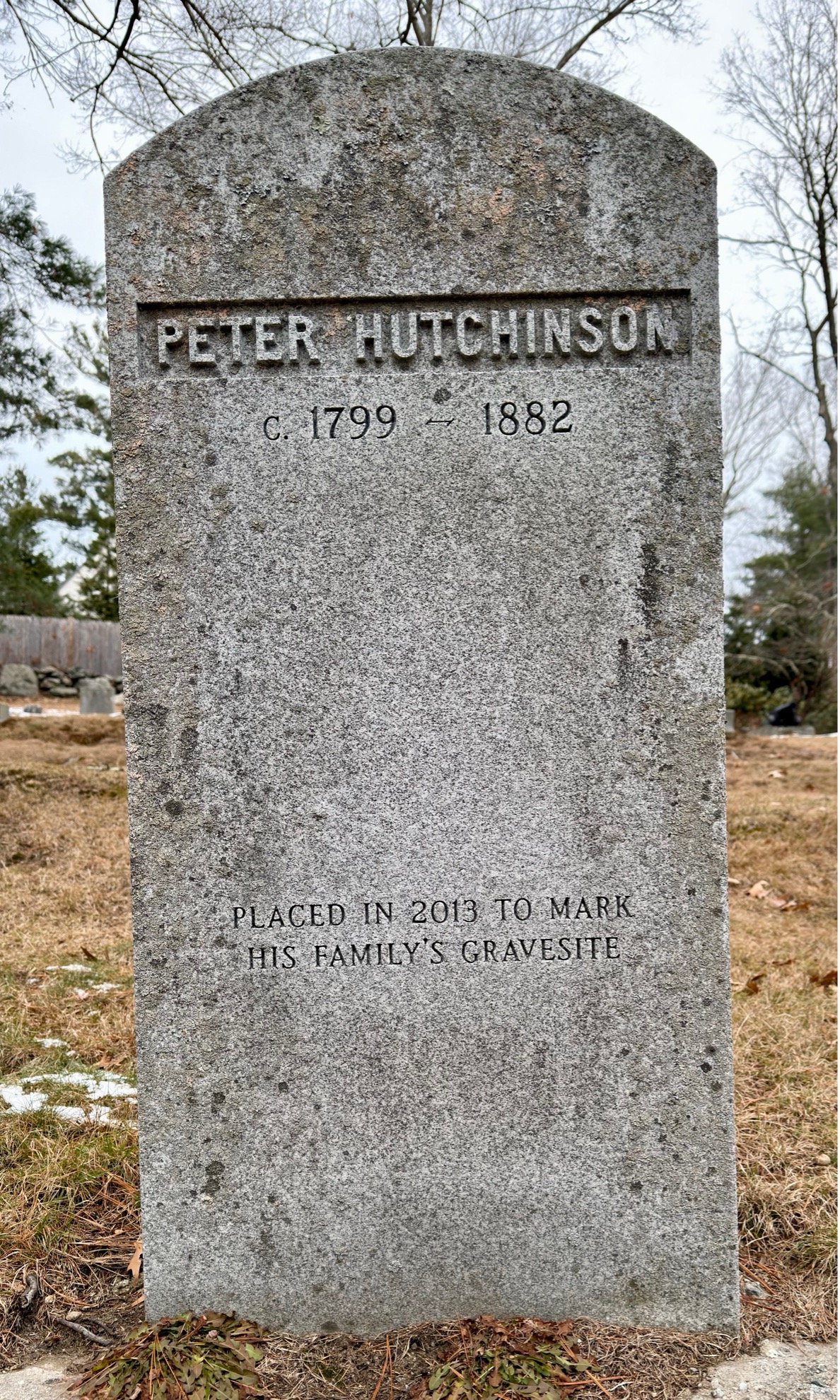
For generations, the story of Concord’s Black community focused mainly on the grave of John Jack. The later recognition of the graves of Elsea Dugan and William Lloyd Garrison Wright, and most recently, the dedication of Peter Hutchinson Jr.’s family lot, have broadened the narrative and brought long-overdue visibility to Black Concordians. The recently rediscovered Sleepy Hollow book is helping identify additional members of Concord’s Black community in their final resting places. While my efforts have not uncovered a lost cemetery like New York City’s “Negroes Buriel Ground,” they have revealed the names and burial sites of many individuals previously absent from the historical record.
Ultimately, the search for Concord’s lost graves is not solely about stones and names; it is about restoring individuals to history, one clue at a time. This progress results from my persistent efforts to piece together information from scattered references, town reports, and rediscovered books to determine where members of Concord’s Black community were laid to rest. However, the story remains incomplete; gaps persist, and the rediscovered book represents only a fragment of a much larger history. The ongoing challenge is to continue searching so that every member of Concord’s Black community may be remembered, honored, and restored to the Town’s collective memory as their burial sites are uncovered.
Further Reading:
On Black History in Concord, Massachusetts: Robert A. Gross, The Minutemen and Their World (New York: Picador, 2022), Robert A. Gross, The Transcendentalists and Their World (New York: Farrar, Straus and Giroux, 2021), and Elise Lemire, Black Walden: Slavery and Its Aftermath in Concord, Massachusetts (Philadelphia: University of Pennsylvania Press, 2009).
This article originally appeared in March 2026
Beth van Duzer is an independent historian based in Concord, Massachusetts, and the owner of Historian for Hire, LLC, which provides historical research services and walking tours. She is co-chair and clerk of the Concord250 History & Education Subcommittee and serves on the Town’s Cemetery Committee. Beth also works as an educator and research assistant at the Concord Museum. She is the author of the forthcoming book Patriots of the Revolution: Early Members of the Social Circle in Concord who Served in the American Revolution and is currently researching a new book on Concord’s Black community.