Two Roads to Freedom: William Lee, Harry Washington, and Living the Paradox of the American Revolution

On a cold winter day in November of 1783, two different stories of liberty unfolded in New York City as the American Revolution came to a close. British troops were withdrawing from Manhattan after nearly seven years of occupation, marching toward the waterfront to board ships bound for Nova Scotia, the Caribbean, and the wider British Empire. Crowds gathered along the streets as the final regiments departed.

Soon afterward, George Washington entered the city at the head of the Continental Army. The victorious commander rode through cheering crowds that hailed him as the liberator of a new nation. Among the men riding with him that day was William Lee, Washington’s enslaved valet and long-time military companion. Lee had accompanied Washington throughout the war, traveling with him from the Continental Congress to the siege of Boston, enduring the winter encampments at Valley Forge and Morristown, and remaining at his side through the final victory at Yorktown. Yet after eight years of shared campaigns, Lee rode beside .

Figure 1: George Washington’s triumphal entry into New York City on November 25, 1783, marking the British evacuation and the end of the Revolutionary War; an event that unfolded alongside the departure of thousands of formerly enslaved people seeking freedom. Currier & Ives, Washington’s entry into New York, on the evacuation of the city by the British, Nov. 25th 1783, 1857, hand-colored lithograph. Library of Congress Prints and Photographs Division. Retrieved from the Library of Congress.

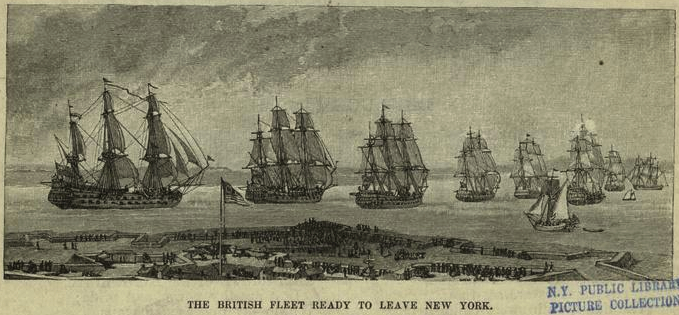
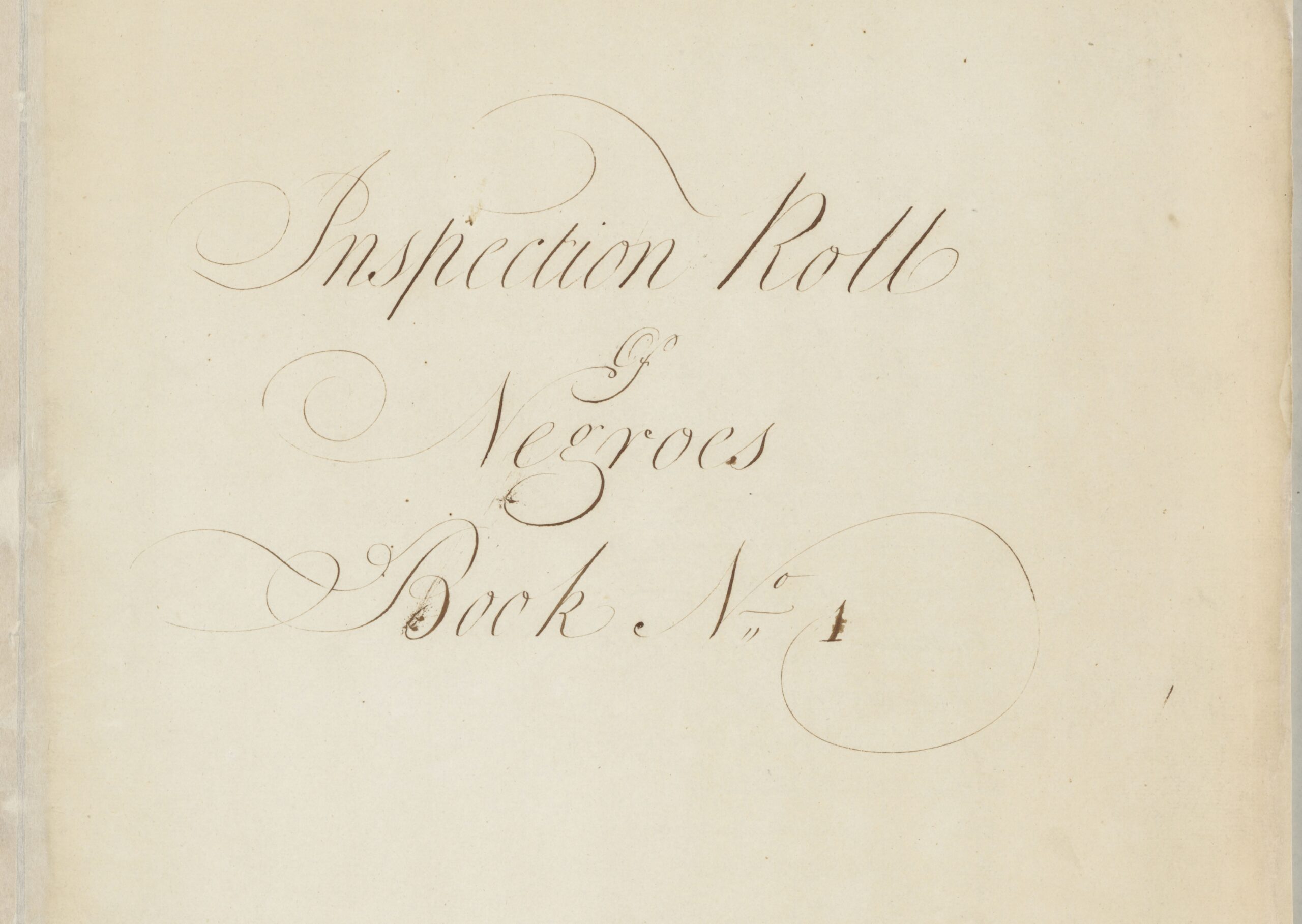
Months earlier another man once enslaved at Mount Vernon passed through the same city under very different circumstances. In the summer of 1783 British officials compiled a ledger documenting Black Loyalists who had secured their freedom through service to the Crown. Known as the Book of Negroes, the register recorded the names, ages, and former owners of those entitled to evacuation from the United States. Among the entries was Harry Washington, a former slave of Washington’s who escaped years earlier and joined the British to fight for his independence.

Figure 2: British ships departing New York in 1783 carrying thousands of Black Loyalists who had escaped slavery and secured freedom under British protection. “The British Fleet Ready to Leave New York,” Harper’s Magazine (November 1883). New York Public Library, Public domain, via Wikimedia Commons.

As William Lee accompanied George Washington into New York while still enslaved, Harry Washington sailed away a free man. These two enslaved men from the same plantation reached freedom by radically different paths—one through proximity and service, the other through self-emancipation—revealing how the Revolution opened paths to liberty even as slavery remained embedded within the world supposedly shaped by the Revolution’s highest ideals.

In that moment, the promise of independence and the reality of bondage existed side by side, embodied in the lives of men who had once labored together at Mount Vernon but now stood on opposite sides of the same historical turning point.

Historians have often analyzed the American Revolution through intellectual debates over revolutionary ideas: natural rights, republican virtue, and Enlightenment philosophy. Yet the era’s most profound transformations are most evident not only in pamphlets and legislative bodies, but also in lived experiences. Enslaved men and women encountered revolutionary rhetoric not as abstract theory but amid a crisis that destabilized authority and opened new possibilities for pursuing their own freedom.

Recent scholarship on the American Revolution and slavery emphasizes that enslaved people were not passive observers of imperial conflict but active participants. Historians such as Cassandra Pybus, Alan Taylor, and Simon Schama trace how thousands of enslaved men and women responded to wartime disruption by fleeing plantations, joining British forces, and pursuing freedom to Nova Scotia and Sierra Leone. Their work reveals a vast geography of wartime mobility, as enslaved individuals weighed competing risks and opportunities in pursuit of liberty.

This wider Atlantic framing also points to the Haitian Revolution, where enslaved people transformed revolutionary language into a direct assault on slavery itself. The comparison does not collapse the American and Haitian Revolutions into a single story, but it reminds us that Black claims to liberty developed within a broader revolutionary world in which freedom was contested not only by legislatures and armies, but also by individual enslaved people.

William Lee and Harry Washington navigated the Revolution along markedly different paths.  While Lee navigated the Revolution through proximity to Washington, Harry Washington seized the war as a chance to escape that world entirely. Their lives illuminate the range of choices available to enslaved people within the unstable political environment of the late eighteenth century.

George Washington’s long relationship with William Lee illustrates how Revolutionary ideals encountered the realities of daily life. Purchased by Washington in 1768 as a teenager, Lee remained in his service for thirty-eight years and accompanied him through the most consequential years of his life. During the Revolutionary War the two men lived in near constant contact. From 1775 to 1783 they spent almost every day within sight of one another.

Within the rigid structure of slavery this relationship was never one of equals, yet daily life required trust, reliability, and cooperation. Lee observed Washington not only as a military commander but as a man grappling with responsibility and uncertainty. Washington depended upon Lee’s discretion and competence. Over nearly four decades of shared experience, each man’s life unfolded within the presence of the other, a relationship that inevitably shaped their understanding of the world they inhabited.

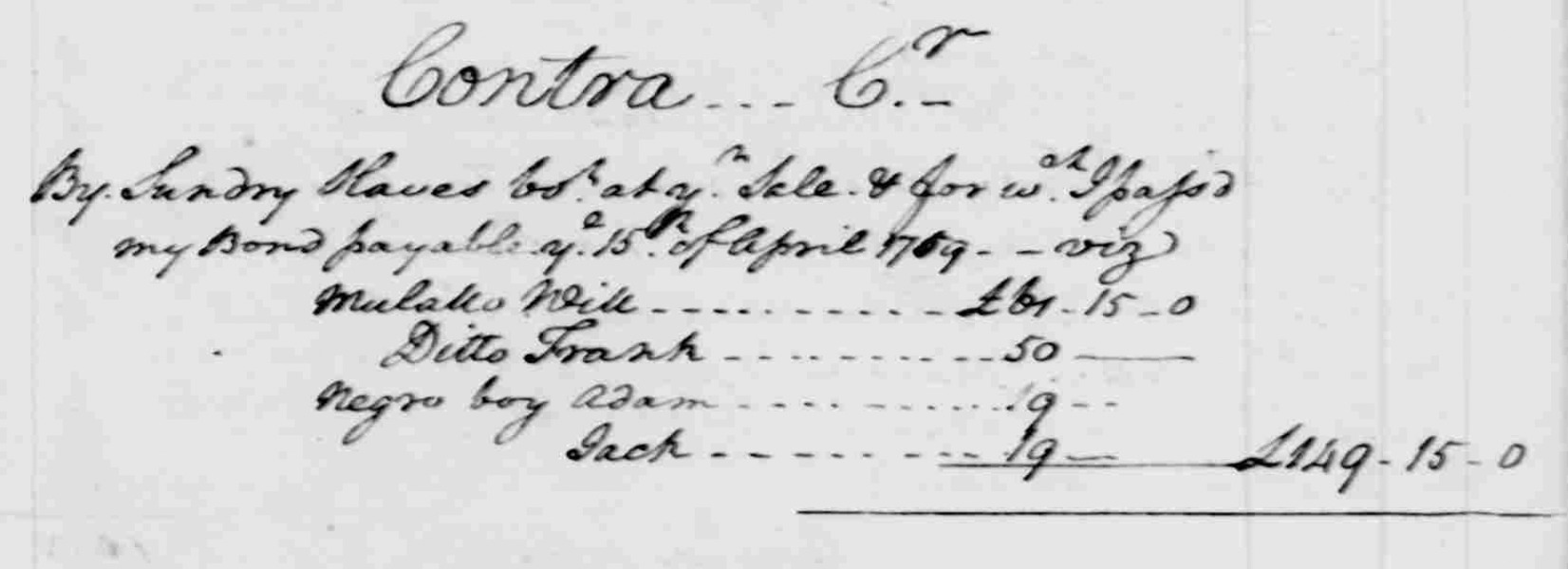
William Lee entered George Washington’s world in 1768, when Washington purchased him and his brother Frank from the estate of Mary Smith Ball Lee. William was described in the sale record as “mulatto,” a designation that signaled mixed African and European ancestry. He was likely born in Virginia around 1750, making him approximately sixteen at the time of purchase. His mother had also been of mixed ancestry, and possibly her mother before her. Lee thus represented at least the third generation of his family born in the Chesapeake.

Figure 3: Ledger entry for George Washington’s 1768 purchase of William Lee and his brother Frank. This transaction brought Lee into Washington’s household, where he would remain for more than three decades. George Washington, Cash Accounts, 3 May 1768. George Washington Papers, Series 5, Financial Papers: General Ledger A,-1772./1772, 1750. Retrieved from the Library of Congress.

That generational depth mattered profoundly. Lee spoke English as his first language. He was raised within the cultural rhythms of Virginia plantation society and Anglican practice. He understood the codes of deference and the expectations of gentry households. He had no memory of Africa and no lived experience of transatlantic rupture. Although enslaved, he inhabited the same geographic and cultural world as Washington.

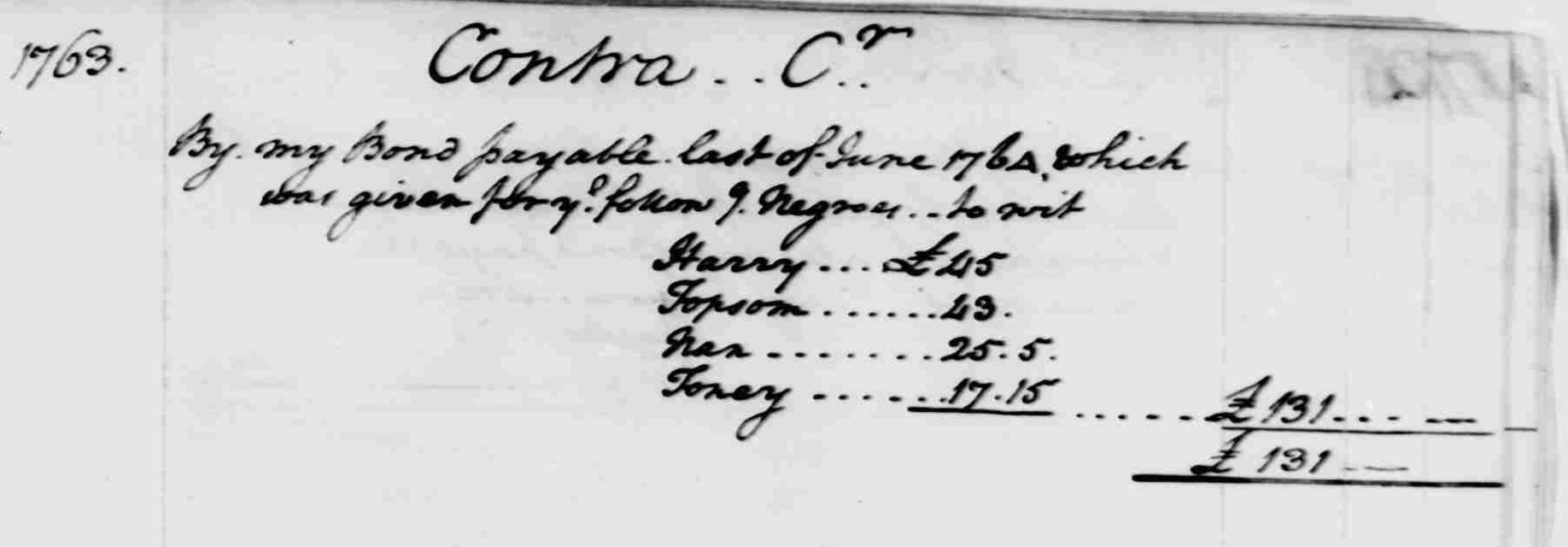
Harry Washington’s origins were entirely different. Born around 1740 in the Gambia River region of West Africa, he was captured in warfare and sold into the Atlantic slave trade. Having survived the horrors of the Middle Passage, he arrived in Virginia as what contemporaries called a “saltwater” slave, carrying memories of Africa that William Lee never knew. When George Washington purchased him in 1763 for work draining the Great Dismal Swamp, Harry had already survived violent capture, oceanic displacement, and sale into forced labor. Unlike Lee, he carried a lived memory of another continent, another social order, and another life as a free man.

Figure 4: Ledger entry recording George Washington’s 1763 purchase of several enslaved people, including Harry Washington. This transaction marked the beginning of a life that would later diverge sharply from that of William Lee during the Revolution. George Washington, Ledger A, 1750–1772, p. 173, entry recording bond for “Harry,” “Topsom,” “Nan,” and “Toney,” George Washington Papers, Series 5, Financial Papers: General Ledger A,-1772./1772, 1750. Retrieved from the Library of Congress.

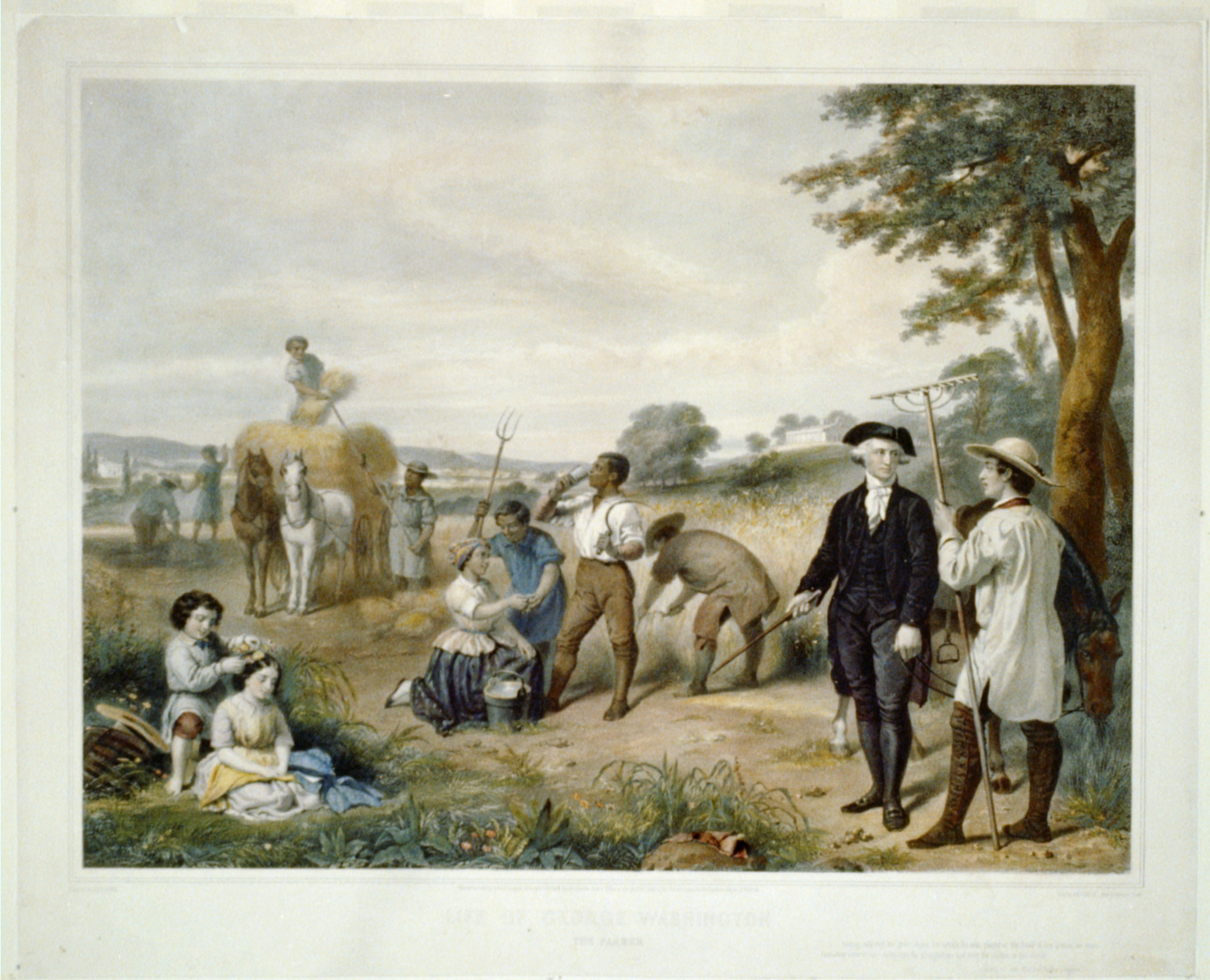
By the late 1760s Harry had been relocated to Mount Vernon and eventually assigned to the stables. There, he likely encountered William Lee regularly. Both men worked in skilled positions related to horses, a central element of George Washington’s identity as a Virginia gentleman. Their daily work proximity suggests conversation and observation, even if the archival record remains silent on their personal interactions.

Figure 5: By the mid-eighteenth century the plantation stood at the center of George Washington’s world and was the place where William Lee and Harry Washington began a shared life in bondage before the Revolution led them down two very different roads to freedom. Junius Brutus Stearns, Life of George Washington—The Farmer (Paris: Lemercier, c1853). Retrieved from the Library of Congress.

Yet despite shared space, their frames of reference diverged. William Lee was culturally embedded in Virginia society. Harry Washington carried memories of Africa and of a life before enslavement.  Both were enslaved, but they inhabited slavery differently, one within generations of continuity in Virginia, the other after violent rupture and displacement.

William Lee’s ascent within Washington’s household was rapid. Recognized for his skill as a horseman, he was appointed huntsman during fox hunts, a role that placed him visibly at the head of elite leisure rituals. Fox hunting was not merely sport but a performance of gentry authority and discipline. That Washington entrusted Lee with this role indicates both competence and confidence.

More consequential still was Lee’s appointment as Washington’s personal valet, in which capacity he prepared Washington’s clothing, organized his travel effects, attended to his grooming, and accompanied him wherever he went. When Washington traveled to the First Continental Congress in 1774 and again in 1775, Lee came, too. When Washington was appointed Commander in Chief in June 1775, Lee marched north.

For nearly eight years, Lee did not return home to Mount Vernon.

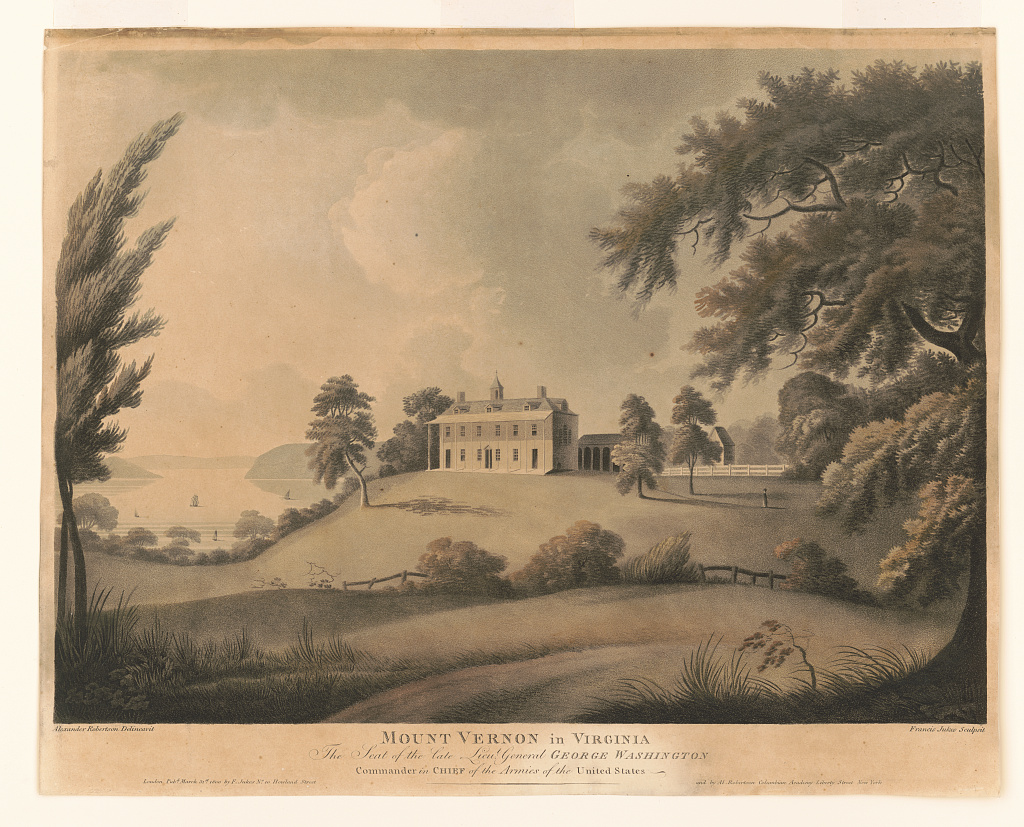
Figure 6: View of Mount Vernon from the Potomac River. Francis Jukes, Mount Vernon in Virginia (London: F. Jukes, 1800). Retrieved from the Library of Congress.

Within the wartime headquarters personnel that Washington described as his “military family,” Lee occupied a singular position. Aides-de-camp rotated. Generals rose and fell. Political emissaries came and went: Lee remained constant. He rode with Washington on campaign, endured winter encampments, and stood nearby during reviews and councils. An eyewitness recalled Washington throwing his reins to Lee before physically breaking up a fight between New England and Virginia soldiers in Cambridge during the war’s first winter. Another recorded the two men together at the Battle of Monmouth.  Lee was also entrusted with Washington’s personal papers, documents whose exposure could have proved damaging.

This proximity complicates portrayals of Lee as merely peripheral. Lee was embedded in the daily life of revolutionary command. He witnessed debates over military discipline, the fragility of republican authority, and the mobilization of enslaved and free Black men in northern regiments. He was with Washington when the Declaration of Independence was read to the army in July 1776 and witnessed the exposure of Benedict Arnold’s treason.  Lee lived the Revolution’s contradictions.

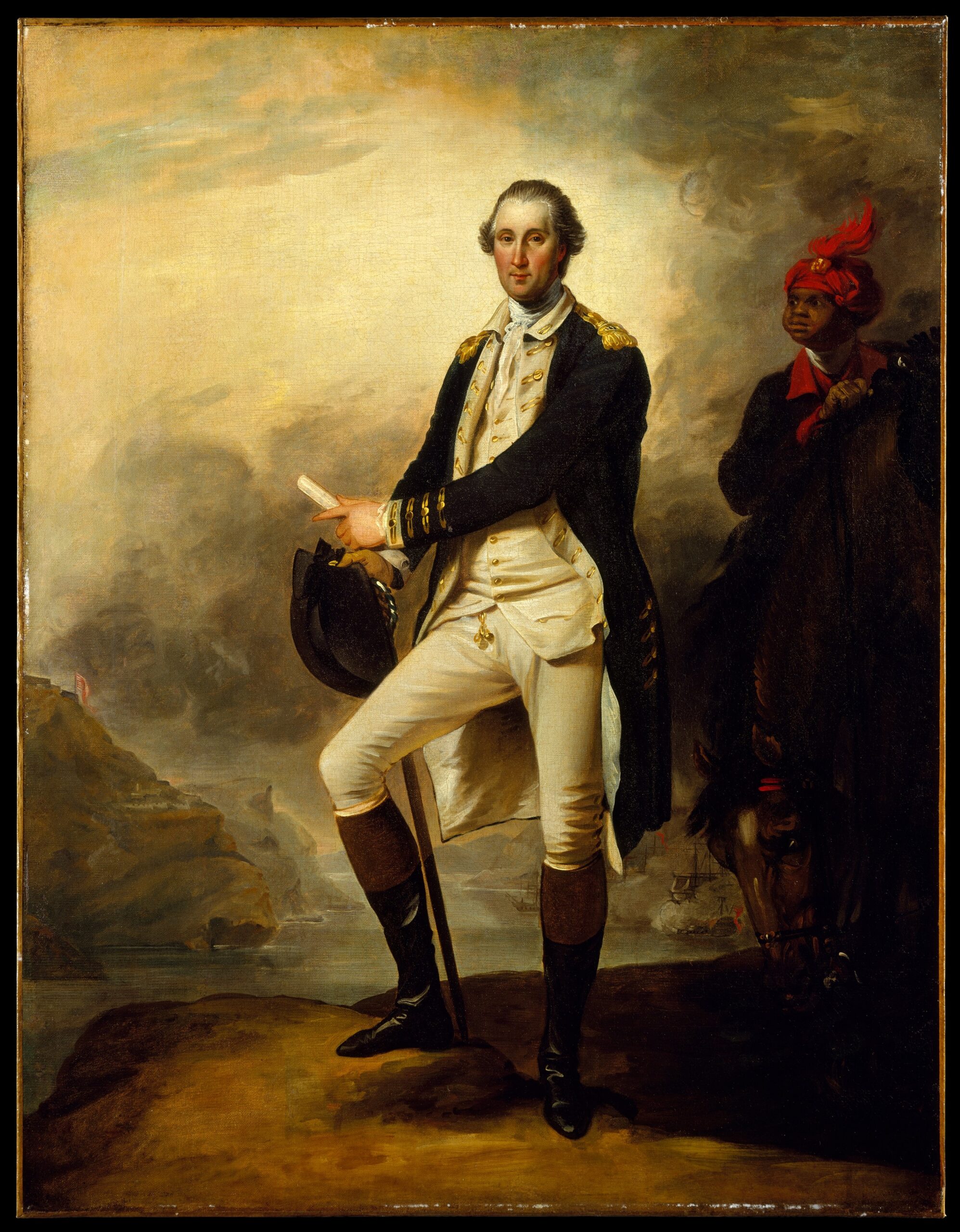
Figure 7: John Trumbull’s portrait of George Washington with his enslaved valet William Lee, who accompanied him throughout the Revolutionary War and remained in his service for more than thirty years. John Trumbull, George Washington and William Lee (1780). Bequest of Charles Allen Munn, 1924, Metropolitan Museum of Art.

The British repeatedly offered freedom to enslaved men who fled rebel masters. Thousands took that path. Lee possessed intimate knowledge of Washington’s movements and plans. His defection would have held enormous strategic value. Yet he did not flee. The decision to remain cannot be reduced to passivity: it reflected calculation within constraint.

Loyalty, whether grounded in attachment, prudence, or expectation of reward, was Lee’s chosen strategy. Such a decision was not without cost. He left behind a wife and child at Mount Vernon when he marched north in 1775 and they vanish from the record thereafter. During the war Lee married Margaret Thomas, a free mulatto laundry woman from Philadelphia who worked for Washington’s household. Yet there is no evidence that they established a permanent shared life after the war. Lee’s commitment to Washington’s orbit limited his geographic autonomy.

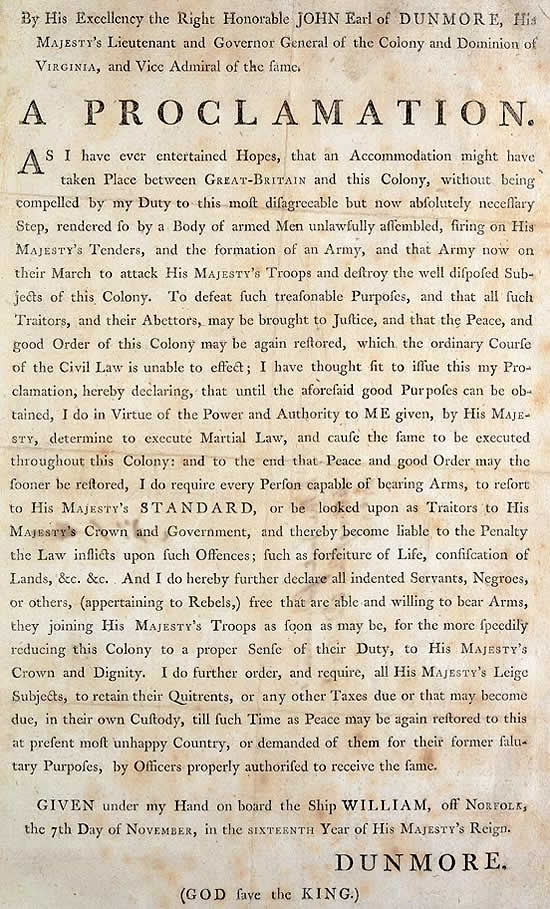
Figure 8a: Dunmore’s Proclamation, which inspired Harry Washington to declare his own independence by escaping from Mount Vernon in July of 1776 and fighting for the British in exchange for his freedom (John Murray, 4th Earl Dunmore, Public domain, via Wikimedia Commons).
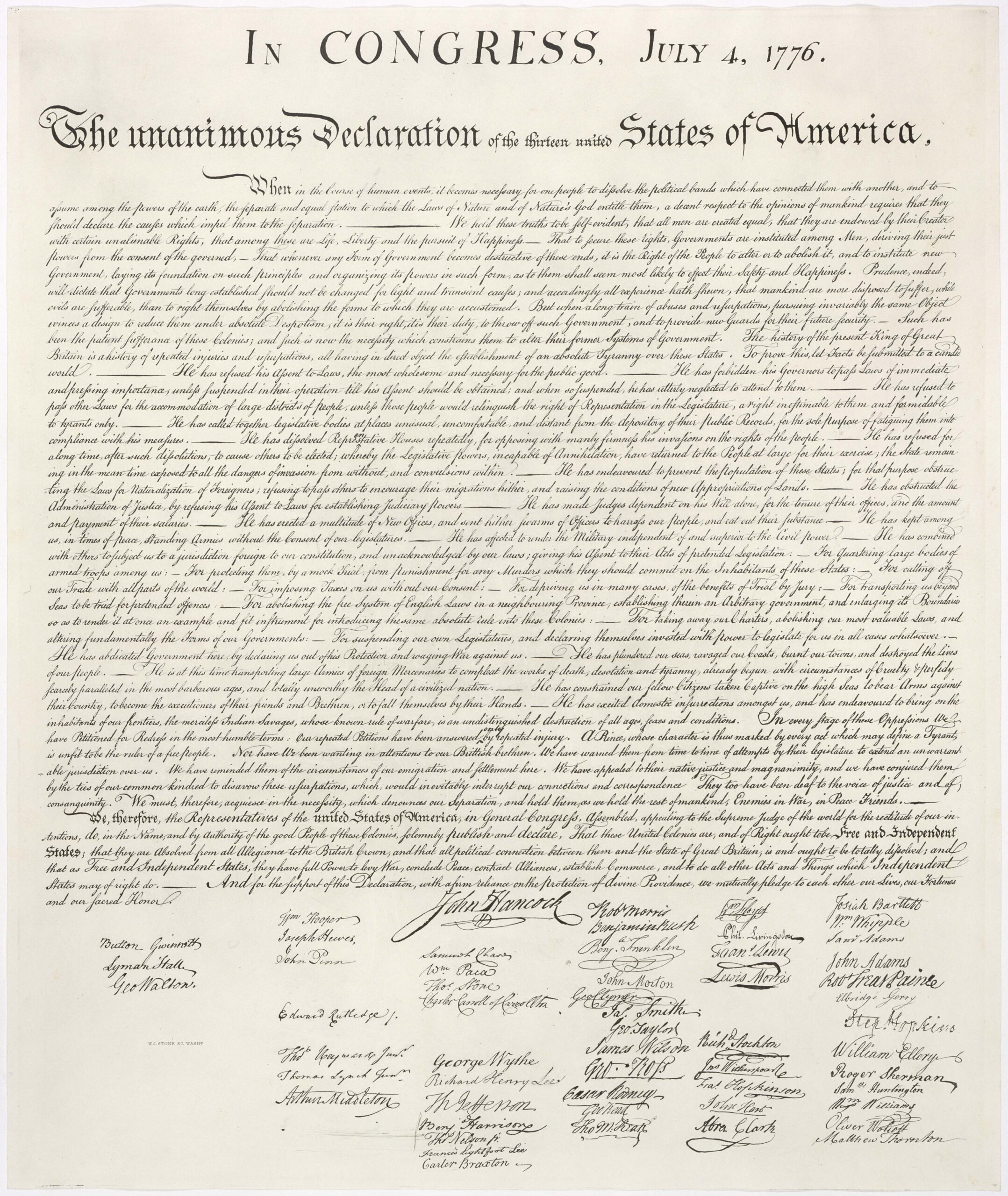
Figure 8b: The Declaration of Independence which General Washington had read to the Continental Army in New York City to inspire them in July of 1776. (Second Continental Congress; reproduction: William Stone, Public domain, via Wikimedia Commons).

Harry Washington joined Dunmore’s Ethiopian Regiment, formed from enslaved men who had fled their rebel masters for the promise of freedom in British service. Disease ravaged the regiment, and survivors were reassigned to labor and support roles within the British Army. He later served as a Corporal in the Royal Artillery Department, fighting for the British, and for his freedom.

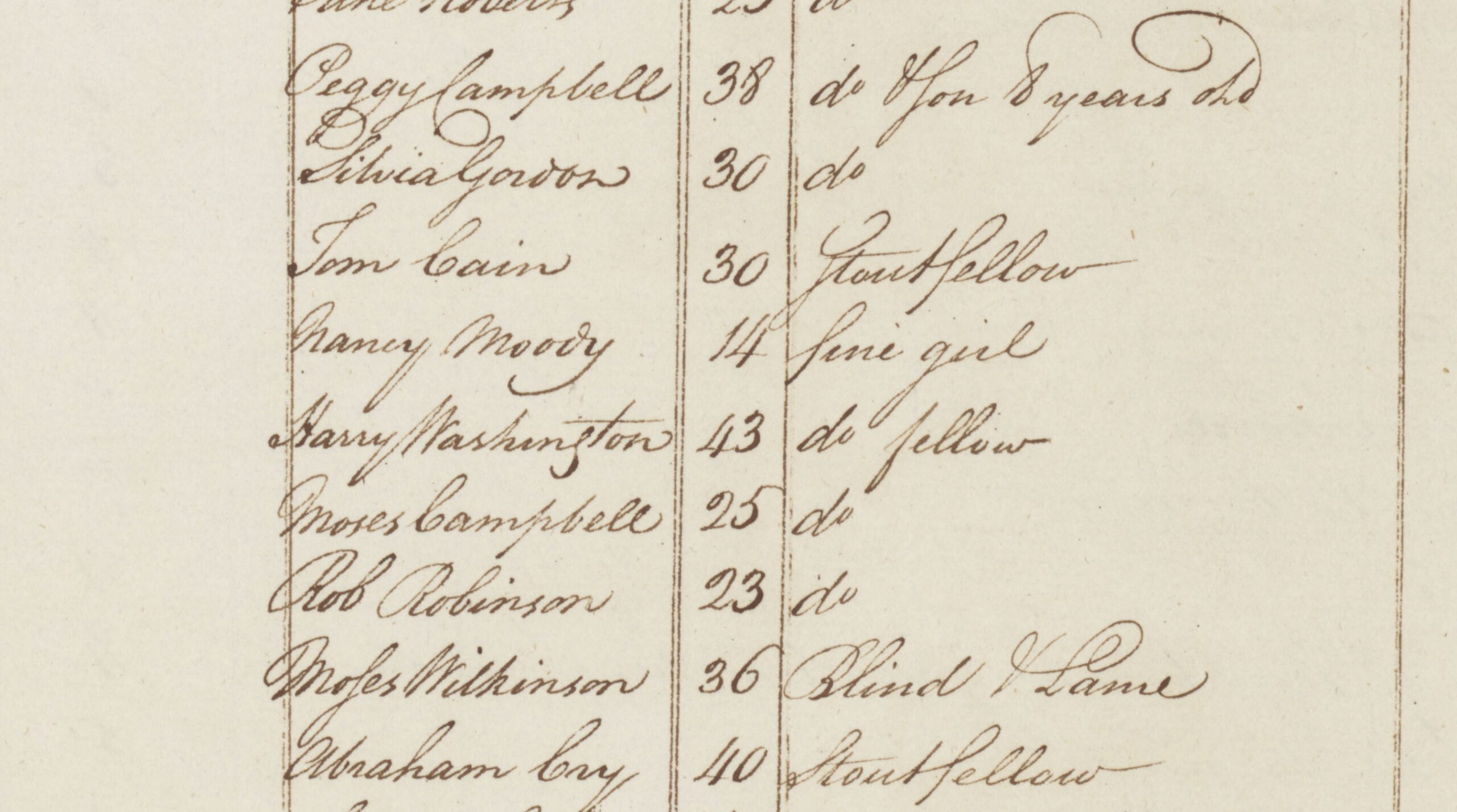
Washington’s service entitled him to evacuation in 1783 under British protection, as part of the largest emancipation of American slaves until the Civil War. His name was entered into the Book of Negroes, a remarkable bureaucratic document that recorded age, description, former owner, and certificate of freedom. “Harry Washington, Negro, 43, Stout Fellow; formerly the property of General Washington; left him 7 years ago. Certificate by General Birch.” That record formalized his status as a free man departing American shores.

Harry Washington’s story deepens after the war. He was transported to Nova Scotia, where Black Loyalists confronted harsh winters, racial discrimination, and broken promises of land. Many found themselves laboring for white settlers rather than establishing independent farms. The British Empire had granted freedom but not equality.

Figure 9a: The “Book of Negroes,” a British ledger recording Black Loyalists evacuated from New York in 1783. Harry Washington appears here as a formerly enslaved man who secured his freedom through flight and service with British forces. Inspection Roll of Negroes Book No. 1, Miscellaneous Papers of the Continental Congress, Between 1774-1789, National Archives.
Figure 9b: The “Book of Negroes,” a British ledger recording Black Loyalists evacuated from New York in 1783. Harry Washington appears here as a formerly enslaved man who secured his freedom through flight and service with British forces. Inspection Roll of Negroes Book No. 1, Miscellaneous Papers of the Continental Congress, Between 1774-1789, National Archives.

In 1792 Harry Washington joined nearly 1,200 Black Loyalists who migrated again, this time to Sierra Leone.  He crossed the Atlantic once more, no longer imprisoned in chains below deck, but as a free passenger breathing free air. Influenced by British abolitionists such as Granville Sharp, the colony of Sierra Leone was envisioned as a site of Black autonomy. Yet tensions soon emerged between settlers and the Sierra Leone Company, which sought to impose centralized control and taxation.

In 1800 the settlers rebelled, demanding representation and resisting what they perceived as unjust exploitation. Harry Washington participated in the uprising. The revolt was ultimately suppressed, and its leaders were executed or banished. Harry was exiled into the African interior and there the record ends.

Harry Washington’s freedom had been seized, defended, and contested across multiple Atlantic frontiers. Unlike Lee’s, it was not bestowed but taken. Yet Harry was reminded time and again that his freedom remained precarious, subject to imperial structures and colonial powers.

Placing William Lee beside Harry Washington also brings George Washington’s own evolution into sharper focus. Historians have debated the sources of Washington’s gradual discomfort with slavery, variously emphasizing Enlightenment ideology, economic calculation, or Revolutionary rhetoric. Yet ideas alone rarely produce moral transformation. Lived experience matters.

For eight continuous years, Washington lived in close proximity to Black men who embodied the Revolution’s contradictions. He depended upon William Lee daily. He witnessed Black soldiers serving in northern regiments. He saw enslaved people use wartime upheaval to renegotiate status. He experienced firsthand the instability that Dunmore’s proclamation unleashed among slaveholders.

Washington’s correspondence in the postwar years reveals a growing unease with slavery and a reluctance to buy or sell enslaved people. His will ultimately provided for the emancipation of those he legally owned. This evolution did not represent a public denunciation, nor did it extend to the dower slaves legally tied to Martha Washington’s estate. Yet it was also unprecedented: alone among Virginia’s principal founders, Washington provided in his will for the emancipation of all the enslaved people he legally owned.

Washington’s late-life manumission provisions should not be mistaken for a complete conversion. His pursuit of Ona Judge after her escape reveals the limits of his growing unease with slavery and the persistence of his belief in mastery, property, and household authority. The same man who could contemplate emancipation, and eventually provide for the freedom of those he legally owned, still acted to recover a woman who had claimed freedom for herself. That contradiction is essential: Washington’s change was real, but partial; morally significant but bounded by the habits and legal assumptions of a slaveholder.

Lee’s constant presence alone may not explain Washington’s change. But proximity to capable, disciplined Black men within the crucible of war challenged his inherited assumptions. Washington and Lee were not simply thinking abstractly about liberty; they were living inside its paradox.

When Lee petitioned Washington in 1786 to bring his new wife, Margaret Thomas Lee from Philadelphia to Mount Vernon, Washington could not refuse. He wrote to his agent Clement Biddle to find and arrange transportation for her “as he has lived with me so long and followed my fortunes through the War with fidility [sic”].  In his 1799 will, Washington granted Lee immediate freedom—the only enslaved person to be emancipated outright—and provided him with a lifetime pension “as a testimony of my sense of his attachment to me, and for his faithful services during the Revolutionary War.” Washington’s recognition of Lee, forged from decades of daily contact, perhaps most clearly exposed the moral dissonance of slavery in the very man who embodied the cause of liberty.

Harry Washington’s self-emancipation similarly illuminated the paradoxes of the American Revolution and Washington’s role in it. Washington protested the British evacuation of formerly enslaved people as a theft of property. Yet the very existence of the Book of Negroes documented the capacity of enslaved individuals to claim liberty as human beings worthy of imperial protection.  He was thus compelled to confront both the loyalty of one enslaved man and the flight of another.

By 1800, the fortunes of the three men could scarcely have been more different. George Washington was dead. William Lee remained at Mount Vernon on an annuity, his later years marked by lasting injuries and declining mobility. Harry Washington was free but exiled, banished from Sierra Leone’s coastal settlement. Their lives show that the American Revolution did not produce a singlepath to emancipation.  Enslaved people pursued freedom differently, according to their circumstances, experiences and opportunities. 

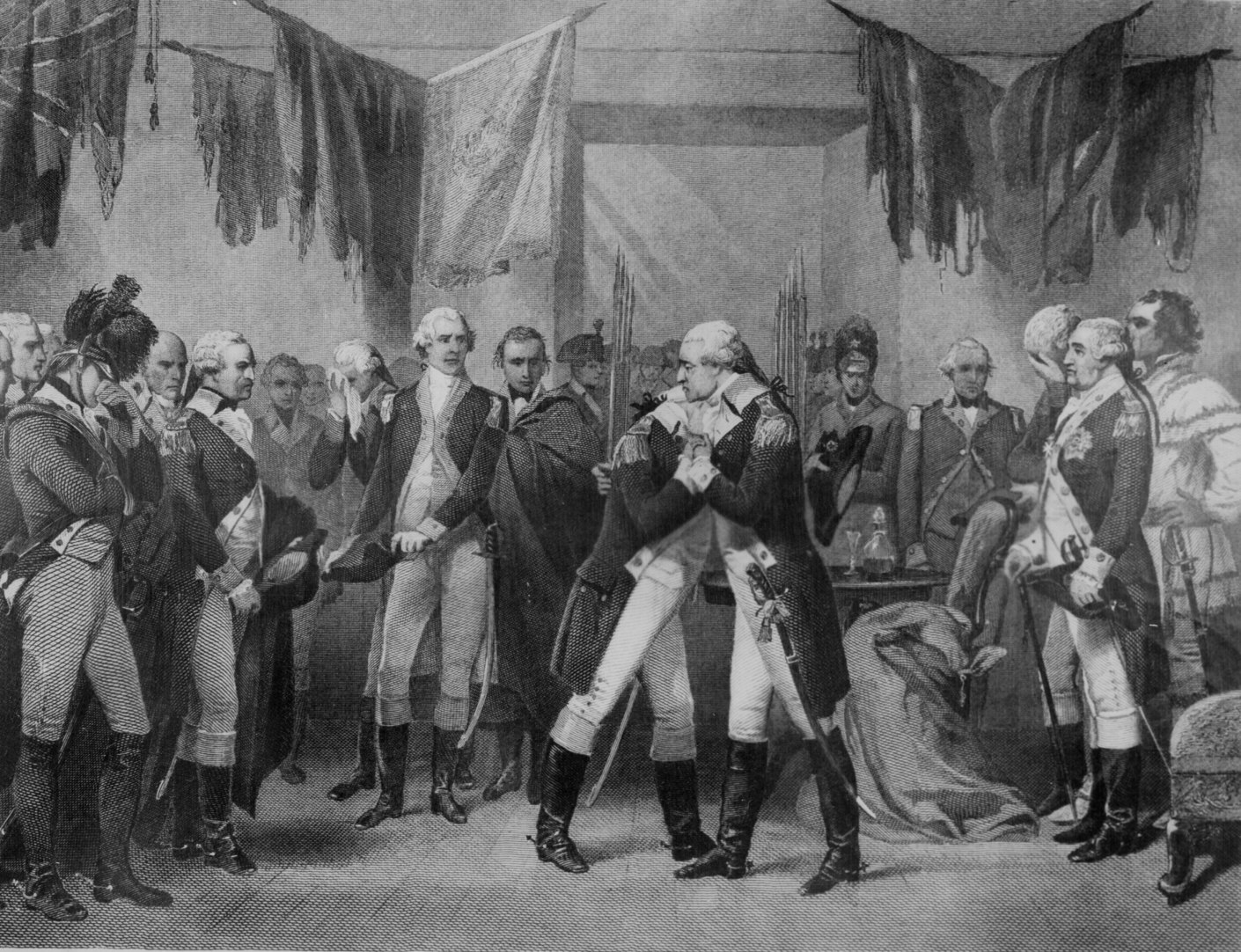
New York in November 1783 was a symbolic crossroads of these divergent paths. Washington famously bid his officers farewell at Fraunces Tavern, where British officials had earlier recorded Black Loyalists in the Book of Negroes. William Lee had accompanied Washington to the tavern many times. Harry Washington secured his documented freedom there before departing.
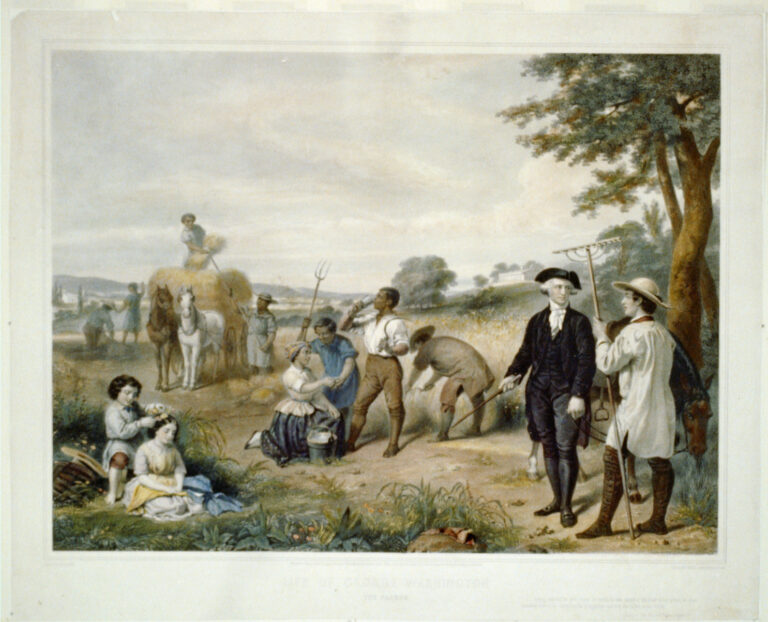
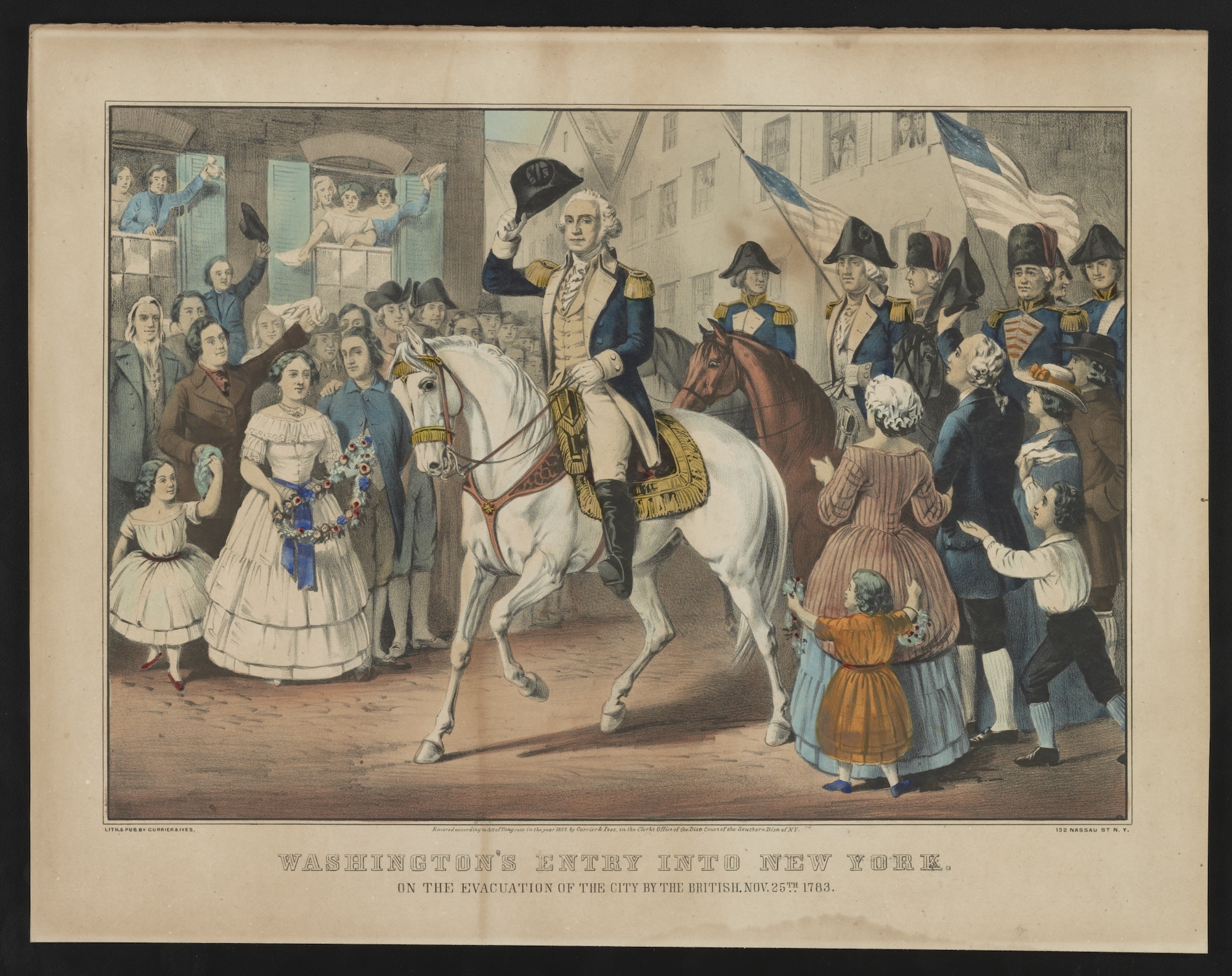
Figure 10: Fraunces Tavern in lower Manhattan, where George Washington bid farewell to his officers in 1783 and where British officials compiled the Book of Negroes, making the tavern a symbolic crossroads of two very different roads to freedom. “recorded Black Loyalists in the Book of Negroes—a site where triumph and departure converged. “Washington’s Farewell to His Officers,” (circa 1866), Alonzo Chappel, Public domain, via Wikimedia Commons.

The same revolutionary moment contained triumph and departure, loyalty and flight, celebration and exile. It exposed the Revolution’s paradox: liberty proclaimed universally but realized individually.

William Lee and Harry Washington compel us to view the Revolution not as a monolithic ideological achievement but as a lived crisis in which enslaved people acted with agency within the limits imposed upon them. Their divergent paths illuminate the moral terrain within which Washington himself evolved. They reveal a founding moment shaped as much by lived experience—proximity and flight—as by declarations and ideology.

The Revolution’s promise was not singular. It was contested, negotiated, seized, and sometimes granted. William Lee and Harry Washington pursued that promise by different roads: one beside the man hailed as a liberator, the other by escaping him.


Further Reading

For primary sources on George Washington and his world, see The Papers of George Washington, Revolutionary War Series, ed. Philander D. Chase et al. (Charlottesville: University of Virginia Press), as well as Washington’s “Last Will and Testament,” July 9, 1799, Library of Congress, and the searchable database Founders Online, National Archives (https://founders.archives.gov). On William Lee and Mount Vernon’s enslaved community, consult the Mount Vernon Ladies’ Association digital encyclopedia (https://www.mountvernon.org). For Black Loyalists and the wartime pursuit of freedom, see “The Book of Negroes,” British Headquarters Papers, 1783, Library and Archives Canada. Important secondary works include Cassandra Pybus, Epic Journeys of Freedom (Boston: Beacon Press, 2006); Alan Taylor, The Internal Enemy (New York: W. W. Norton, 2013); Simon Schama, Rough Crossings (New York: HarperCollins, 2006); Gary B. Nash, The Forgotten Fifth (Cambridge, MA: Harvard University Press, 2006); and Philip D. Morgan, Slave Counterpoint (Chapel Hill: University of North Carolina Press, 1998). For interpretations of Washington and slavery, see Henry Wiencek, An Imperfect God (New York: Farrar, Straus and Giroux, 2003), and Joseph J. Ellis, His Excellency (New York: Alfred A. Knopf, 2004). For recent work that describes how generations of historians have repeatedly shaped, softened, or contested the meaning of Washington’s relationship to slavery, see John Garrison Marks, Thy Will Be Done: George Washington’s Legacy of Slavery and the Fight for American Memory (Chapel Hill: University of North Carolina Press, 2026).


This article originally appeared in September 2026.


Melchior Baltazar is an author, independent scholar, and military veteran whose work explores identity, race, and ideology in the American Revolutionary era. He holds a B.A., an M.A. in History, and a J.D. from the University of Virginia, and is a former special operations officer in the US Navy SEALS. An accomplished author and experienced presenter, he has delivered work at numerous conferences. His military service, biracial heritage, and multicultural background inform a distinctive perspective on leadership, race, and the struggle for freedom in Revolutionary America. He was awarded a 2025 Research Fellowship with the American Revolution Institute of the Society of the Cincinnati, and his paper, “Revolution in His Ranks: Washington’s Aides and His Evolving Views on Slavery,” emerging from that research, was presented at the 2026 annual conference of the Consortium on the Revolutionary Era, as part of its 250th anniversary programming on the American Revolution.