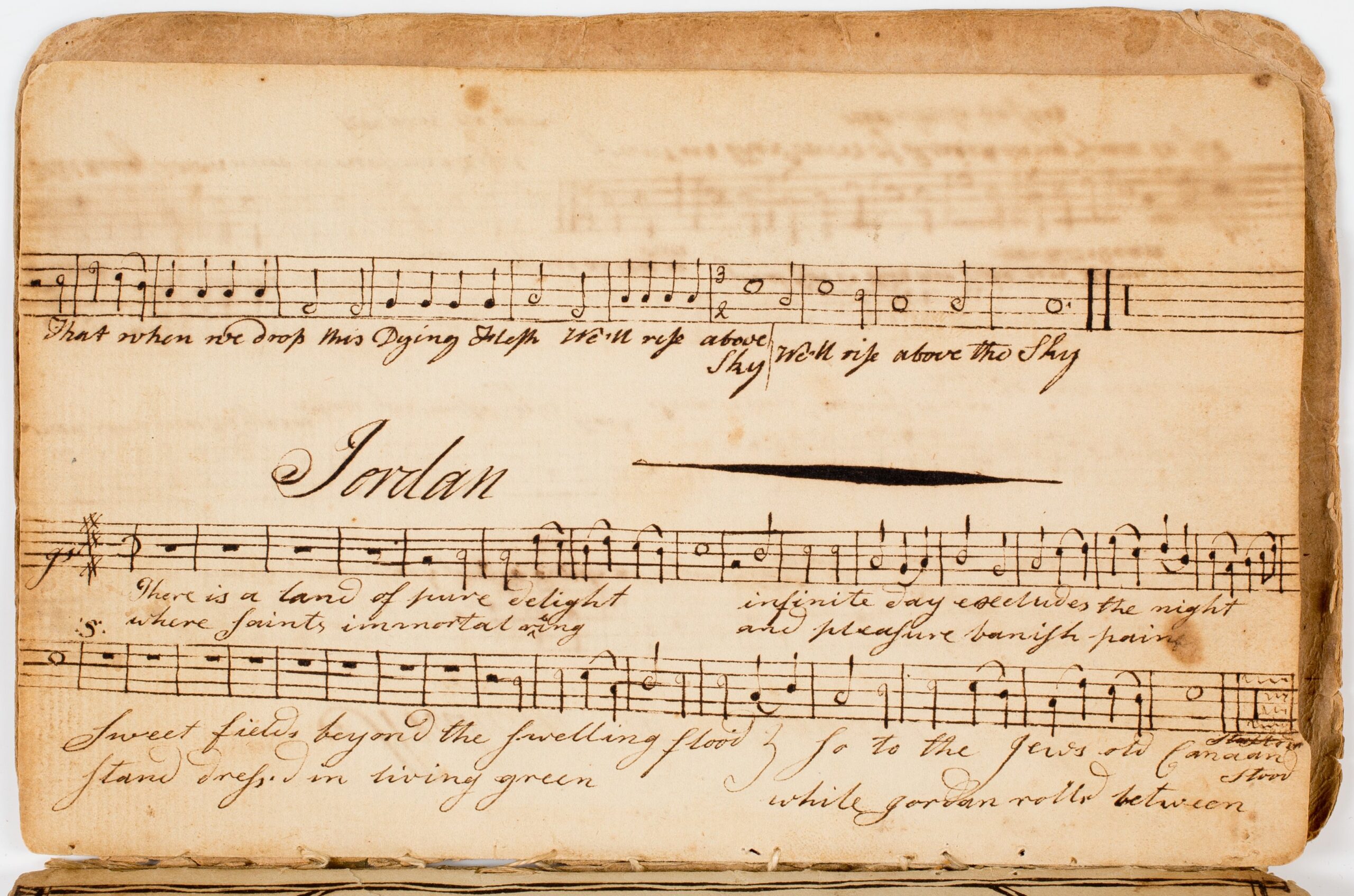
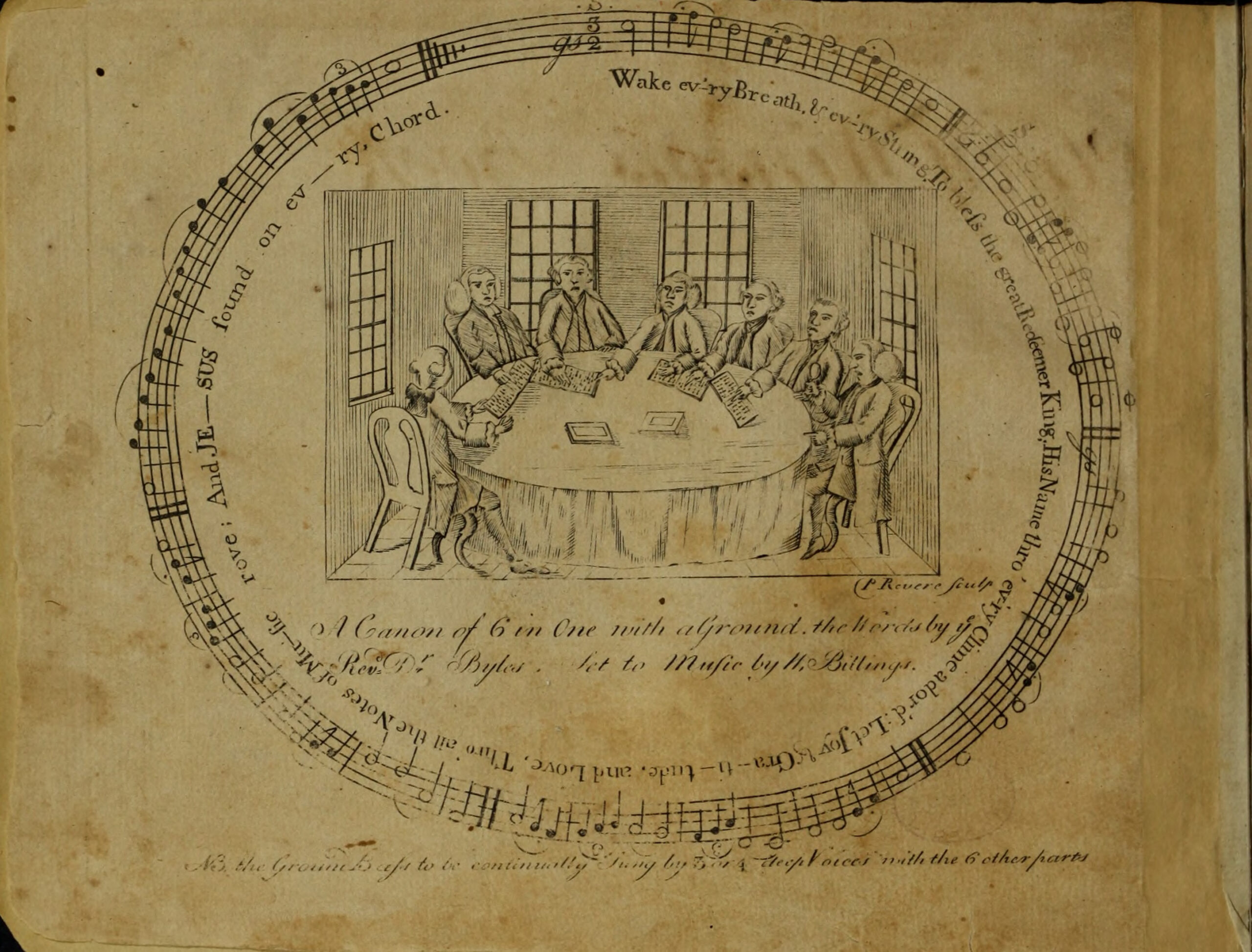
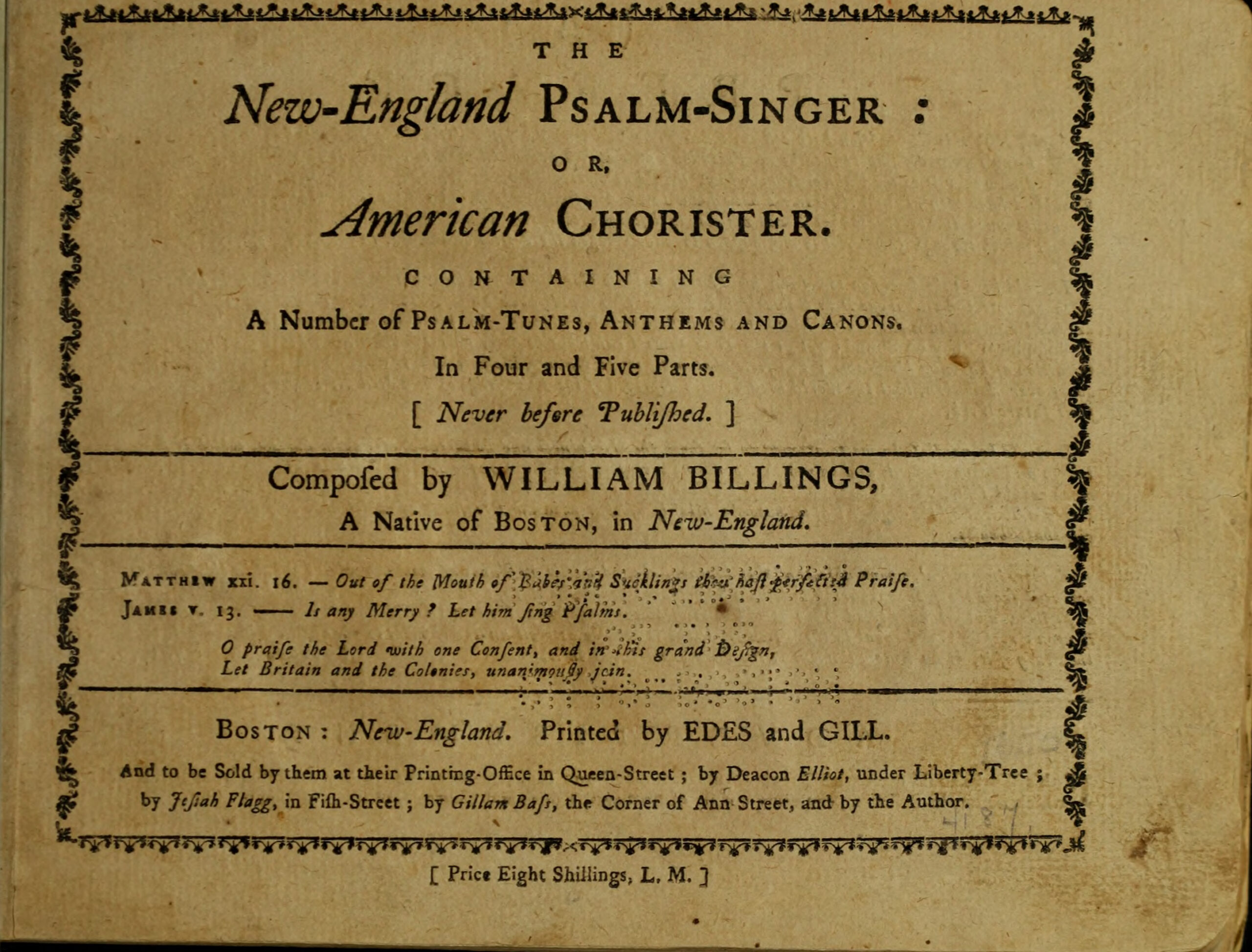
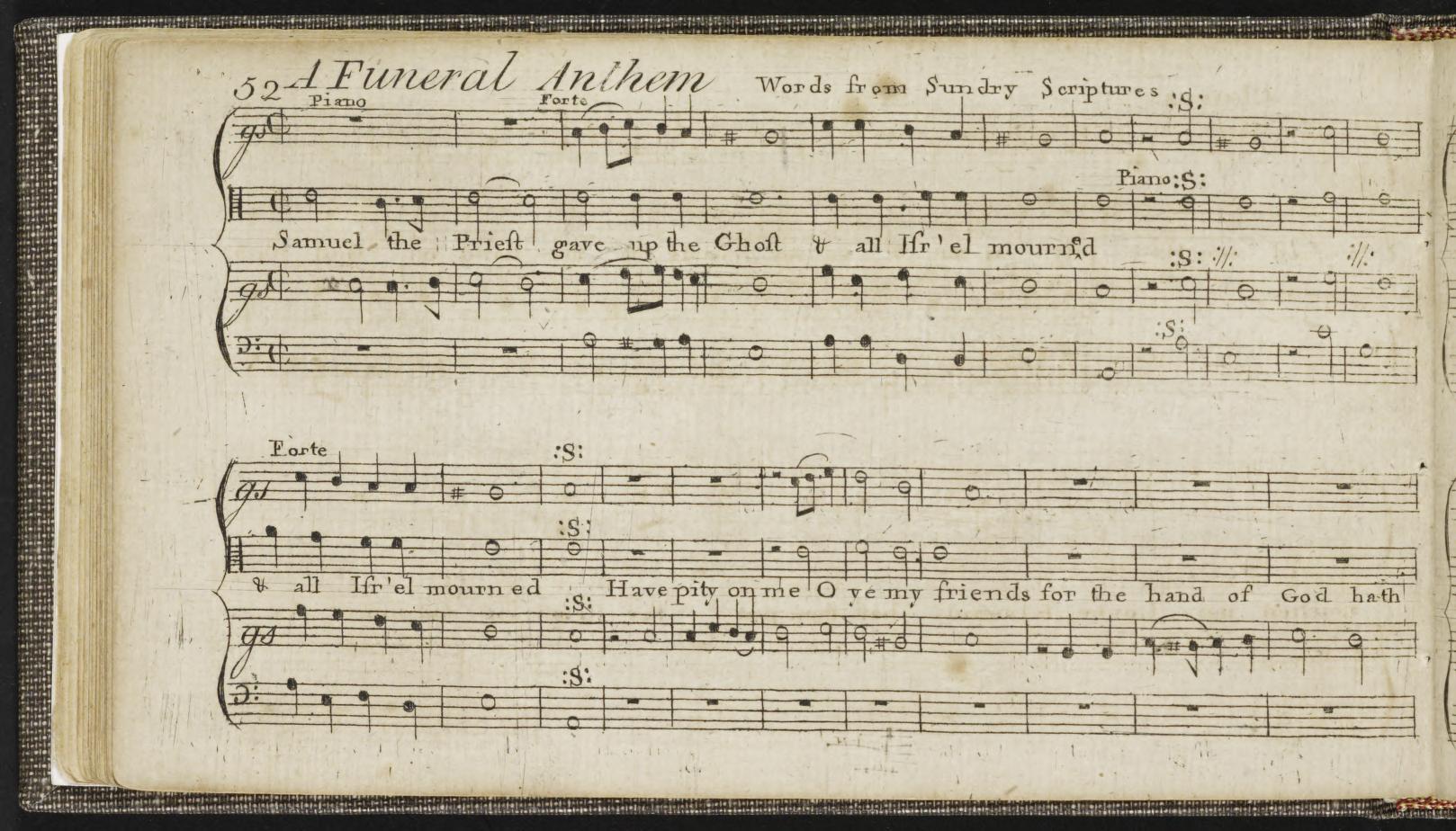
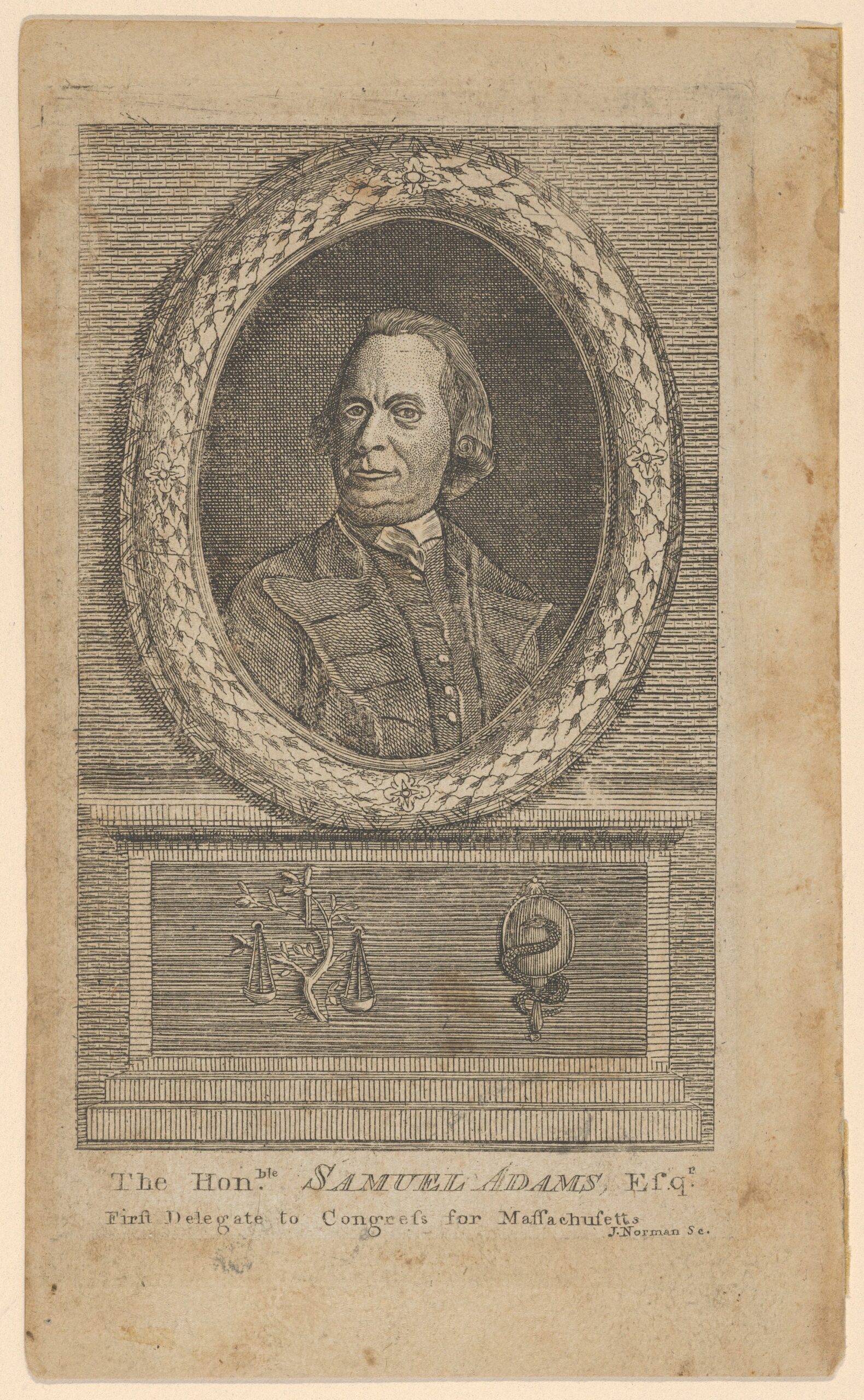
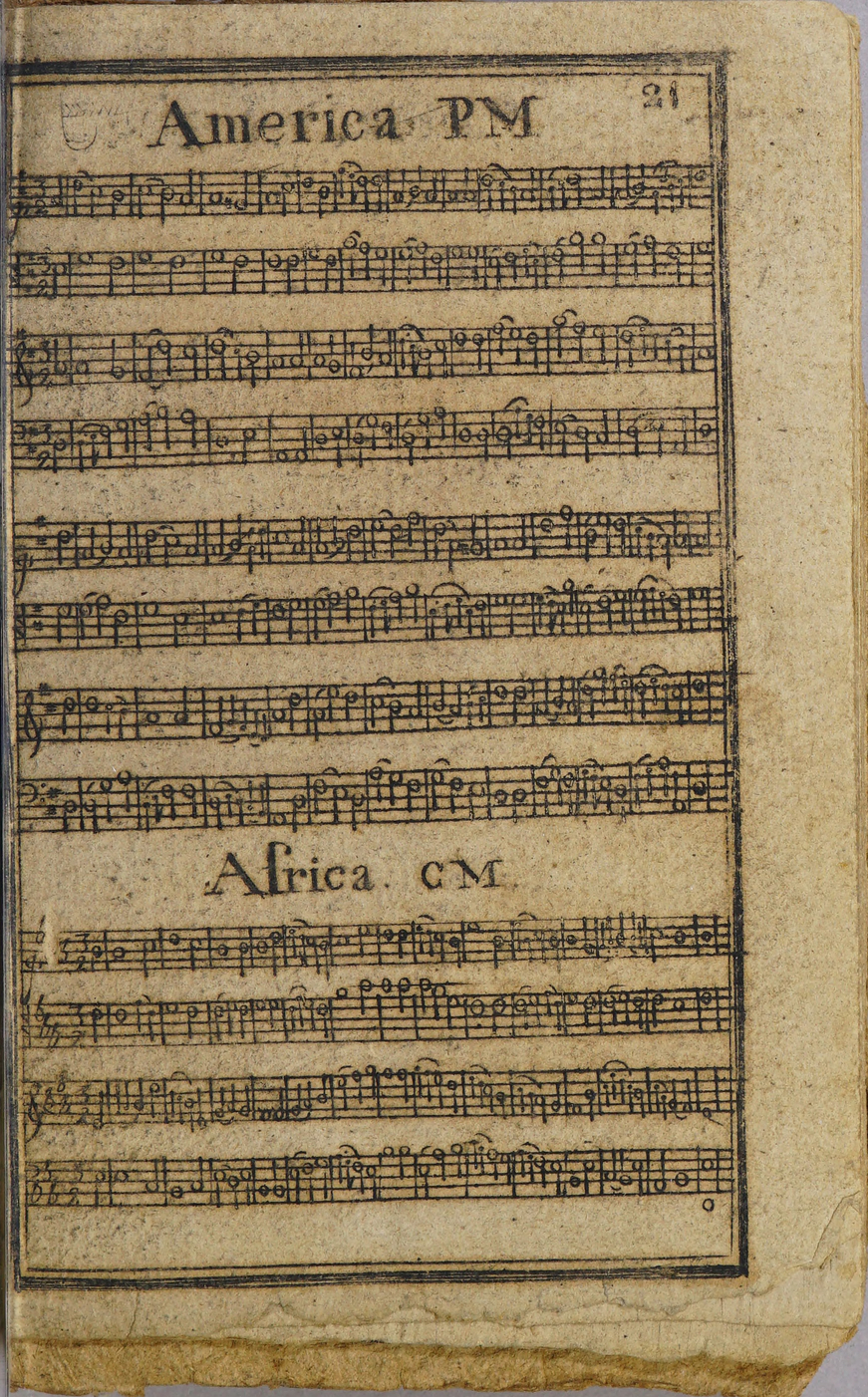
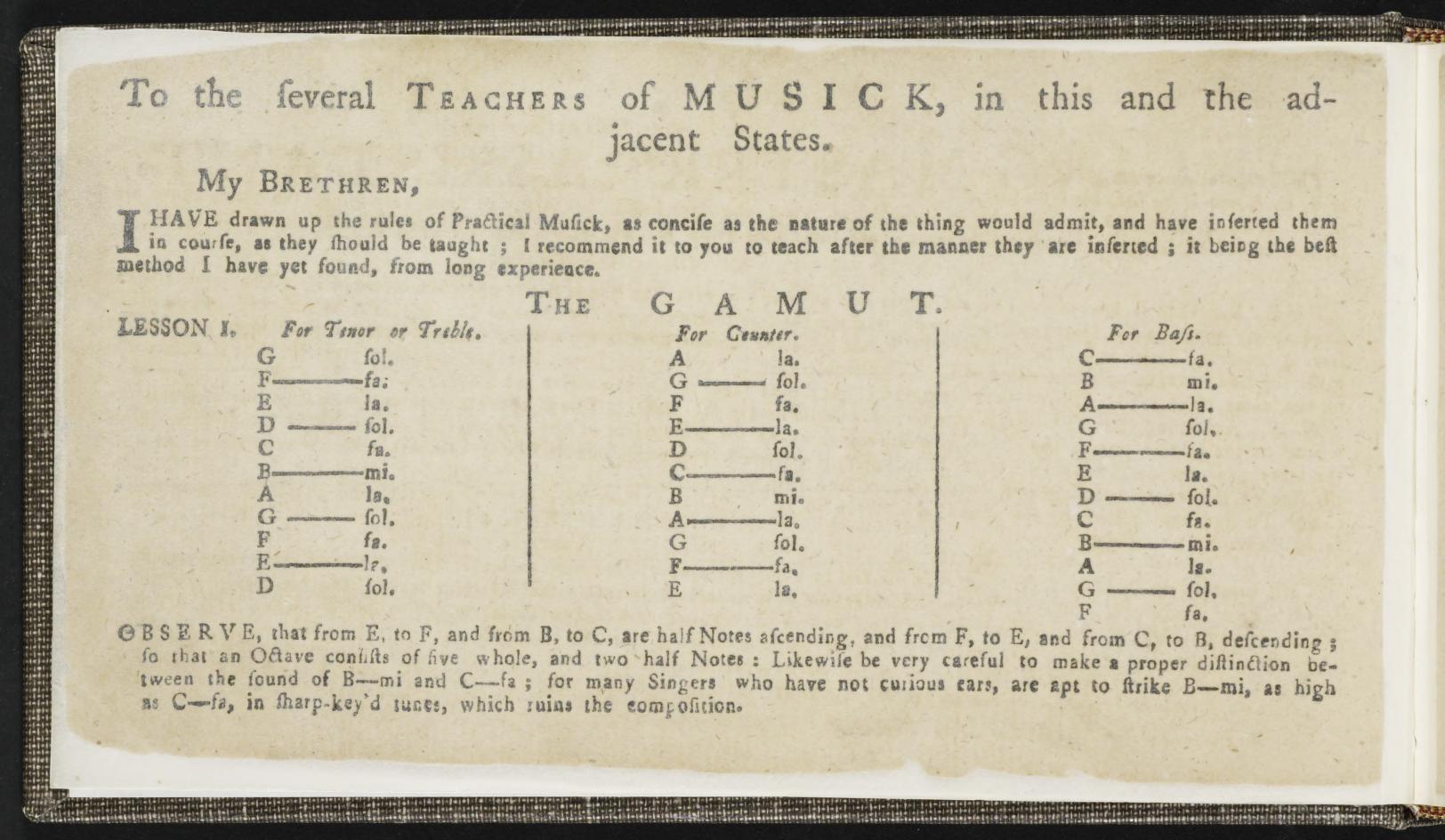
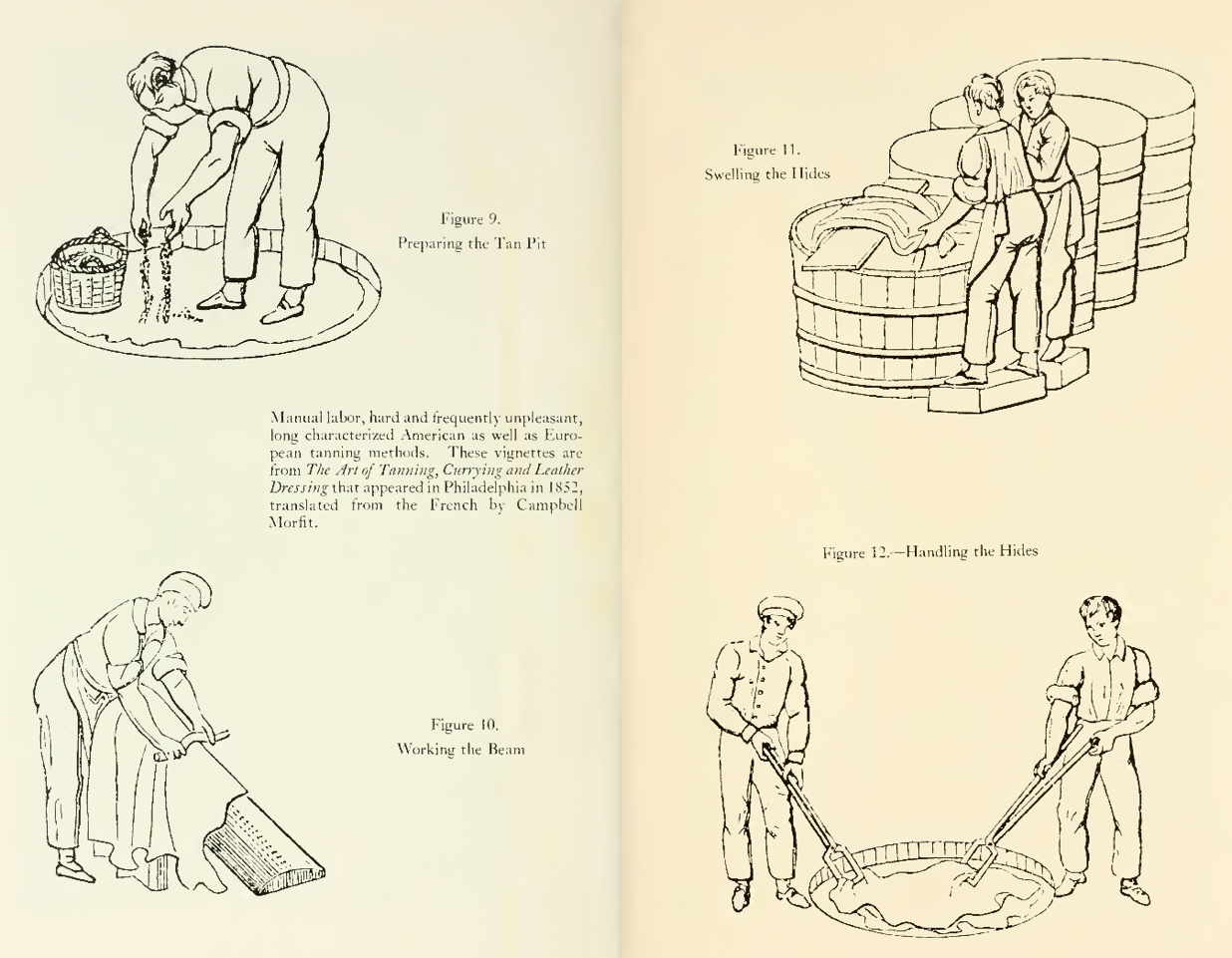
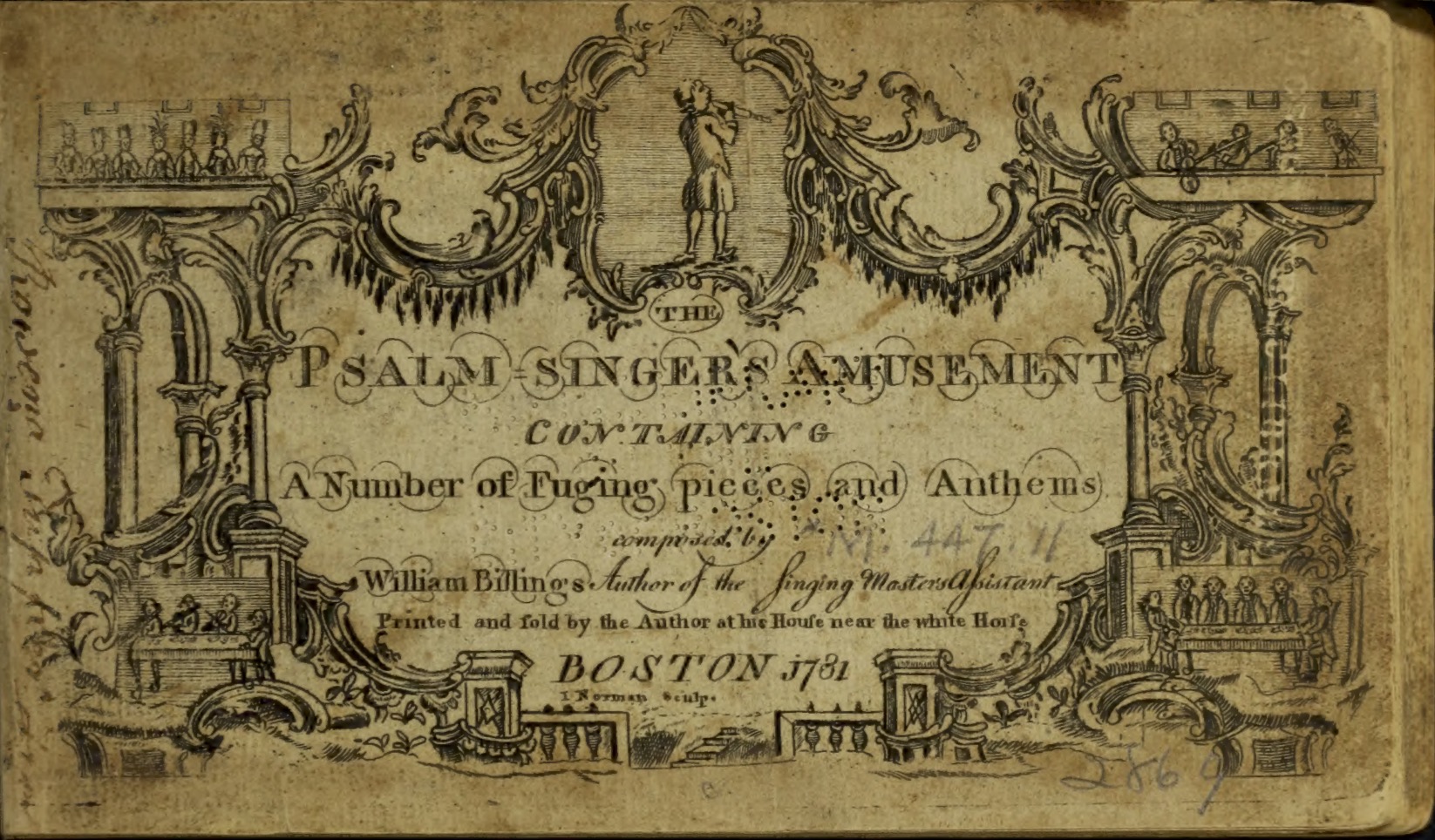
The Musical Tanner is now complete. But even with an accelerated schedule, a novel would take much longer to get through the editorial and publication process than I had, if I wanted to reach readers during the year when many people will be thinking, however briefly, about the American Revolution. So I decided to publish it on Substack in serial form. Every Friday appears a new chapter, free of charge, scheduled to finish up sometime before July 2026.
All of us are about to be barraged with information about the nation’s founding. It’s time this unique and prolific early American got some of the recognition he deserves. I continue to work on a more conventional biography of Billings, taking a deeper dive into his rich published corpus. A colleague from Tulane, Dr. Leonard Raybon, founder of the Sacred Nine Project on early American religious music, has composed a one-act musical program that captures through musical pieces Billings’ life; we hope to stage it in venues around the country over the next year. But for now I’m happy to have my research represented by historical fiction. And that elusive trove of personal papers may yet surface. I’d be thrilled if this article encourages the scholar who eventually discovers them.
Further Reading:
Atwood, Margaret, et.al., AHR Forum: Histories and Historical Fictions. American Historical Review, Dec. 1998.
Barbour, J. Murray, The Church Music of William Billings. East Lansing: Michigan State University Press, 1960.
Barrett, Andrea, Dust and Light: On the Art of Fact in Fiction. New York, Norton, 2024.
Benson, Louis F., “The English Hymn: Its Development and Use in Worship. New York: Hodden & Stoughton, 1915.
Billings, William, The Complete Works of William Billings, edited by Hans Nathan, Karl Kroeger, and Richard Crawford. Boston: American Musicological Society & The Colonial Society of Massachusetts, 1977-1990.
Brewer, Charles E. Singing Sedition: Piety and Politics in the Music of William Billings. Hillsdale, NY: Pendragon Press, 2017.
Broyles, Michael, Mavericks and Other Traditions in American Music. New Haven: Yale University Press, 2004.
Cook, Nym, “William Billings in the District of Maine, 1780.” American Music 9:3,
Autumn 1991.
Gould, Nathaniel D., Church Music in America. Boston: A. N. Johnson, 1853.
Lepore, Jill, “What Was the American Revolution For?” The New Yorker, 10 November 2025.
McKay, David P., and Richard Crawford. William Billings of Boston: Eighteenth-century Composer. Princeton, N.J.: Princeton University Press, 1975.
Metcalf, Frank J., American Writers and Compilers of Sacred Music. New York: The Abingdon Press, 1925.
Schiff, Stacy. The Revolutionary: Samuel Adams. New York: Little, Brown and Company, 2022.
Silverman, Kenneth, A Cultural History of the American Revolution: Painting, Music, Literature, and the Theatre in the Colonies and the United States from the Treaty of Paris to the Inauguration of George Washington, 1763-1789. New York: T. Y. Crowell, 1976.
Young, Alfred F., and Harvey J. Kaye. Liberty Tree: Ordinary People and the American Revolution. New York: New York University Press, 2006.
This article originally appeared in January 2026
David Stowe teaches religious studies at Michigan State University. A musician and historian, he has published several works of non-fiction, most recently Song of Exile: The Enduring Mystery of Psalm 137 (2016) in addition to short fiction, poems, and a novel.