


In the Spring of 1622, the English Governor of Bermuda, Nathaniel Butler, hosted a lavish wedding at his new home. More than one hundred guests were in attendance, including some who had only recently arrived on the island. There was a feast filled with “all sortes of prousions that the Illands could afford in a very plentifull manner.” Butler and others hoped that some of the guests, particularly those on their way to Virginia, would carry tales of the grandeur of the affair to their new homes. The fledgling Bermuda colony and its sponsor, the Virginia Company of London (VCOL), needed all the good press that it could get.
The Other Elizabeth and Mary: Anglo-Powhatan Marriages and the Virginia Company of London
By employing marriage as a technology of imperialism, the Virginia Company hoped to turn its struggling overseas colonies into stable, productive English communities.
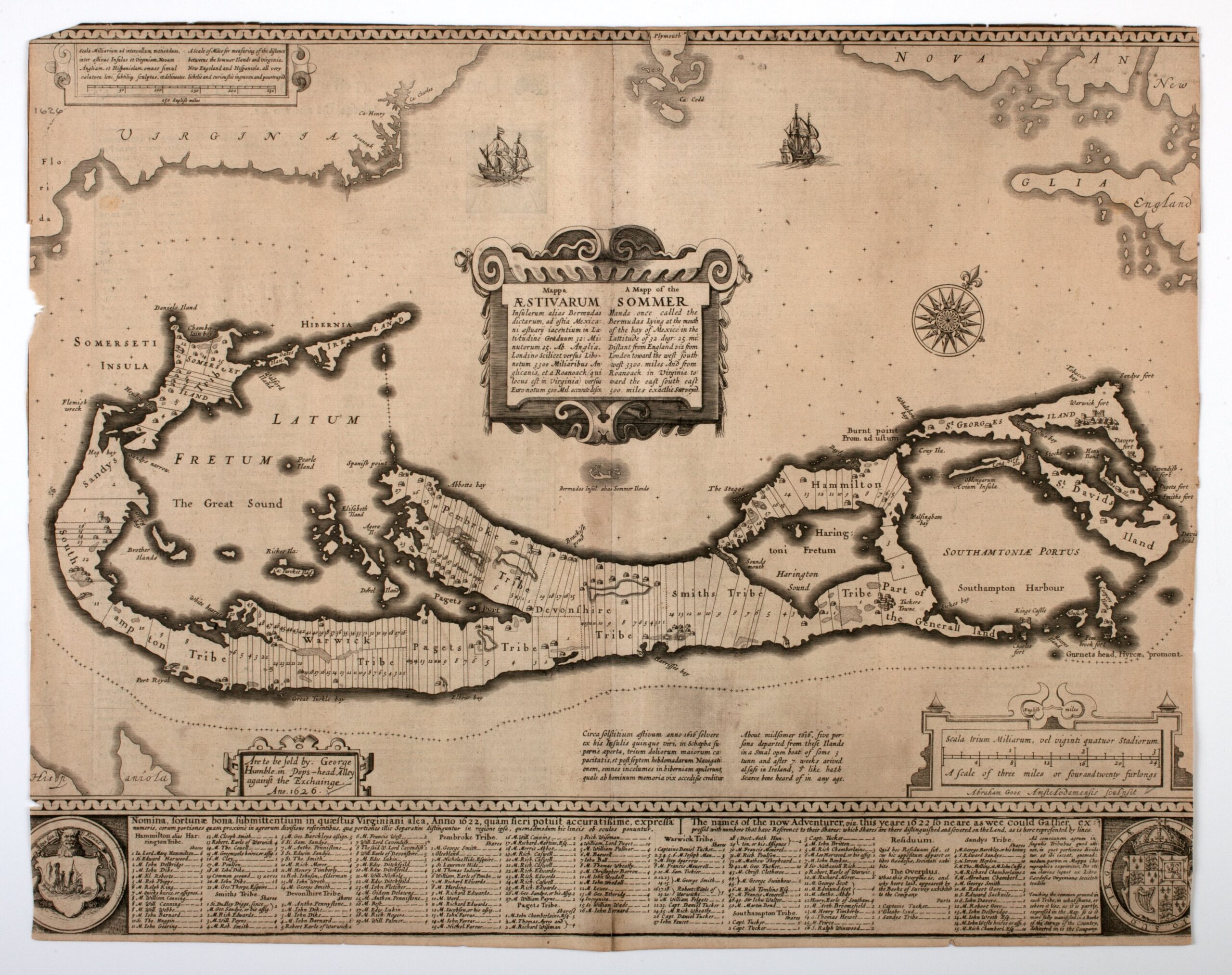
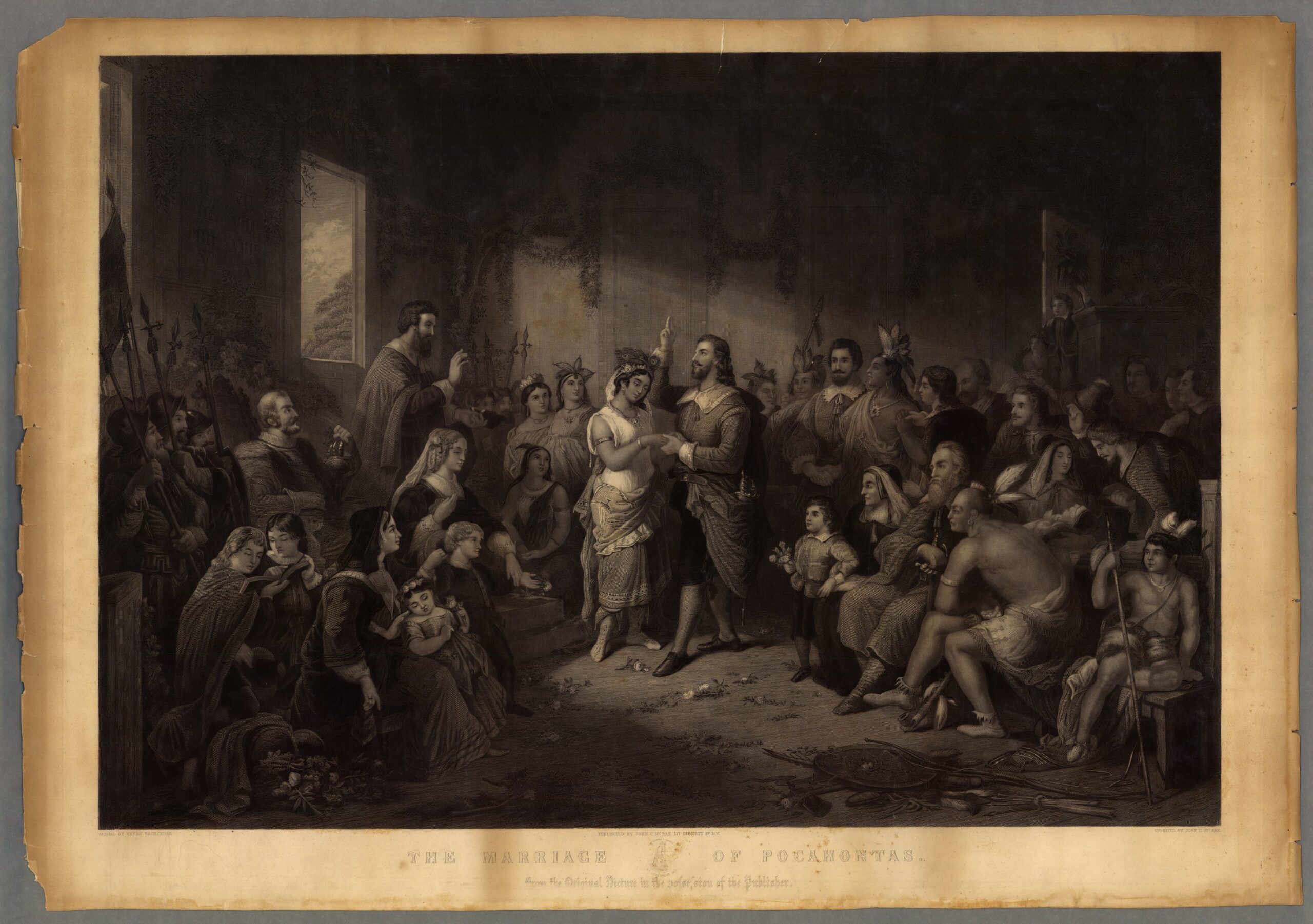
We know nothing about the groom except that he was reported to be “as fit and agreeable husband as the place would afford” (which, of course, was intended to be a little joke about the rough character of Bermuda planters). Surprisingly, we have slightly more information about the bride. We know that she was a Native woman from the Powhatan Confederacy in Virginia (or Tsenacomoco) who travelled to London in 1616 as part of Pocahontas’s retinue and that after her Christian baptism she took the name Elizabeth. No record of her prior name(s) exists. This marriage between a Powhatan woman and an English man is one of the few documented cases of its kind in the 17th century-Atlantic world. Of course, Pocahontas’s marriage to John Rolfe was the most famous union between a Native Virginian and an Englishmen.
In the first quarter of the 17th century, the Virginia Company of London experimented with the potential of Anglo-Powhatan marriages to foster peace, spread Christianity, and increase English territorial claims. Intercultural marriage had long been employed by imperial powers in their attempts to establish peace and dependency among colonized people. In this way, marriage served as a technology of imperialism by creating kinship relations and obligations between colonizer and colonized. In the Spanish colonies to the south, for example, the mixed-race offspring of white men and Indigenous women sometimes became powerful leaders who helped to translate, both literally and figuratively, the cultural divide between Europeans and Indigenous Americans. For the VCOL, their support of the marriages of Pocahontas and later Elizabeth, demonstrates both the financial precarity of the company and its ambitions to “civilize,” pacify, and profit from Virginia.
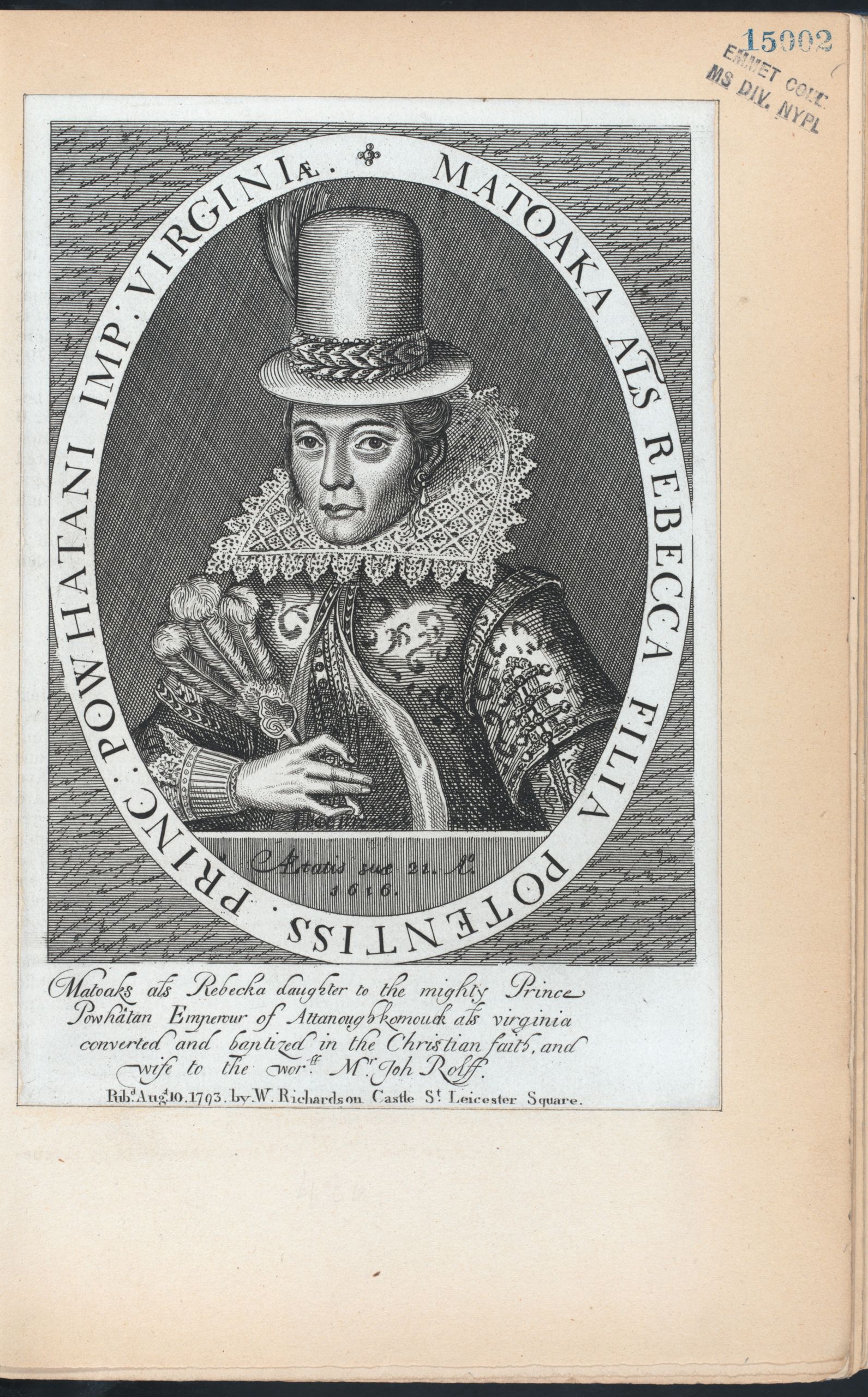
Elizabeth and Mary
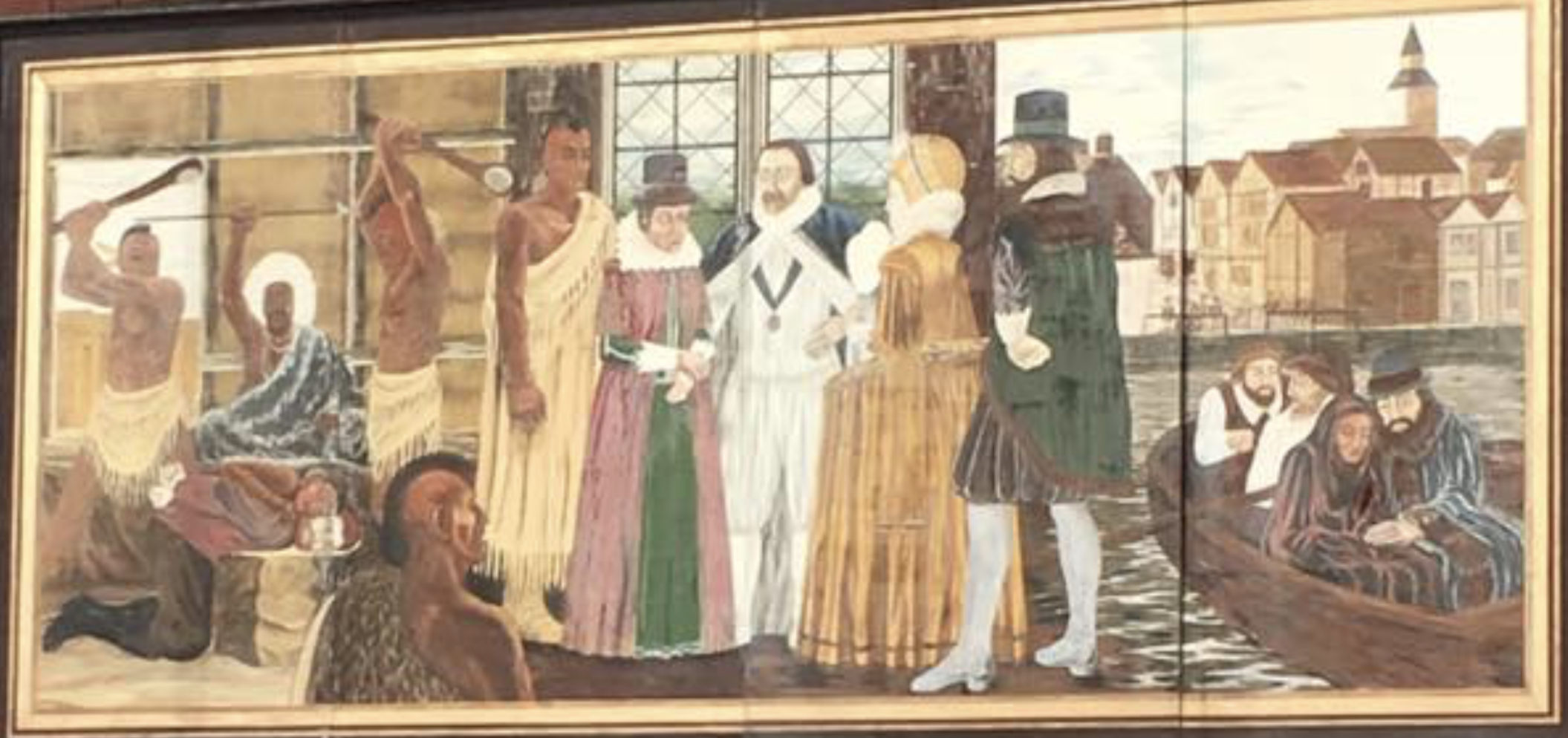
When Pocahontas arrived in London in 1616, she had at least two Powhatan women in her retinue who were referred to in English as Mary and Elizabeth. It is possible that there were other Native women in the entourage, including Matachanna (who was probably Pocahontas’s half-sister and Uttamatomakkin’s wife).
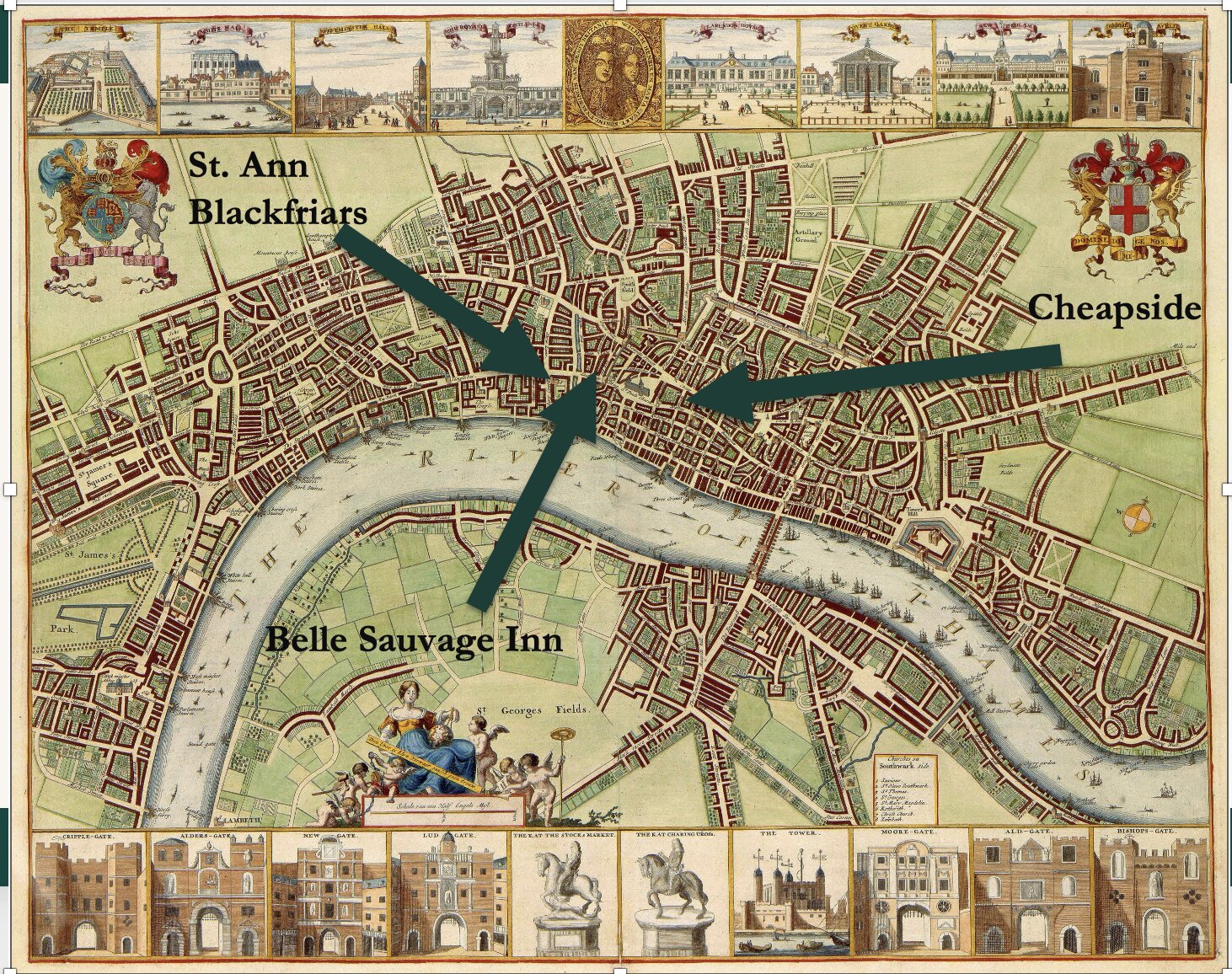
There is very little concrete information about Mary and Elizabeth, or indeed most of the Indigenous retinue aside from Pocahontas and her brother-in-law and chief priest Uttamatomakkin (Tomocomo). We know that the party stayed at the Belle Sauvage Inn for most of their time in London.
We don’t know their ages, although most assume that they were fairly young given that they seemed to have been unmarried. They were described as “maydes” and “virgins” in VCOL sources which implies that they were young and unwed. It is possible that they could have been previously married, as indeed Pocahontas was before her marriage to Rolfe. But it served VCOL interests to describe them as young and pure so that they might attract husbands quickly. We don’t know Mary and Elizabeth’s relationship to Pocahontas or why they were chosen to accompany her. English records suggest that Mary and Elizabeth were well connected to powerful people in Tsenacomoco, but we also know that colonial powers often strategically exaggerated or misunderstood power dynamics and kinship relations among Indigenous people. We also don’t know if the pair had learned any English before sailing across the Atlantic.
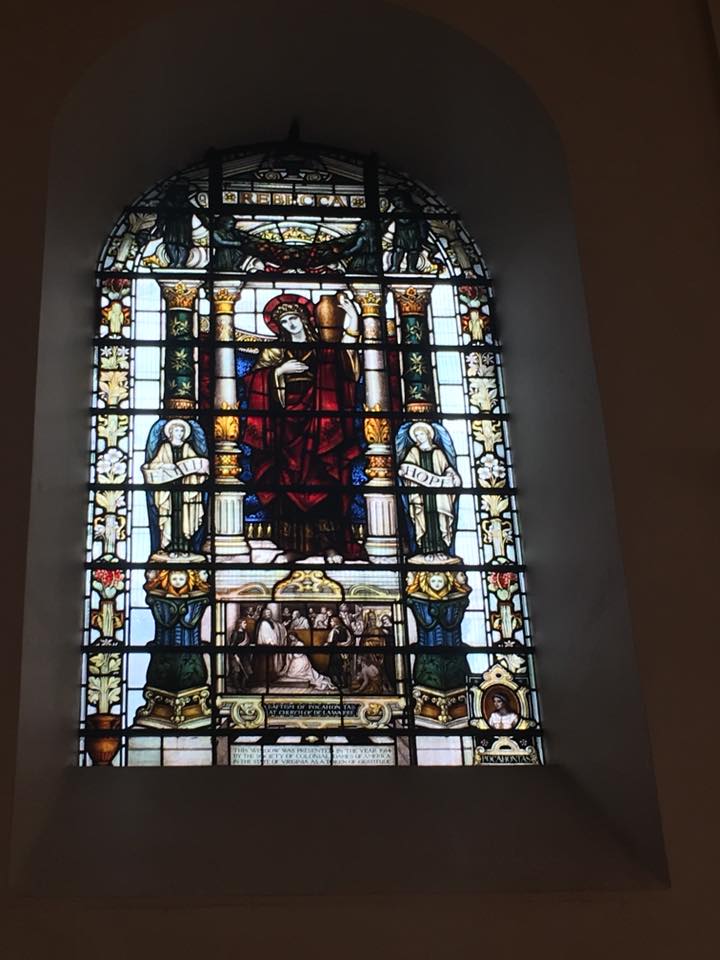
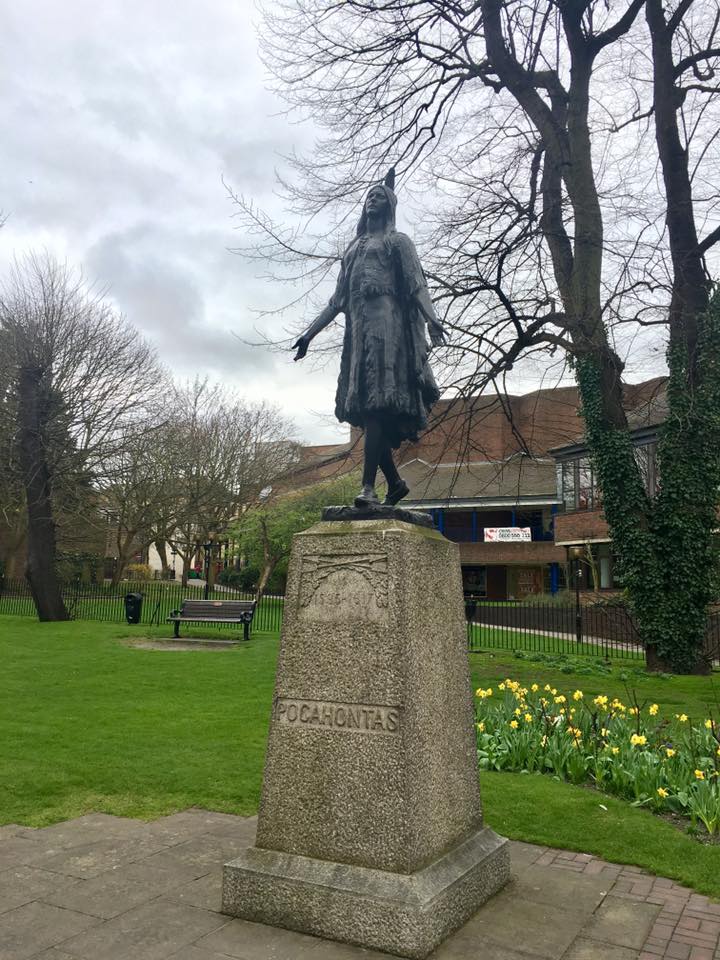
Let me briefly sum up what we do know for certain: When the Rolfes began the journey back to Virginia in 1617, Pocahontas was very ill and died before the ship made it to the open sea. She was buried in a small church in Gravesend, a little less than thirty miles east of central London. At least four Indigenous people, including the Rolfes’ son Thomas, were also sick and stayed behind in London. One of them was likely a young man who was christened Georgius Thorpe after then Virginia Company of London representative, George Thorpe, who had taken in the lad. Georgius was baptized in 1619 and died shortly thereafter. In 1620, George Thorpe was put in charge of a project to build a school and college for Native Americans in Henricus. The other two Native Virginians who stayed behind were Mary and Elizabeth.
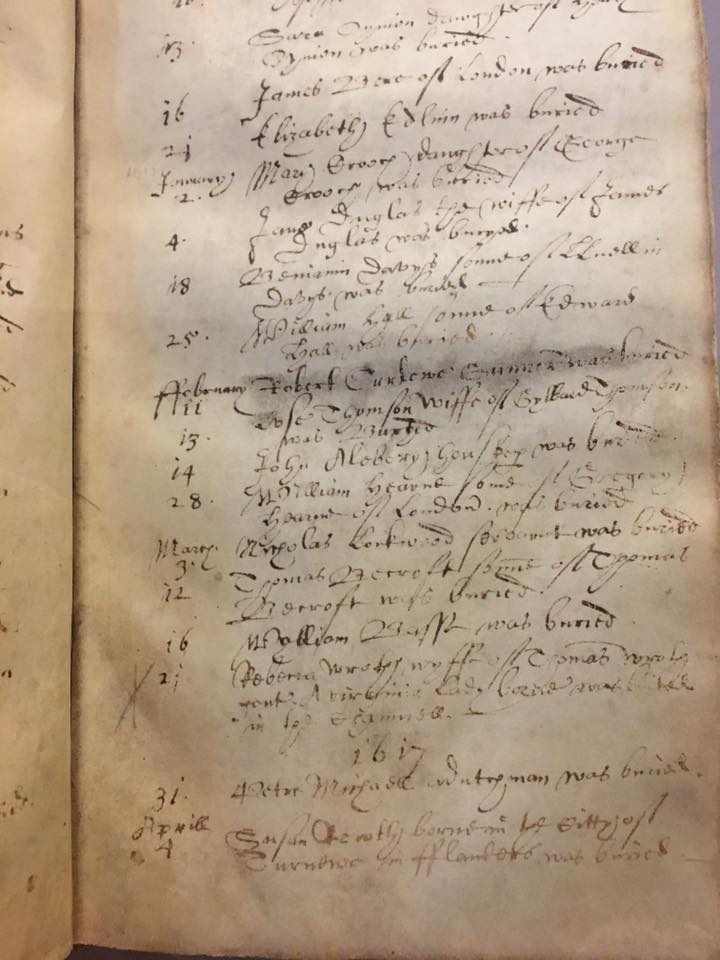
Mary was sent to live with a textile merchant on Cheapside St. in London and likely worked as a servant. Elizabeth lived with a man called Captain Maddison, likely the early Jamestown resident and VCOL loyalist Isaac Maddison, although the timing of his arrival in London is a little difficult to pin down. Mary became too ill to continue in her role as a servant and in the spring of 1620 she relocated to the home of the Reverend William Gouge in Blackfriars. The Virginia Company of London paid for the upkeep of both women, although they were not always timely in issuing their payments. Sir William Throckmorton, cousin to George Thorpe, covered Mary’s medical expenses when the company money failed to show.
By the autumn of 1620, the Virginia Company attempted to secure apprenticeships for both women. They hoped that by spending a bit of extra money to pay for their training now, the women would soon be set up to support themselves. It doesn’t seem that this apprenticeship scheme worked out as the company made a different decision to ease the burden of paying for their upkeep in the summer of 1621–sending them to Bermuda to be married off to white planters there. By this time, Mary and Elizabeth had been in London for five years. They surely spoke English and there is evidence that they could also read and write in the language.
At first glance this seems like a strange decision. These two women had no ties to Bermuda, which was a land without a pre-existing indigenous population. But if we consider the actions of the company in light of their desire to send marriageable women to their colonies, then it makes a certain kind of sense. Why continue to pay for their upkeep in London, when the financial responsibility for their well-being could be shifted onto their English husbands? Additionally, just as the marriage of Pocahontas and John Rolfe was used as propaganda to garner support for their overseas ventures, the company may have wanted the marriages of Mary and Elizabeth to fill in the void left by Pocahontas’s death.
Mary and Elizabeth sailed to Bermuda in July of 1621 aboard the 120-tonne ship the James along with seventy-eight other passengers. They were outfitted quite handsomely with clothing, bedding, toiletries, food and drink plus a Bible and a psalter to share. The company also set aside funds to provide each woman with one servant boy apiece. Curiously, when they set sail, they each had two servant boys instead of the one promised in company documents. These four servant boys are never named or referred to again. One of the women, likely Mary, died during the crossing; What became of her goods and servants is not noted. The cost of transporting and outfitting the women came to roughly seventy-one pounds, which did not include the amount that the VCOL had paid for their upkeep from 1617-1621.
In other contexts, the company was not particularly interested in fostering marriages between white men and Indigenous women. While the company did support the marriage of Rolfe and Pocahontas, there were strategic and political reasons for doing so, particularly given Pocahontas’s close relationship with Powhatan and the desire to secure a lasting peace in the region. Prior to the Rolfes’ marriage, the VCOL was invested in a strategy of kidnapping or acquiring Indigenous youths who could later serve as translators and representatives for company interests in Indian country. With the marriage of Pocahontas and Rolfe, the company was able to pursue a long-term goal of building a school and a college to educate Powhatan people in English ways. Before they set sail to return to Virginia, Sir Edwin Sandys gave the Rolfes one hundred pounds of the company’s money to lay the groundwork for the school.
Unfortunately, Pocahontas’s untimely death put the whole scheme in jeopardy. There was fear in the VCOL that Pocahontas’s death might have catastrophic ripple effects in Virginia and erode the very precarious peace that predominated until March of 1622. So, one possible explanation for the company’s decision to send Mary and Elizabeth to Bermuda was the hope that they would eventually return to Virginia and help to strengthen English-Powhatan relations and promote the school and college. This is borne out by Bermuda Governor Nathaniel Butler’s insistence that he hoped the wedding guests would “carry a good testimony with them of the welfare and plenty” of the Bermuda plantations, but also that
the kindred and freindes of the Virginian brides, who wer prime commandours and not lesse than Viceroyes among the nearest neighbouringe Indians to the English colony ther, might receiue a certaine knowledge of the well being of their kinds woman, and by the good respect and kind vsage showed vnto her among the English, be encouraged both to continue to augment the former freindshyp, and to become Christians themselues: to which ende also, the Gouernour wrote letters of aduice to the Gouernour in Virginia, and caused the mayde herselfe likelwise to doe as much to her brother, who, by her fathers late death, had succeeded in all his royalties and commande
This is the only evidence we have of Elizabeth’s literacy. Butler also seems to imply that Elizabeth and/or Mary were from locally powerful families in Virginia. In another passage, Butler indicates that the hope is for the women and their husbands to eventually be transported “home to their sauvage parents in Virginia (who wer ther no less that petie kings), and so be happely a means of their conuersion.” It seems likely, then, that Elizabeth and Mary were related to local werowances or village chiefs who served under Powhatan, making them something akin to aristocrats, but not a “princess” like Pocahontas. Given that they worked in trades during their time in London, something that Pocahontas would never have been expected to do, they were clearly of lesser status than her.
The pragmatic reason that the Virginia Company of London sent these women to Bermuda was, of course, financial. The company was losing money and could no longer afford to pay for Mary and Elizabeth’s upkeep. However, given the extent of the dowries provided for the women by the Virginia Company, they were willing to shell out a substantial sum at the outset to get these women off their payroll. A company document from June 11, 1621, demonstrates that William Webb, who was paying for Mary’s upkeep, asked the company if “some course might be taken that the two Indian Maydes might be disposed of to free the company of the weeklie charge that now they are at for the keeping of them.” The company decided to send them to Bermuda but pushed off the details until the next meeting.
On June 13 of 1621, about a month before the ship left for Bermuda, a VCOL court issued a directive authorizing their transfer to Bermuda. It read:
Itt being referred to this Courte to direct some course for the dispose of two Indian maydes having byne a long time verie chargeable to ye company itt is now ordered that they shalbe furnished and sent to the Summer Ilands [Bermuda] whether they were willing to go wiervantervante apeec towards there preferm[en]t in marriage with such as shall accept of them with that means—with especiall dyreccon to the Gou’nor & Counsell there for the carefull bestoyinge of them.
The phrase “whether they were willing to go with one servante apeec” appears to indicate that Mary and Elizabeth had a say in their destiny, but it could just as easily mean the opposite. From this brief passage, we cannot be sure if they were consulted or if they agreed to go.
The Politics of Gender and Marriage in Virginia
Women’s roles in Tsenacomoco were complex and varied heavily depending upon the relative status of the woman and her maternal family line in addition to localized traditions. Women and men had parallel responsibilities with women taking the lead on household and most agricultural labor. Men were expected to hunt and participate in war parties. Powhatan society was not patriarchal in the modern sense: women were able to inherit chieftainships, but they did so rarely. The matrilineality of most Virginia tribes meant that power was inherited through the maternal line, but maternal male relatives were prioritized first before female relatives. So, for example, when a male werowance died, the position would typically be inherited by the closest male relative on the mother’s side. Englishmen often failed to understand these nuances of Indigenous power structures.
Most marriages in the Powhatan Confederacy were entered into voluntarily by both parties, but marrying for political reasons was quite common among the powerful. Powhatan himself had multiple wives, but this seems to have been uncommon outside of the highest status individuals. His polygamist household was always changing and growing; as the Confederacy acquired new allies and influence, Powhatan would marry a woman from these new communities. She would live among his household until she became pregnant and returned to her natal village. The child stayed with the mother for the first few years of their life but then moved to Powhatan’s household for their formative years. The mother was free to remarry after this point. Unlike English marriages, there was more flexibility, both in terms of permanency and sexual fidelity, among Viginia Native peoples. Women were eligible for marriage soon after puberty. Perhaps Elizabeth viewed her marriage to an Englishman in Bermuda as political and thus temporary.
Although men were in charge of formal diplomacy, women played key roles in local hospitality when English visitors arrived. It was quite common for English visitors to be offered a female bedfellow. This would not have been considered shameful, as sex was understood to be a key experience in developing stable friendships and alliances with other communities. As the daughters of werowances, Mary and Elizabeth likely would have been expected to marry for the benefit of their community.
We do not know what happened to Elizabeth after her marriage in Bermuda. There is simply no evidence to reveal if she ever returned to Virginia or if her marriage lasted. From the perspective of the VCOL these attempts to promote Powhatan-English marriages to solidify their power in Tsenacomoco came to naught. Pocahontas and Elizabeth were expected to birth a new generation of imperial citizens who would sing the praises of English power and culture but they failed to do so. Marriages between English men and elite Native women had the potential to advance English territorial claims, to grow their influence among Indigenous leaders, and to help spread Christianity. By employing marriage as a technology of imperialism, the Virginia Company hoped to turn its struggling overseas colonies into stable, productive English communities. When the promised peace didn’t come, the VCOL quickly pivoted in 1621 to sending willing white women to Jamestown as potential brides. This plan came with a greater likelihood of growing a stable, and decidedly English and Christian, population, in the Chesapeake.
Further reading:
Butler, Nathaniel. The Historye of the Bermudaes or Summer Isles, Edited by General Sir J. Henry Lefoy. London: Hakluyt Society, 1882.
Clausen, Christopher. “Between Two Worlds: The Familiar Story of Pocahontas Was Mirrored by That of a Young Englishman given as a Hostage to Her Father.” The American Scholar 76, no. 3 (2007): 80-90. http://www.jstor.org/stable/41221734.
Kingsbury, Susan Myra ed. The Records of the Virginia Company of London, vol. 1. Washington, DC: Government Printing Office, 1906.
Kupperman, Karen Ordahl. Pocahontas and the English Boys: Caught Between Cultures in Early Virginia. New York: New York University Press, 2019.
Potter, Jennifer. The Jamestown Brides: The Story of England’s ‘Maids for Virginia.’ New York: Oxford University Press, 2019.
Rountree, Helen. Powhatan, Pocahontas, and Opechancanough. Charlottesville: The University of Virginia Press, 2006.
Townsend, Camilla. Pocahontas and the Powhatan Dilemma. New York: Hill and Wang, 2005.
Vaughn, Alden T, “Powhatans Abroad: Virginia Indians in England,” in Envisioning and English Empire: Jamestown and the Making of the North Atlantic World, edited by Robert Appelbaum and John Wood Sweet. Philadelphia: University of Pennsylvania Press, 2006.
This article originally appeared in July 2026.
Kelly L. Watson, PhD is the Director of the Center for Women’s and Gender Studies at West Virginia University. Her research focuses on the historical intersections of gender, indigeneity, and colonialism in the Atlantic and Pacific worlds. Her book Insatiable Appetites: Imperial Encounters with Cannibals in the North Atlantic World was published by NYU Press in 2015.



.jpg)