teach

Whose 250th?

As students of early American life preparing to commemorate America’s 250th year of independence, what should we know and what might we do?

image_pdfSave to PDFimage_printPrint

On January 18, 2021, twelve days after outgoing President Trump incited an armed insurrection at the United States Capitol, the members of his 1776 Commission issued their final report. Aimed at “looking at the facts of our nation’s founding,” the forty-five-page summary decries “identity politics” and the “misuse of history” and calls for “a wholesome education” that cultivates “true patriotism.” Formed in part as a response to the release of the 1619 Project in August, 2019, Trump’s commission included zero scholars of the American Revolution. It was duly panned by professional historians at the time and removed from the White House webpage when President Biden took office. But as with most things in the MAGAverse, the report lived on and now guides the work of the National Association of Scholars (NAS) and the Civics Alliance, right-wing policy groups that are successfully pushing educational reform bills through state houses. In partnership with the Heritage Foundation, which crafted the Project 2025 roadmap for Trump’s second term, the second Trump Administration immediately picked up where the commission left off. Just days into his second term, Trump prioritized five executive orders focused on history and education.

Without question, the Trump administration understands the impact heritage sites and humanities curricula have on shaping public perception of American history. They acknowledge this in their persistent attempts to dictate what can be seen and experienced at publicly funded historic sites and museums, in their efforts to remove commemorative flags and informational placards, and in their drive to require their brand of civics curriculum in every public school. Their plan for America’s semiquincentennial year is to festoon every public space with their fraudulent, pollyannish patriotism.
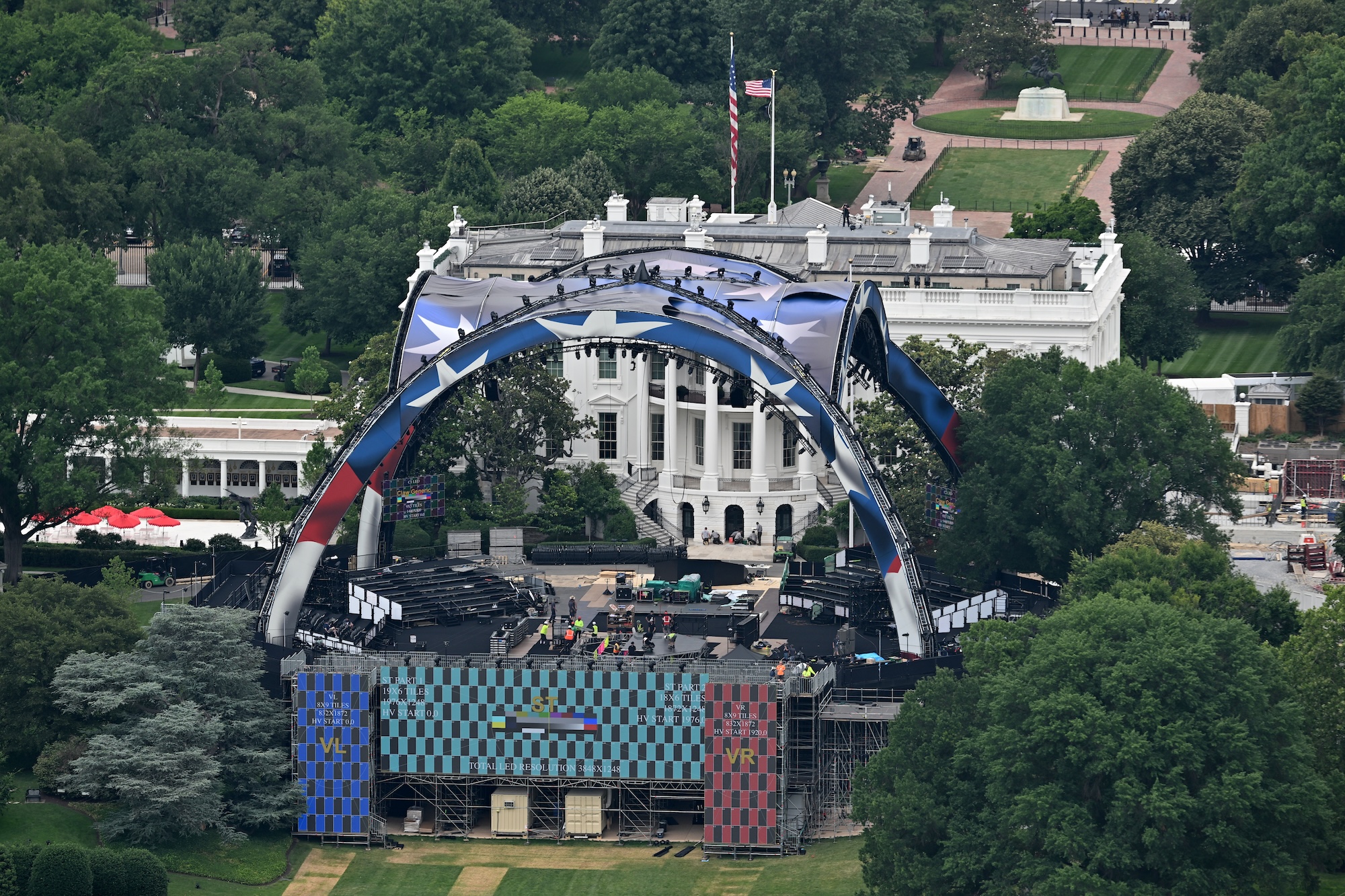
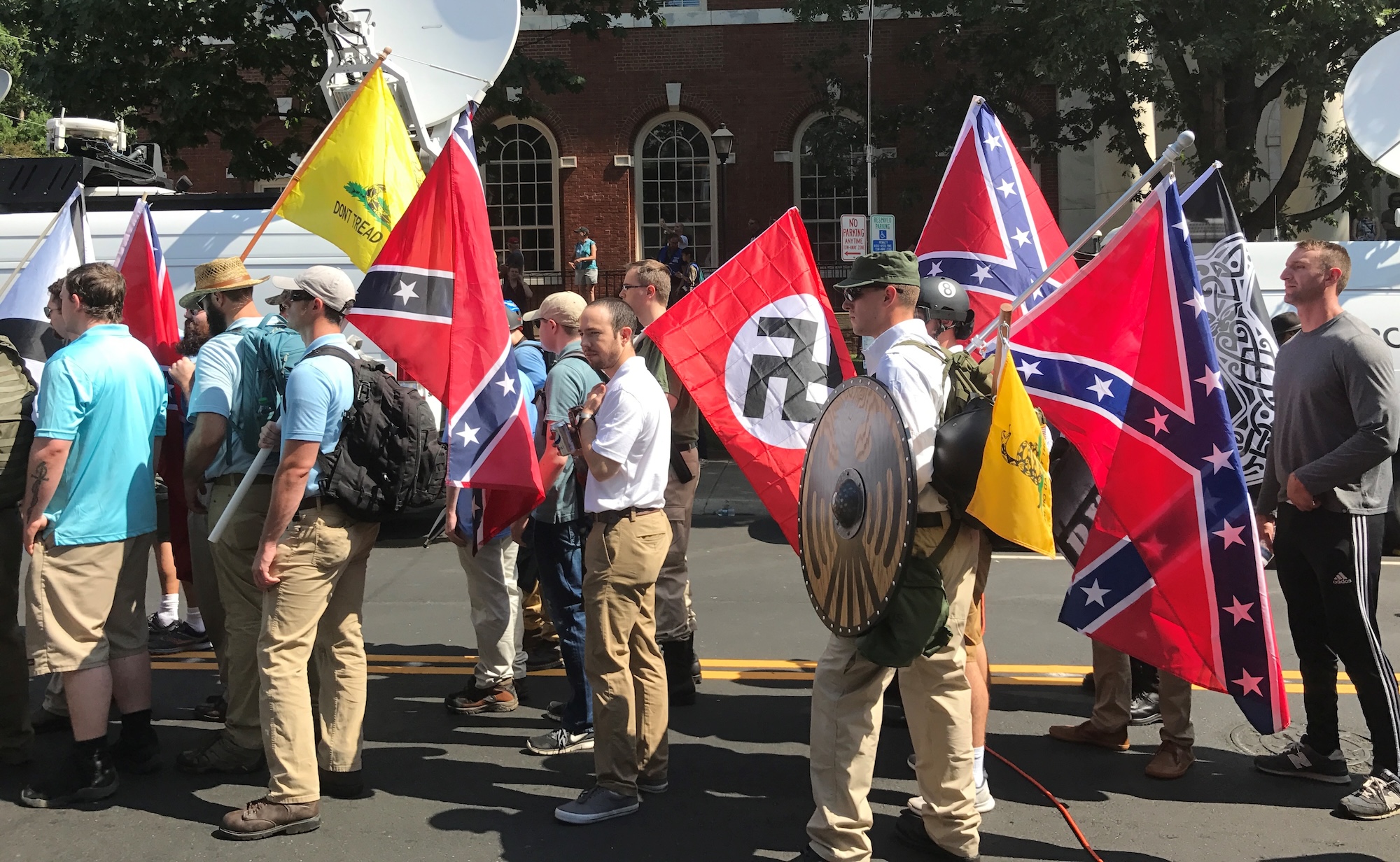
Figure 1: UFC Freedom 250 Arena at the White House, G. Edward Johnson, CC BY 4.0 <https://creativecommons.org/licenses/by/4.0>, via Wikimedia Commons.

As students of early American life preparing to commemorate America’s 250th year of independence, what should we know and what might we do? This essay looks closely at two examples–one from public history and one from public education–of this administration’s revanchist executive orders in action as well as efforts to blunt their force. Channeling the spirit of previous generations, citizens are showing up and pushing back in big and small ways, sometimes with success. We will conclude by sharing resources on teaching and organizing wherever you find yourselves on July 4, 2026.

“Under absolute Despotism”: History by Executive Order

In just sixteen months in office, Trump has issued a flood of 258 distinct executive orders. To put this number in perspective, according to the data collected by The American Presidency Project this number already exceeds Trump’s total in his first term (by thirty-eight), the total number issued by Biden during his entire presidency (by ninety-six), and almost matches the sum issued by both Obama (276) and George W. Bush (291) across each of their eight years in office. Court challenges to Trump’s executive orders have already overturned at least nine of his missives, and ongoing litigations have either temporarily or permanently blocked over one hundred more.  

The sheer volume of Trump’s executive orders exceeds the capacity to close read them, which may be part of the aim of their frequency. Many of these orders have their origins rooted in the agenda of Project 2025 and work hand in glove to advance the aims of that revisionist schema. One executive order in particular has far reaching implications for both the teaching of American history at any educational level and for how publicly-funded sites and museums are allowed to convey information about America’s past to the public. This order, issued on March 27, 2025, is, perhaps, more familiar to us by its insidious title: “Restoring Truth and Sanity to American History.” It moves to essentially outlaw what it frames as “woke” history, taking aim at public memory, nationally-funded museums, and historic sites. From its very opening line, Exec. Order 14253 syntactically excludes anyone who disagrees with everything from its definition of truth to its definition of “Americans.” It reads, “Over the past decade, Americans have witnessed a concerted and widespread effort to rewrite our Nation’s history, replacing objective facts with a distorted narrative driven by ideology rather than truth.”

Full of far-right dog whistles, Exec. Order 14253 sets public trusts in its crosshairs, as the directive attacks the Smithsonian American Art Museum, The National Museum of African American History and Culture, and the pending Smithsonian American Women’s History Museum. The same order also calls for the restitution of Confederate memorials. As David Waldstreicher has poignantly observed, “Erasing history at the Smithsonian and the National Parks has become a bureaucratic priority” and the weaponization of DOGE cuts and executive orders are helping to achieve it. Similarly, Vincent Brown has argued that not only has “this administration shown a commitment to rolling back generations of halting progress towards racial equality,” but it increasingly moves to silence any and all “perspectives that emerge out of a history of enslavement, impoverishment, and racial violence.” The crisis we face at the moment is not the second coming of the culture wars of the late twentieth century, but a uniquely twenty-first century war on public culture, one that seeks to codify the injunction “You Will Not Replace Us,” repugnantly chanted in front of a Jefferson statue at the University of Virginia campus in 2017.

Figure 2: Charlottesville “Unite the Right” Rally in 2017. Anthony Crider; cropped by Beyond My Ken (talk) 20:37, 9 April 2018 (UTC), CC BY 2.0 <https://creativecommons.org/licenses/by/2.0>, via Wikimedia Commons.

Exec. Order 14243 is but one salvo out of many aimed at defunding and dismantling public institutions and erecting white nationalist monoliths—both literal and figurative. In Exec. Order 14190, for example, Trump delivered on a campaign promise to “end radical indoctrination” in American schools, claiming that “identity politics” had infected the teaching of history and was hurting (white) children’s feelings. He also reinstated two first-term executive orders focused on criminalizing the vandalism of monuments and rolling back the renaming and removal efforts that followed the murder of George Floyd in the summer of 2020. As part of America 250, the “National Garden of American Heroes” will be built with money partially seized from the illegal mass cancellation of National Endowment for the Humanities (NEH) grants and programs caught in the AI-driven dragnet of “woke” keywords. This administration knows that federal control over certain narratives and icons of American history makes other measures—like the assault on citizenship status—all the easier to justify. Patriotism is a mighty cudgel in the hands of a despot.

This administration also created Freedom250 which it charged with “the delivery of the President’s national signature events” for the semiquincentennial. This task force works independently of America250 (a bipartisan commission established by Congress in 2016) which had previously been in charge of federal plans for the anniversary. Understanding their fiduciary control of historic sites as carte blanche permission to dictate the content of public history, the Trump administration has moved to install celebratory narratives which align with its narrow vision of the Revolution. The accomplishments of the Revolution are not up for debate, they insist; discussing the limits of enfranchisement and the narrow definition of American liberty are literally labeled “insane.” The administration slouches towards the semiquincentennial anniversary as if their powers of taxation liberate them from accountability. In place of participatory debate and contestation, they conceive of the public sphere as governable by authoritarian fiat.

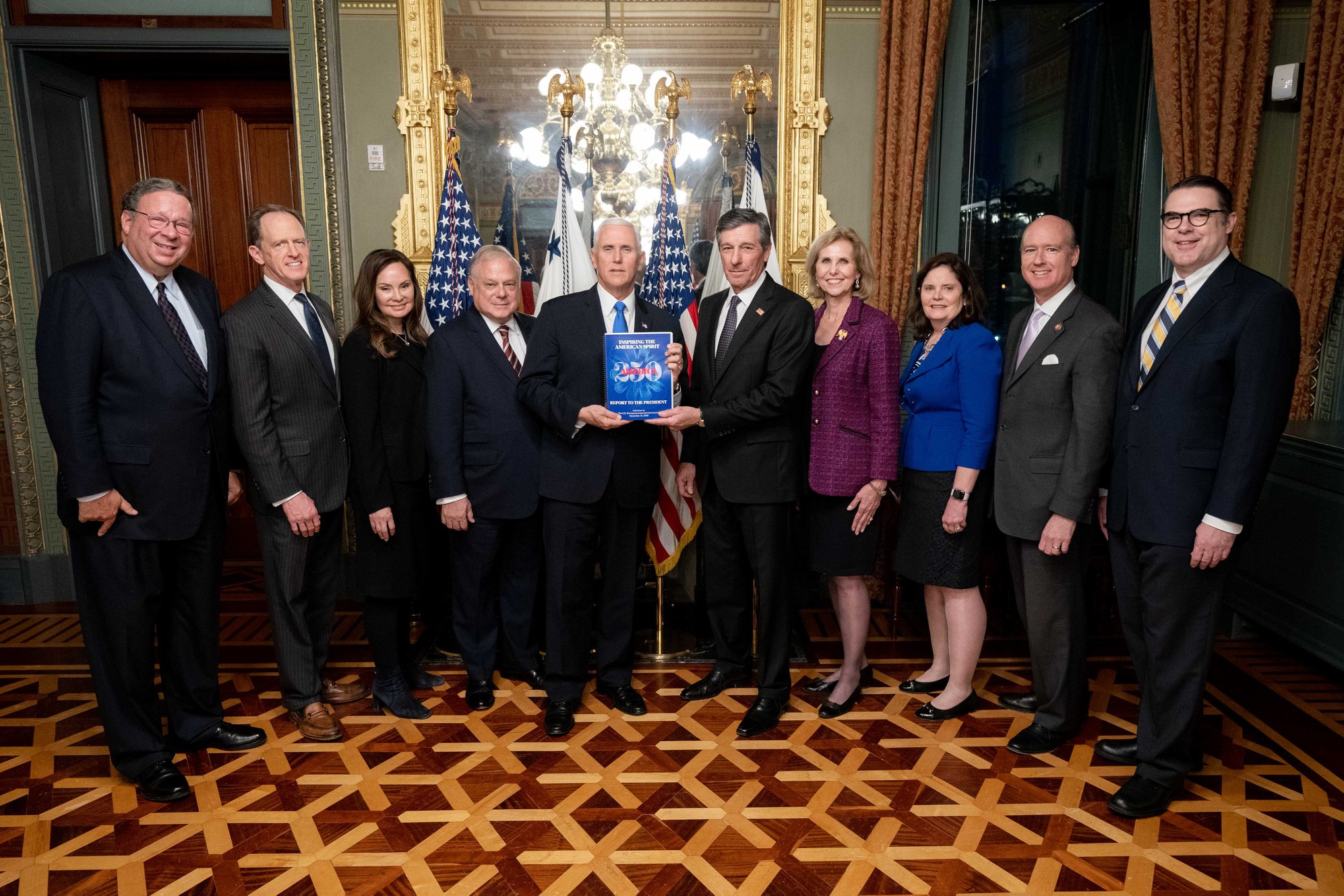
Figure 3: Semiquincentennial Commission Report delivered to Vice President Mike Pence in 2020. D. Myles Cullen, Public domain, via Wikimedia Commons.

“A History of repeated injuries”: Slavery at the President’s House

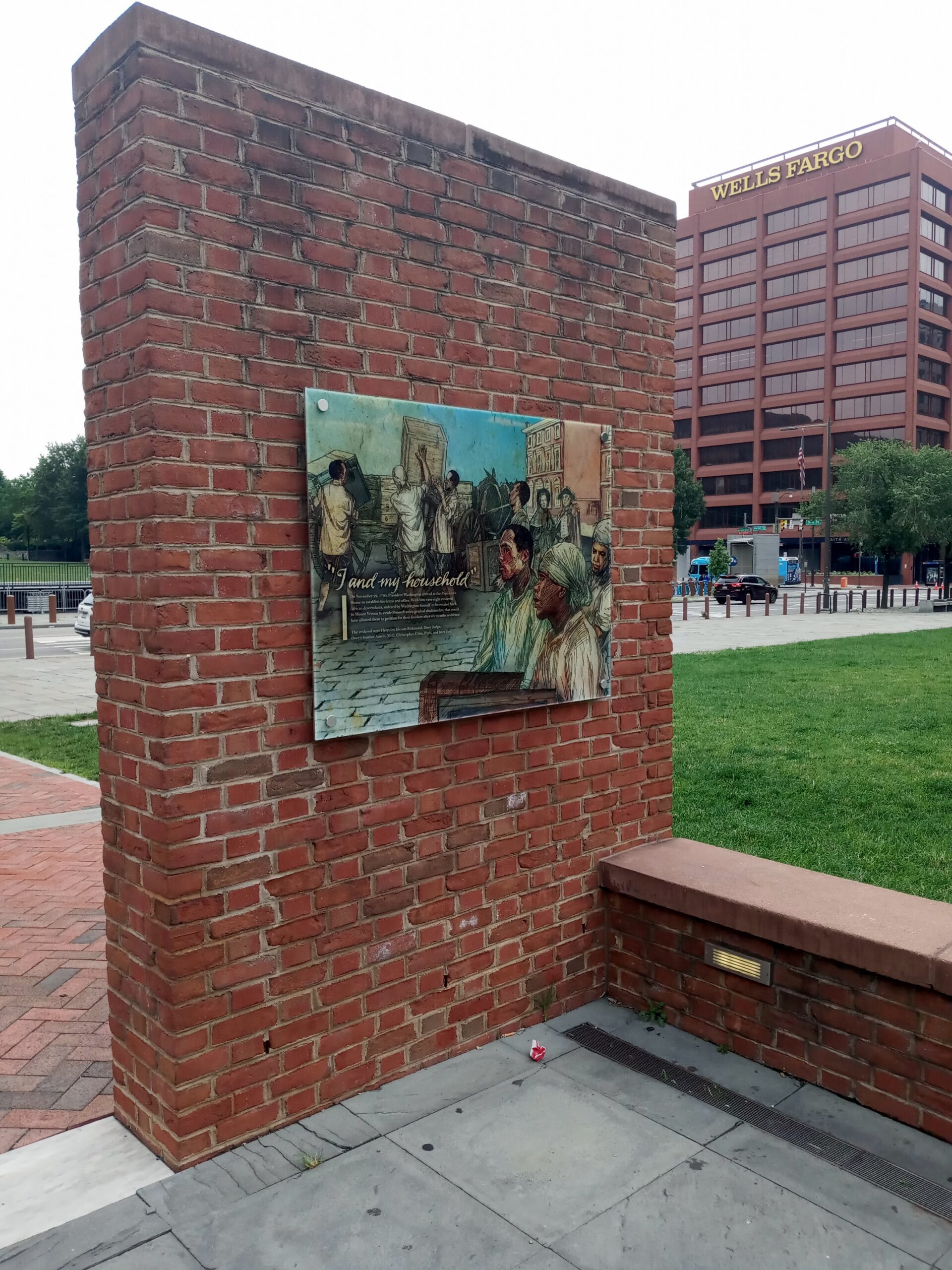
Ground zero for the battle over public history has been a somewhat minor portion of Independence National Park in Philadelphia. Commonly referred to as the President’s House, this site sits a block north of Independence Hall and mere footsteps from the entrance to the modern building housing the Liberty Bell. Composed of several free-standing brick walls, the modern version of the President’s House was erected in 2010 to recreate the footprint of the dwelling in which George Washington resided from 1790 to 1797 while serving as the first U.S. President. This skeletal structure was originally intended to solemnize Washington’s time in Philadelphia. Yet, almost immediately after its design was announced local activists began lobbying for recognition of the nine enslaved people that Washington brought from Mount Vernon to run what was essentially the first White House. The work of these activists resulted in a reconceptualization of the design plans to include the emplacement of thirty-four historical markers detailing the lives of Oney Judge (also known as Ona), Moll, Austin, Hercules Poesy, Richmond, Giles, Paris, Christopher Sheels, and Joe Richardson, all of whom were held in bondage (against the intentions, if not the absolute letter, of Pennsylvania’s 1780 Act for the Gradual Abolition of Slavery ).

Figure 4: Historical markers of enslaved individuals at the President’s House in Philadelphia (2022). Kreuz und quer, CC0, via Wikimedia Commons.

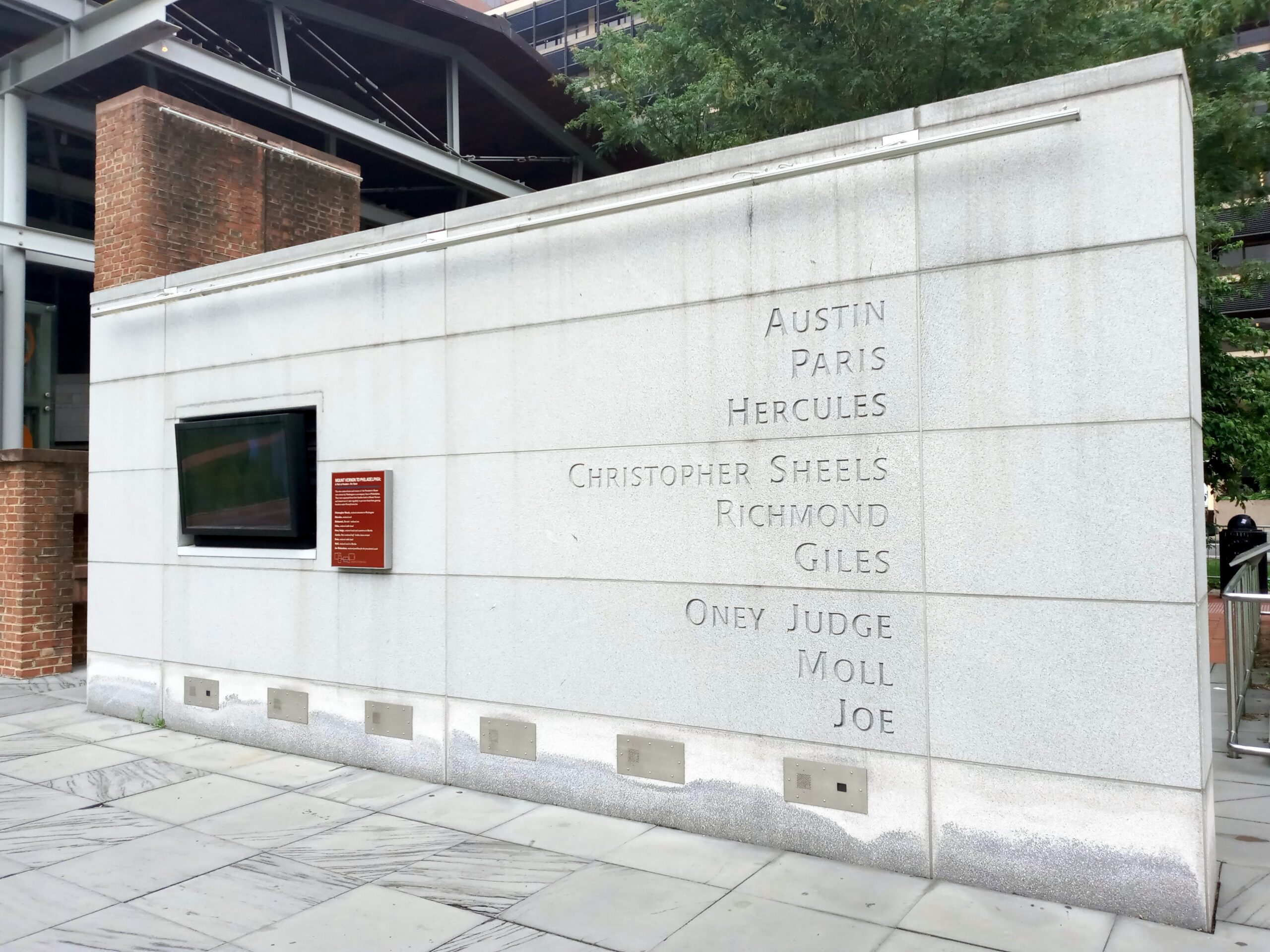
The disinterring of the histories of enslavement at the President’s House was a public good, a long overdue acknowledgment of a willfully suppressed facet of the history of the early American Republic. No one living in Philadelphia in the 1790s, no one who visited Washington’s residence during his tenure as President, would have been surprised that he was an enslaver. The willful neglect of this history has its own history, one the efforts of the Mount Vernon Ladies Association in the middle of the nineteenth century to transform Washington into a yeoman farmer in order to promote him as a symbol of national unity. Disassociating Washington from connections to enslavement in the popular imagination was a way to cast him as a figure of national cohesion, especially as the divisions leading to the Civil War compounded. The early twenty-first century efforts to install memorials to the lives of Oney Judge, Moll, Austin, Hercules Poesy, Richmond, Giles, Paris, Christopher Sheels, and Joe Richardson were not speculative enterprises; rather, they were a return to a commonplace public knowledge of the Revolutionary Era. The creation of this commemoration offered the public a chance to move past obscuring mythic sentiments and return to the realities of Washington’s actual public and personal histories.

Figure 5: Names of the enslaved engraved on the wall at the President’s House in Philadelphia (2022). Kreuz und quer, CC0, via Wikimedia Commons.

In the words of Philadelphia journalist David Topel, the signs crafted in 2010 to acknowledge the lives of these nine people “did not speculate or editorialize;” rather they “documented” and “named,” effectively recognizing that enslavement resided “at the heart of the nation’s founding contradictions” without moving to condemn or seek restitution. These signs noted the existence of enslavement but stopped short of condemning enslavers or from pointing out the hypocrisy of Washington or the other Founders. Yet even this anodyne formation proved too complex and threatening to the overtly white supremacist versions of American origins held fast by the Trump administration. So, under the authority conjured by Executive Order 14253, the National Parks Service removed these historical markers from the President’s House  on January 22, 2026. Even the soberest, most whiggish form of reckoning with slavery was deemed too “revisionist” for an administration fully committed to only allowing a one-dimensional whitewashed history to be displayed for the semiquincentennial.  

These subversive deletions quickly spurred a renewed public activism, most notably by the Avenging the Ancestors Coalition, which was heavily involved in the original fight to publicly memorialize the lives of the nine Black people once forced to live and work at this site. Outraged at this desecration, they took their battle to the social media and to the streets, organizing countless rallies and press conferences. In cooperation with Avenging the Ancestors, the City of Philadelphia sued the Secretary of the Interior (as the head of the National Parks Service) and pressed for the immediate restoration of the commemorative panels. In a scorching decision, released on President’s Day, Judge Cynthia Rufe condemned these baseless removals and ordered an immediate restitution of the vacated panels. Comparing the Trump administration to George Orwell’s “Ministry of Truth,” Rufe opened her decision by noting that “this Court is now asked to determine whether the federal government has the power it claims—to dissemble and disassemble historical truths when it has some domain over historical facts. It does not.” Federally-funded public history should not, according to Rufe, have Big Brother’s motto “Ignorance is Strength” as its telos.

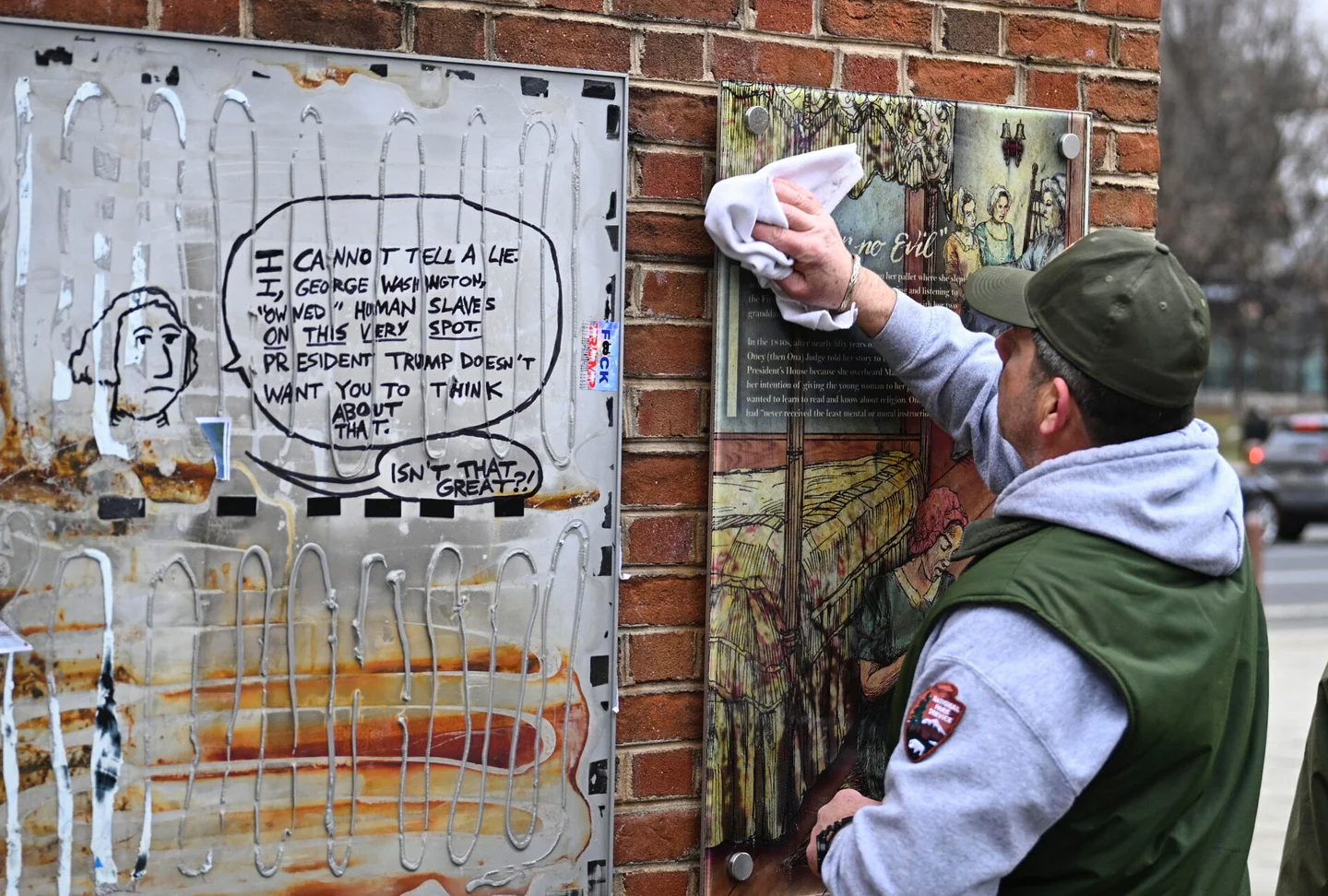
More insurgent responses included efforts by anonymous groups and individuals who ventured–even on the most frigid of January and February 2026 mornings–to the President’s House to decry the expunged memorials with a fulsome history from below. Many of these handwritten or printed-at-home signs foreshadowed Rufe’s scathing condemnation. More than one sign sought to resurface the personal histories of the nine enslaved people while others implored the public to “fight truth decay.” Still others more boldly sought to mark the white supremacy of these removals by posting signs adorned with such phrases as “white mischief.” Under pressure from the White House to keep these display boards empty, workers would seemingly remove these protest signs in the dead of night. In response, more than a few publicly-minded preservationists used sharpies to inscribe the history directly onto the derelict bulletin boards (until these, too, were removed), in effect to turn these now blanketed walls into sites of continuous political dissent.

Figure 6: Protest cartoon drawn directly on space where marker was removed at President’s House in Philadelphia. Photo by Joe Lamberti for AP including at Huffpost.com.

One startling intervention took the form of an improvised political cartoon which fabulated Washington himself weighing in on this contemporary effacement. This satirical injunction plays off a mythic commonplace about Washington to stress the dishonesty of Trump’s attempts at whitewashing. Using Parson Weems’s famous fabrication of Washington’s unimpeachable honesty, the cartoon Washington confesses his role as enslaver to admonish the contemporary president for wanting Americans to ignore foundational realities. The irony of the second speech balloon further emphasizes how the invocation to “Make America Great Again” relies on a blatant embrace of historical amnesia. A powerful indictment of this executive order’s ambitions of erasure, this sharpie protest resurrects the most famous occupant of the President’s House as demanding that the public know about the lives of all the house’s residents because he cannot tell a lie.

While the plundering at the President’s House was not the first public rescripting ordered under the auspices of Exec. Order 14253, it has been (so far) the most overtly public. From attempting to remove the Pride flag from the Stonewall National Memorial to asserting more control over wall placards and installation themes in federally-funded museums, this administration has waged a war on public memory. And this is noteworthy because of how public heritage sites and museums have been slow (at best) to admit the violences and dehumanizing racial hierarchies so central to American foundations. Yet as Shevaun E. Watson and Cathy Rex demonstrate, “the American public claims to learn more about U.S. history” from “popular culture and leisure travel” than from academic research. And this fact should concern anyone interested in the realities of the past. Minor historical sites are, for Watson and Rex, often the grounds on which “the social construction of memory” about the meaning of such things as declaring independence are formed. As such, “the political stakes” of the “negotiated meanings of cultural inheritance” function as bellwethers of public memory, so even the most rudimentary recognitions of enslavement have a profound impact on public understandings of American formations.

The struggle to fully restore the desecrated historical markers at the President’s House continues, as the Trump administration has appealed Rufe’s decision and launched a new President’s House website which marginalizes the history of the nine people Washington enslaved while also seeking to cast Washington as a reluctant enslaver by comparing his personal beliefs on the issue to those of John Adams (who not only never enslaved anyone but was also among the most prominent opponents of enslavement among the Founders).  While this fight to preserve truth continues, we should also be moving to preserve this resistance to erasure as an ongoing inscription of public history. Such conservation could exhibit how the struggle over the meaning of declaring Independence—then and now—remains a matter of intense public interest and contestation.  

“Let facts be submitted”: Revisionist Civics in the Classroom

One great irony of right-wing activists’ incursions into Revolutionary history is that even while they insist on their reverence for the founding documents of deliberative democracy, they cannot stomach it in practice. The NAS and its offshoot, the Civics Alliance, push cut-and-paste educational reforms through state legislatures. Their “model legislation” empowers lawmakers to sign on to something they have not crafted and likely have not read. These bills, often introduced in gerrymandered chambers, aren’t deliberated, they’re simply adopted and signed. Legislators can then run on something as apparently innocuous as “civics education” or “teaching founding documents.” But Civics Alliance makes their policy goals clear in their online toolkit; they seek to erase BIPOC representation in curricula and eliminate service-learning, characterized in their sample citizen letters as “radical community organizing.” The cognitive dissonance one must embrace to celebrate the Declaration of Independence while condemning community organizing is a feature, not a bug. That is to say, not reading the founding documents—just like not reading the bills—is the model of civic literacy most aligned with white nationalist comfort-seeking around history. In turn, white citizens to whom this curriculum is tailored are, in James Baldwin’s words to his nephew, “Still trapped in a history which they do not understand and until they understand it, they cannot be released from it.”

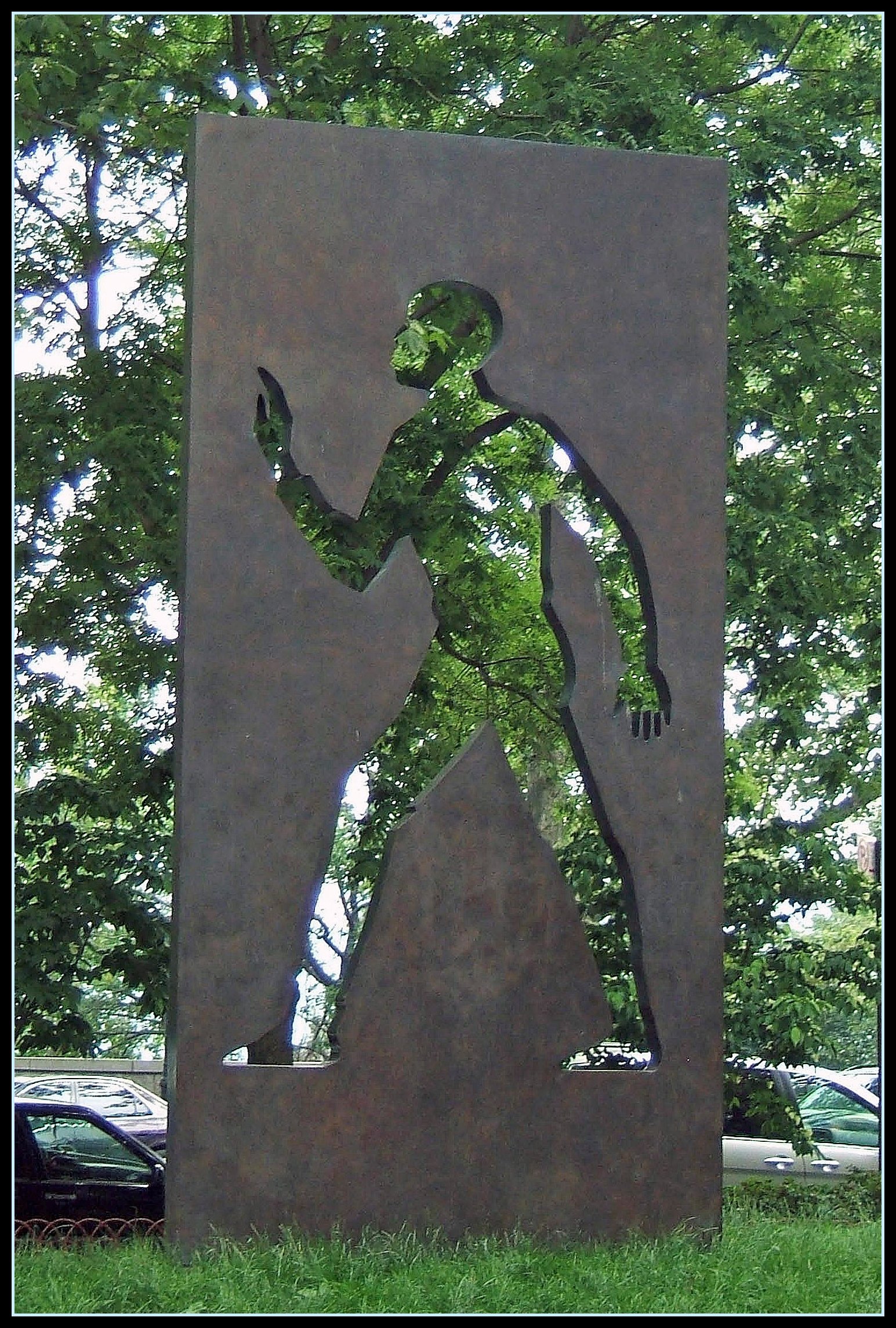
Figure 7: Elizabeth Catlett, Invisible Man, Riverside Park, New York, 2003. “Invisible Man Sculpture, Harlem, NY” by Tony Fischer Photography is licensed under CC BY 2.0.

The “1776 Report” illustrates Baldwin’s point in a strange rhetorical gambit related to the Declaration of Independence and the Constitution’s contradictory principles. The report reads, “The foundation of our Republic planted the seeds of the death of slavery in America. The Declaration’s unqualified proclamation of human equality flatly contradicted the existence of human bondage and, along with the Constitution’s compromises understood in light of that proposition, set the stage for abolition. Indeed, the movement to abolish slavery that first began in the United States led the way in bringing about the end of legal slavery” (emphasis original). Like Dorothy’s ruby slippers, which contained the power to send her home all along, the Constitution was just missing the requisite heal clicks. Nevermind the mortal danger that makes up the arc of Dorothy’s story and ours. America’s capability to eventually enact its stated principles is pitched here as strength; its lack of will to do so is, predictably, unacknowledged. “Trapped in a history” that insists on American exceptionalism, the commission’s celebration of America’s founding documents is pitched as ideologically neutral. That is, the right wing positions their civics education in line with the exegetical practices of strict constructionism; they are not just assigning a body of required texts, but a method of interpretation. It is crucial that this method be rhetorically positioned as “anti-woke” in their advocacy literature.

The Civics Alliance curriculum package requires instruction and credentialing in “Western and American Heritage” at the collegiate level. Among other actions, their suggested bills include creating a 6-credit “Western Heritage Certificate Program” in publicly-funded institutions; establishing a “School of Intellectual Freedom” embedded within colleges of arts and sciences; and enacting a “College Credit Act” that would deny students the ability to receive transfer or testing credits for courses featuring red-flagged topics like the persistence of racial discrimination in America. No agency could comb through the millions of transcripts and course descriptions that state governments will require under these acts. AI will surely do that work with the same care and precision recently exposed in the National Endowment for the Humanities case brought against DOGE employees.

 Ohio legislators have been trailblazers in this arena, passing, along with the state budget, Section 3345.382. This bill requires state institutions of higher education to develop a 3-credit civic literacy course. Course curriculum must include the following texts:

(1) The entire Constitution of the United States;

(2) The entire Declaration of Independence;

(3) A minimum of five essays in their entirety from the Federalist Papers. The essays shall be selected by the department chair.

(4) The entire Emancipation Proclamation;

(5) The entire Gettysburg Address;

(6) The entire Letter from Birmingham Jail written by Dr. Martin Luther King Jr;

(7) The writings of Adam Smith, including a study of the principles written in The Wealth of Nations.

The conviction that undergirds this curriculum is that these texts are true, enduring, and exemplary; the pedagogical approach that undergirds their teaching is, in the Civics Alliance’s language, “the study of and devotion to American institutions and ideals.” The syllabus for a course that includes these documents is subject to scrutiny under the Section’s additional provisions. Educators must submit their course syllabi in a format that is public, easily found on the department’s webpage, and keyword searchable. In addition, this legislation requires that courses “Demonstrate intellectual diversity for course approval, approval of courses to satisfy general education requirements, student course evaluations, common reading programs, annual reviews, strategic goals for each department, and student learning outcomes.” The trumpeting of “intellectual diversity” is uncomplicatedly positioned alongside the requirement that civics instruction focus on the same seven texts. The expressed purpose of the Civics Alliance curriculum is to cultivate patriotic devotion to the version of American life and history captured by fewer than a dozen writings. The manifold paradoxes that mark the mission to protect “founding” documents, values, and ideas bring to mind the words of Black suffragist Mary Church Terrell who wrote in The Crisis’s September, 1912 issue:

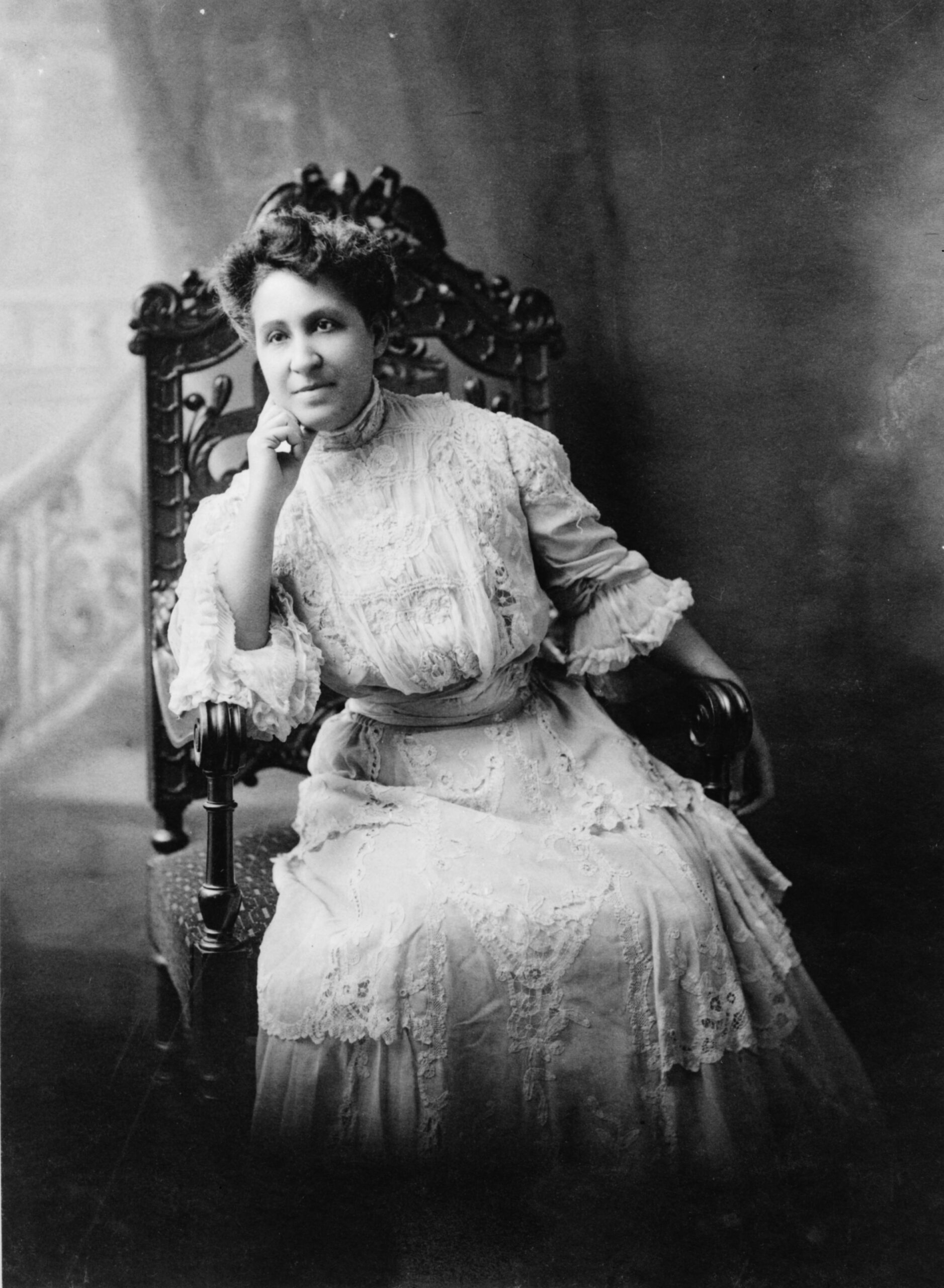
The founders of this republic called heaven and earth to witness that it should be called a government of the people, for the people and by the people; and yet the elective franchise is withheld from one-half of its citizens . . . because by an unparalleled exhibition of lexicographical acrobatics the word “people” has been turned and twisted to mean all who were shrewd and wise enough to have themselves born boys instead of girls, and white instead of black.

Terrell makes strange the tangled work of racial discrimination when thrown against the plain language of liberation. The principles of strict construction are suddenly abandoned when, as Terrell shows, the words “we” or “our” or “people” are interpreted literally.

Figure 8: Portrait of Mary Church Terrell (ca. 1880-1900). Not stated, Public domain, via Wikimedia Commons.

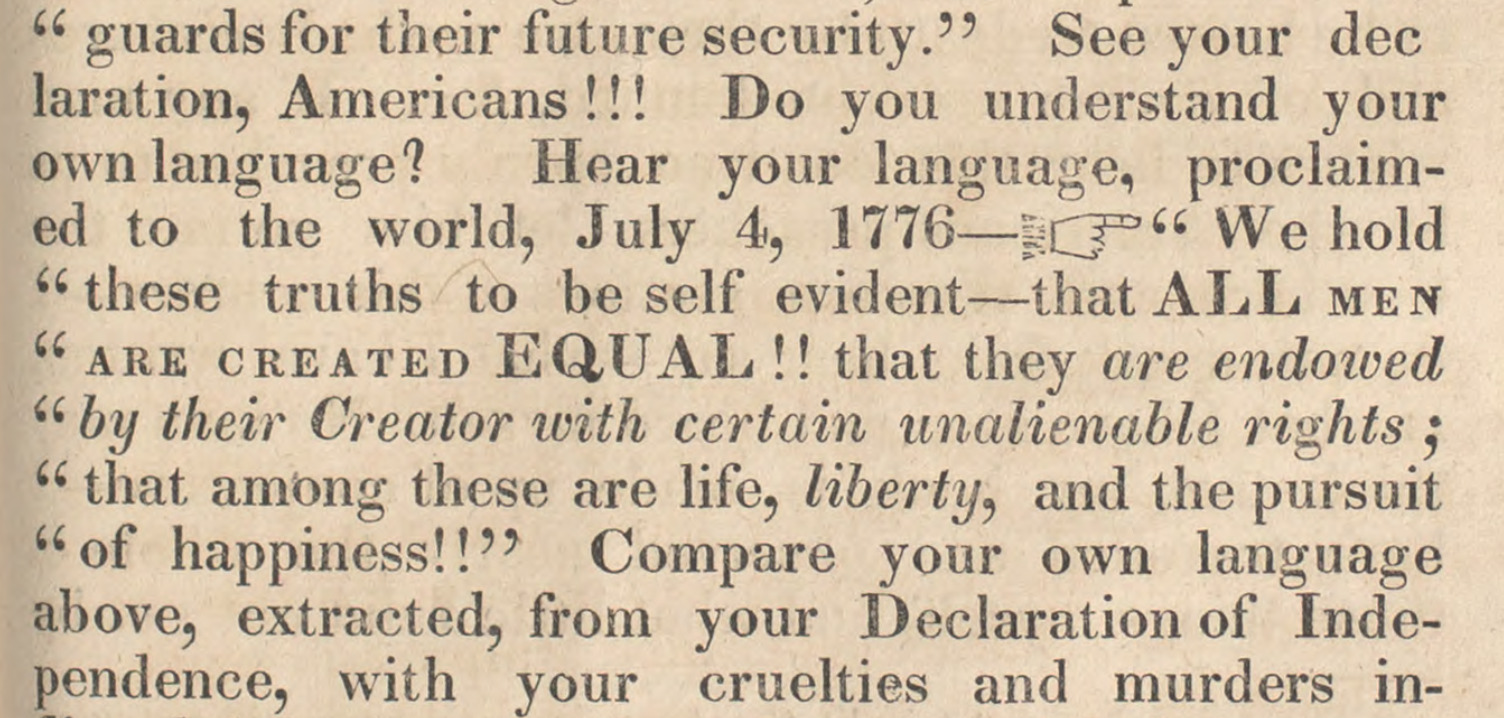
This historic rhetorical reality is why teaching founding documents has always been a double-edged sword for right-wing Christian nationalist organizations. The Declaration of Independence in particular, has provided fodder for Black historians, organizers, and creators to adapt and ironize. David Walker’s 1829 Appeal to the Colored Citizens of the World invokes the language of the Declaration of Independence with typographical flourish. Marcy Dinius argues that Walker’s setting of the phrase “ALL MEN ARE CREATED EQUAL!!” in all and small caps, preceded by a manicule for emphasis, allowed Walker to “effectively rewrite the Declaration according to his interpretation, even as he quotes its language word for word.” Indeed, Walker alienated himself from these words in the preceding rhetorical question: “Do you understand your own language?” Making it strange makes his point more potent.

Figure 9: David Walker, Appeal, in Four Articles, Together with A Preamble, to the Colored Citizens of the World (Boston: David Walker, 1830), 77. Google Books.

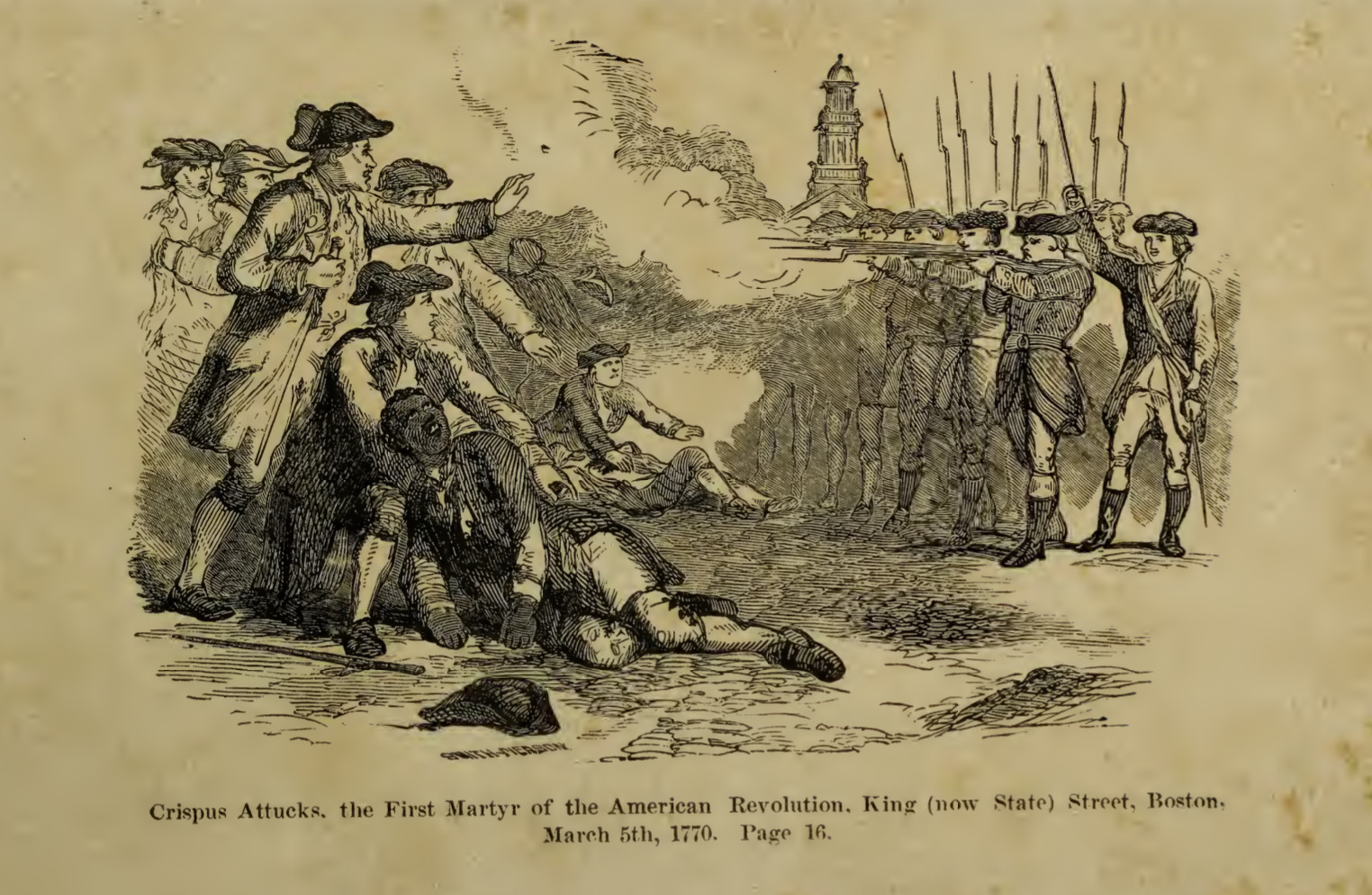
Frederick Douglass famously invoked the “scorching irony” of his invitation to speak before a largely white Rochester, New York audience on Independence Day in 1852. In “What to the Slave is the Fourth of July?” Douglass seized the occasion to expose its fraudulence, meditating on how the founding documents are proof of an ongoing charade. “The existence of slavery in this country brands your republicanism as a sham, your humanity as a base pretence, and your Christianity as a lie,” he declared on the seventy-sixth anniversary of 1776. That same year, Douglass’ collaborator and co-organizer for abolition, William C. Nell prepared a pamphlet entitled Services of Colored Americans, designed to tell the stories of Black servicepeople in the American Revolution, stories “veiled from the public eye” and official record. Nell likewise sought to organize celebrations in Boston of Crispus Attucks Day, marking the death of the Afro-Indigenous sailor killed on March 5, 1770, in the Boston Massacre. Nell believed that Attucks’s martyrdom in 1770 had been intentionally supplanted in collective memory writing, “When the authorities of the town of Boston voted to merge the 5th of March celebration into the 4th of July, it would have been very well had the people not so entirely, from that day to this, forgotten that the colored man was one of the ‘all men created free and equal.” Founding documents—fetishized for their presumed authorizing of “American heritage”—have never been neutral ground nor dead letters; indeed, they have always been rich texts on which marginalized Americans could ground their presence, protest their exclusion, insist on accountability, and thwart erasure.

Figure 10: The death of Crispus Attucks at the Boston Massacre highlighted in William C. Nell, The Colored Patriots of the American Revolution (Boston: Robert F. Wallcut, 1855). Retrieved from the Internet Archive.

The state of South Carolina passed a similar set of bills to Ohio, requiring “one or more documents that are foundational to the African American Freedom struggle” in its compulsory civics curriculum. Could that be David Walker’s Appeal? Or, could one develop a course that teaches The Declaration of Independence alongside Tracy K. Smith’s powerful erasure poem “Declaration”? This piece eliminates large sections of the original Declaration to create a poem about the middle passage, the monarchical “He” made to signify a tyrannical America. Can an educator treat these vaunted texts as living documents, worthy of our careful critique?

“We Mutually Pledge”: Resources for Teaching and Organizing

To conclude, we have assembled some resources grouped by category that may be useful to you across your roles and regions. Recognizing that readers may not be able to engage in organizing efforts, incorporate particular reading materials, or openly discuss institutional mandates, we hope that those working under greater protection will extend aid to those who are not. If you are interested in contributing to this list and/or developing ideas for syllabus sharing, especially around new compulsory courses, please email dicuirci@umbc.edu and duncan.faherty@qc.cuny.edu.

Organizations and Advocacy Groups:

Monument Lab

Avenging the Ancestors Coalition

For Freedoms

Freedom to Read Foundation

Save Our Signs

Everylibrary

SPLC’s Learning for Justice

Teaching Resources:

‘76 Objects

250 to 250 YouTube series

Founding Feminists (Ms. Magazine)

Indigenous America250

Wheatley Peters Project

National Monument Audit

The Inclusive Historian’s Handbook

American Association for State and Local History 250th Anniversary Resources

The Smithsonian’s website Teaching the 250th

Artwork of Titus Kaphar

Readings:

David Waldstreicher, “On the Responsibility of Historians,” Boston Review, September 2025.

J.S. Allen, “The Dismantling of Black Studies,” Nation 2026, volume 322, no. 6, pp. 62–67.

Paul Chan, “The Arts at Risk: A Timeline,” October, Summer 2025, no. 193, pp. 29–36.

Jelani Cobb, “Two Hundred and Fifty Years of Complicated Commemorations,” New Yorker, May 4, 2026.

Further Reading:

James Baldwin, The Fire Next Time (Dial Press, 1963).

Marcy J. Dinius, The Textual Effects of David Walker’s “Appeal”: Print-Based Activism Against Slavery, Racism, and Discrimination, 1829-1851 (University of Pennsylvania Press, 2022).

William C. Nell, Services of Colored Americans in the Wars of 1776 and 1812 (Robert F. Wallcut, 1852).

Cathy Rex & Shevaun E. Watson eds., Public Memory, Race, and Heritage Tourism of Early America (Routledge, 2021).

Tracy K. Smith, “Declaration,” in Wade in the Water: Poems (Greywolf Press, 2018).

Mary Church Terrell, “The Justice of Woman Suffrage,” The Crisis 4, number 5 (September, 1912).

David Walker, Appeal, in Four Articles, Together with A Preamble, to the Colored Citizens of the World (Boston, 1830).


This article originally appeared in July 2026. 


Lindsay DiCuirci is an Associate Professor of English at the University of Maryland Baltimore County and the author of Colonial Revivals: The Nineteenth-Century Lives of Early American Books (2018). She is currently writing a book about Spiritualism and social reform in the U.S.

Duncan Faherty is Professor of English & American Studies at Queens College & The Graduate Center, CUNY and the author most recently of The Haitian Revolution in the Early Republic of Letters: Incipient Fevers (2024). He is currently working on a book which explores contemporary artistic reconfigurations of early American histories. 

image_pdfSave to PDFimage_printPrint